The
DEAP
Roots
Report.
A weekly newsletter on digital equity for Black people in the South.
A lot can happen in a week, especially when billions of dollars, new infrastructure and public policy are moving at the same time.
Each Monday, we break down the decisions that shaped the previous week across nine Southern states: Alabama, Mississippi, Georgia, Louisiana, South Carolina, North Carolina, Arkansas, Tennessee and Virginia. We follow the broadband money, the data center approvals, the policy changes and the numbers behind them, then ask the question that often gets skipped: What does this mean for Black communities?
We also track the national decisions influencing what happens across the South.
“There Is no rights secured to us there Is no law likely to be made which our Hands can reach.”
Henry Bram, Ishmael Moultrie and Yates Sampson, the committee elected by the freedpeople of Edisto Island, South Carolina
Letter to Maj. Gen. O. O. Howard, commissioner of the Bureau of Refugees, Freedmen and Abandoned Lands, written after Howard came to the island to tell them President Andrew Johnson was restoring the land to its former owners and then asked them to choose a committee. October 1865; the editors date it Oct. 20 or 21. Read in the transcription published by the Freedmen and Southern Society Project at the University of Maryland, from B-53 1865, Letters Received, series 15, Washington Headquarters, Record Group 105, National Archives. The manuscript separates these clauses with a space rather than punctuation.
The week in one minute
- A federal judge refused to dismiss the NAACP’s Clean Air Act suit against xAI, holding that the gas turbines running outside Memphis are not exempt and need air permits.
- South Carolina’s state-owned utility raised residential rates twice over two years and put $120 million of turbines for a gas plant whose price doubled into the bill.
- Cox is walking away from every rural broadband award it holds in Arkansas, Louisiana and Virginia, and the leftover addresses are being handed to BEAD.
- Hundreds of Chesterfield County residents questioned Google and Dominion executives about a project their supervisors had already approved unanimously.
- The FCC proposed a $4.4 million fine over $7,000 in Lifeline payments claimed for dead subscribers, and the gap between those two numbers is the story.
- Lawyers spent the week working through a Fifth Circuit ruling that the agency administering E-Rate and Lifeline was created without authority from Congress.
- Pew found 42% of Black adults expect artificial intelligence to make patient health outcomes worse, up 12 points since 2022.
- All nine state broadband offices published nothing at all last week, in the middle of a federal challenge window they control.
The turbine case
A federal judge told xAI the turbines need permits.
On Oct. 30 a federal judge refused to throw out the NAACP’s Clean Air Act lawsuit against xAI over the gas turbines powering the company’s Colossus computing operations outside Memphis. U.S. District Judge Debra M. Brown, of the Northern District of Mississippi, denied the company’s motion to dismiss.
Brown rejected xAI’s central argument, which was that the turbines count as “mobile sources” and therefore need no air permits at all. She also rejected the company’s claim that Clean Air Act citizen suits are unconstitutional, writing that the people who bring them “are not exercising the federal government’s executive power.” The court had already denied a similar motion filed by the U.S. Department of Justice earlier in October.
The NAACP is represented by the Southern Environmental Law Center and Earthjustice. Brown has not yet ruled on the pending request for a preliminary injunction, so nothing about how the plant runs changes because of this order.
The Southern Environmental Law Center says the turbines can emit more than 5,000 tons of nitrogen oxides, 400 tons of fine particulate matter and 47 tons of formaldehyde a year. Those numbers describe what the plaintiffs say the equipment is capable of releasing. They are not measurements of what came out of it, and no monitoring data has been published.
Counted: combustion turbines, and tons per year of three pollutants. Measured: alleged emission potential, not monitored emissions.An air permit is not just paperwork. Applying for one opens a public notice period and a comment docket before construction starts, which is the one scheduled moment when people who live near a site can say something on the record and force an answer. Build first without the permit and there is no hearing to show up to, because the proceeding that would have held it never opened.
That is what makes this ruling matter beyond the pollution numbers. The Mississippi Department of Environmental Quality allowed the plant to be built, and the only route left to the people breathing near it ran through federal court, which is slow, costs money and requires somebody with standing and lawyers. The NAACP had all three, and most neighborhoods do not.
Watch for Brown’s ruling on the preliminary injunction. That is the only step in front of us that could change how the plant operates before a trial, and it is the thing to ask about at any public meeting in Shelby or DeSoto County between now and then.
Federal
The FCC proposed a $4.4 million fine over $7,000 in payments.
On Oct. 29 the commission issued a notice of apparent liability against Boomerang Wireless, proposing a forfeiture of $4,401,666. The agency says the company enrolled deceased people as Lifeline subscribers and altered their records to show California addresses unconnected to where they had lived. Lifeline is the federal program that discounts phone and internet service for low-income households.
The FCC’s own release says only “hundreds” of deceased people. Broadband Breakfast, reporting from the commission meeting, puts it at 442 deceased subscribers and $7,000 in reimbursements actually received. A notice of apparent liability proposes a penalty. It does not impose or collect one.
Boomerang denies wrongdoing. The company says it followed the third-party identity verification process the FCC requires in California, Texas and Oregon, that another federal database showed those subscribers alive at enrollment, and that it will defend itself.
Counted: dollars of proposed forfeiture, dollars of reimbursement received, and enrolled subscriber accounts. Measured: a proposed penalty, not money recovered.The money the company actually took was $7,000, and the proposed fine is more than 600 times that. The commission has not explained the arithmetic publicly, and the same pattern showed up in its October enforcement against two other Lifeline carriers.
Enforcement against carriers that cheat a subsidy program is a good thing, and nobody should want dead people on the rolls. The thing to keep an eye on is the framing. When an agency builds a public case about fraud in the programs that serve low-income households, that case tends to show up later in arguments for shrinking those same programs. Lifeline serves people, and the people are not the ones under investigation here.
The Fifth Circuit held that the FCC lacked authority to create the company that runs E-Rate and Lifeline. A three-judge panel ruled that the commission violated the Government Corporation Control Act when it established the Universal Service Administrative Company without specific authorization from Congress, and vacated the fourth-quarter 2025 universal service contribution factor.
The decision came down Oct. 15, which is before last week. What happened last week is that the analysis started circulating, and telecom lawyers began working through what it means for an entity that has administered the Universal Service Fund for close to 30 years. That fund pays for E-Rate in schools and libraries and for Lifeline. The ruling directly voids one quarter’s contribution factor and nothing else, but the reasoning reaches further.
Counted: one quarterly contribution factor, vacated. Measured: legal authority, not dollars. No dollar figure appears in the decision.Every discount a Southern school gets on its internet bill and every Lifeline line in a low-income household runs through the entity a federal appeals court just said should not exist in its current form. For the families using Lifeline and the schools and libraries using E-Rate, the question is what that means for support they already have. Nothing stops today. The concern is what follows if Congress has to rebuild the mechanism that collects and distributes the money, because the programs it pays for could become part of that debate. Issue 06 reported the Brattle figures on regional support, which put the South ahead of every other region in E-Rate money received.
NTIA says it is still on track to publish the Digital Equity Act competitive grant notice in December. The comment period on the program’s application paperwork closed Oct. 26. A two-page joint status report filed Oct. 23 in National Digital Inclusion Alliance v. Trump says the agency “remains on track” for a December notice of funding opportunity.
The competitive program is worth $1.25 billion, one piece of the $2.74 billion Digital Equity Act. A $250 million Tribal set-aside was not canceled. Earlier this year Judge John Bates agreed with the administration that the statutory provision directing funds to racial minority communities was unconstitutional, struck that provision, and said he expected the competitive program to be reinstated. The separate pool of Digital Equity Act money for state governments remains unresolved.
A target date in a stayed case is a target, not money moving.
Counted: dollars authorized by statute, and one court filing of two pages. Measured: a projected publication month, not an award, an obligation or a disbursement.The FCC opened a review of its disability accessibility rules. The commission approved a notice on Oct. 29 asking six questions: how to encourage accessible design early in product development, how to clear marketplace barriers to new accessibility tools, how to remove obstacles to one-device and one-number solutions, how to make multifactor authentication more accessible, how to improve customer service including direct video calling, and how to streamline rules that may be duplicative or outdated.
The release carries no statistics, no dollar amounts and no docket number. The sixth question is the one to follow. Streamlining is raised only as a question here and no rule is named for removal, so this is not a rollback on the current record.
A bipartisan group of 105 state legislators from 34 states asked the FCC to protect E-Rate. Their letter, sent Oct. 13 and reported Oct. 29, says a recently proposed commission rule could undermine the program that discounts internet service for schools and libraries, and asks the agency to strengthen it instead.
The signatory list is not published on the page carrying the letter, so we cannot say which of the nine states signed. If you want to know whether your legislator did, that is a question worth putting to their office.
Counted: legislators and states. Measured: signatures on a letter. No dollar figures.BEAD watch
Cox is walking away from every rural broadband award it holds in Arkansas, Louisiana and Virginia.
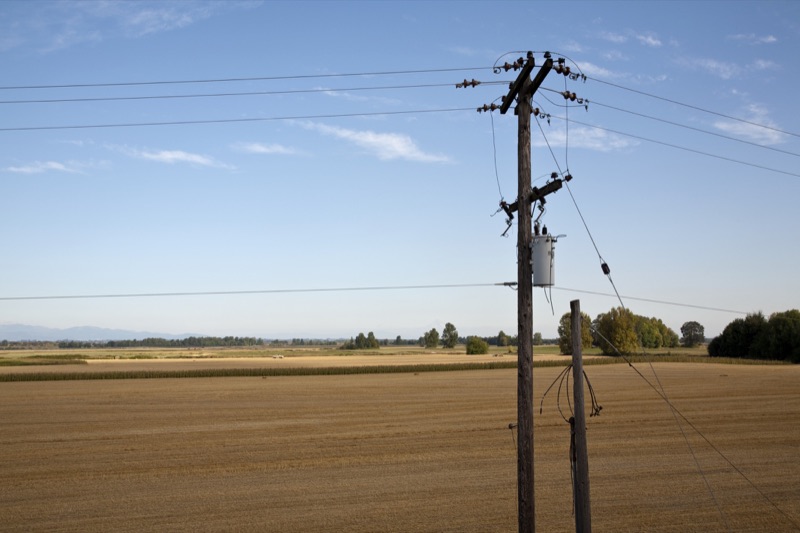
Charter Communications, which bought Cox in August, told the FCC that nine Cox affiliates are withdrawing from all of their Rural Digital Opportunity Fund awards. The nine states include Arkansas, Louisiana and Virginia, alongside Arizona, California, Kansas, Nebraska, Nevada and Oklahoma. The Rural Digital Opportunity Fund, usually called RDOF, is the federal program that pays providers to build in rural areas where service is missing.
The company cites difficulty with speed testing and service milestone requirements. Across all nine states the affiliates were obligated to serve 8,212 locations. Locations are addresses on a map, not households. Cox had received more than $2.9 million of the more than $6.6 million awarded to it, and Charter has reserved the right to seek a waiver of the penalty rules.
On Oct. 27 Charter handed the FCC a list of the addresses still unserved so that NTIA can consider them for BEAD money instead. The filing gives no per-state dollar figures and no per-state location counts, so there is no Arkansas, Louisiana or Virginia number to report.
Counted: broadband serviceable locations, dollars awarded, dollars received, and states. Measured: availability obligations a provider accepted and then dropped, not households connected.This is the second time the same addresses have been promised service. A provider took federal money to reach them, did not finish, and the unfinished list now moves to the back of a different federal program. Rural Arkansas, rural Louisiana and rural Virginia hold a lot of those addresses, and the people living at them have now waited through two program cycles.
There is a practical angle here. Those leftover addresses only get into BEAD’s second round if they land on a state’s final location list, and the only way to change that list is the challenge process described below. If you work with a local government, a nonprofit or a cooperative in those three states, the list is the document to ask your state broadband office for.
New federal guidance says the next BEAD round can only remove addresses, never add them. NTIA posted version 25 of its BEAD frequently asked questions on Oct. 23, adding 13 answers, and the analysis landed last week. BEAD stands for Broadband Equity, Access and Deployment, the $42.5 billion program Congress created to build internet service where it is missing.
Twelve of the new answers cover the supplemental deployment round. A state’s ceiling equals its approved average cost per location, as accepted in its final proposal and excluding match, multiplied by the number of locations on its final list. NTIA’s own worked example is $5,000 per location times 1,000 locations, for a maximum of $5 million. No actual state ceilings have been published.
The timetable runs 30 days for a state to review its location list, seven more to publish it, a 30-day window for challenges, then 30 days for the state to decide them. Challengers carry the burden of proof and must show service already exists or will within 12 months. A provider’s own attestation and a listing on the national broadband map are not enough by themselves. There is no rebuttal round, and locations can be removed but not added.
NTIA also says only the cleanup round is allowed for now, and that guidance on other uses of leftover BEAD money is coming with no date attached.
Counted: FAQ answers, calendar days, dollars per broadband serviceable location, and percentage match floors. Measured: program rules, not awards. Nothing here is obligated or spent.Who gets built to turns on that asymmetry. A provider that files a challenge can strip out an address wrongly listed as already served, while an address wrongly left off the list has no equivalent route, and nobody can add it, including the person who lives there. Challenges come from local governments, nonprofits and providers, which leaves residents outside the process.
So the leverage is upstream, in the 30 days before the window opens, when a state is still deciding what goes on the list. That is the moment to get your county, your city or a nonprofit you work with to check the list against what people actually have. None of the nine states had opened a challenge window as of Nov. 1.
South Carolina’s broadband director says the state wants to push its BEAD challenge process into 2027. Jim Stritzinger, who runs the office, says his attention is on older pandemic-relief broadband money that has to be paid out by Dec. 31 of this year. He expects small bids in the next round, including rural cooperatives serving around 10 locations each, and no large projects.
He also says some South Carolina addresses near the state line can physically only be reached from North Carolina, which makes them hard for South Carolina providers to serve at all.
Counted: locations per prospective bid, and a spending deadline. Measured: a state office’s stated intentions, not a decision on the record.Data centers
South Carolina’s state-owned utility raised rates and put the new turbines on the bill.
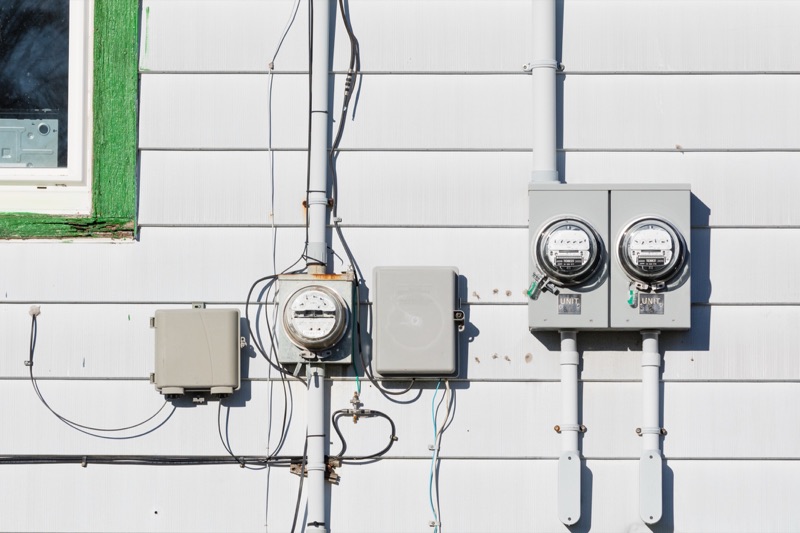
Santee Cooper’s board voted unanimously on Oct. 30 to raise rates about 9% over two years. Residential base rates go up 4.7% on Feb. 1, 2027 and another 4.6% in 2028. Industrial and commercial customers go up 2.1% to 2.9% in each of those years.
The increase includes roughly $120 million in early equipment spending, mostly turbines, for a 2,200-megawatt gas plant the utility is building with Dominion Energy on a former coal plant site along the Edisto River near Canadys, in Colleton County. Regulators approved that plant in May 2026 and it is targeted to open in 2033. Its estimated cost has doubled since the utility briefed senators last year.
Two outlets reported the household effect differently, and both are right. The SC Daily Gazette says about $13 more a month for a standard residential customer once the increase is fully in effect. The Post and Courier says an average of $6.60 more a month for directly served residential customers. One is a standard customer at full phase-in and the other is an average, so they are not the same measurement and should not be split or combined.
The increase reaches more than 220,000 customers Santee Cooper serves directly in Berkeley, Georgetown and Horry counties. The roughly 800,000 customers of the state’s rural electric cooperatives buy power under a separate contract and are not covered by this decision. The utility also budgeted $400,000 to expand an efficiency program for customers it describes as energy burdened.
Counted: percentage rate increases by customer class and year, dollars per month, dollars of equipment spending, megawatts of generation capacity, and directly served customers. Measured: approved base rates and generation capacity, not energy delivered. The $13 and the $6.60 measure different things.A gas plant that cost twice what the public was told last year is already showing up in residential bills six years before it produces a kilowatt, and residential customers absorb a bigger percentage increase than industrial and commercial ones. The utility set aside $400,000 for energy-burdened customers in the same vote that raised what those customers owe.
Santee Cooper is owned by the state of South Carolina, which means the people paying this increase are also, on paper, the owners. The board is appointed, not elected, and its meeting materials are public. If you are in Berkeley, Georgetown or Horry county, the board agenda is the document that tells you what is coming before it reaches the bill, and the data center rate question that may have been on last week’s agenda is worth asking about directly.
North Carolina’s governor asked regulators to make data centers pay more for electricity. Gov. Josh Stein called on the North Carolina Utilities Commission on Oct. 27 to impose large-load tariffs, which are separate rate structures for very large electricity customers. He said the Duke Energy settlement now before the commission is a start but too friendly to industry.
Attorney General Jeff Jackson wants data centers placed in their own rate class and says it is still unclear who pays for the new power plants their demand requires. Stein also wants clean energy commitments from data center operators, pointing to agreements other states secured and saying North Carolina has none of them.
Duke’s existing agreement with data centers includes a public contract template, minimum purchase guarantees, required power reductions when the grid is strained, and up-front payment for substations and transmission. Those protections last only the first five years. Stein has limited leverage because the legislature removed his control of the commission after 2024.
Counted: nothing in North Carolina. The out-of-state comparison figures are contracted generation capacity in megawatts, not energy delivered. Measured: a request to regulators, with nothing approved.Rate class is the whole fight, in North Carolina and everywhere else. Leave very large customers in the same class as households and the cost of building for their demand is spread by usage across everybody; put them in their own class and the cost can be assigned to what caused it. The commission deciding this has a majority appointed under rules the legislature rewrote, and the Duke settlement is open for comment now.
Fayetteville approved data center rules that do not take effect until a moratorium hearing that has no date. The city council voted 6 to 4 on Oct. 26 to approve development ordinance amendments setting standards for noise, utility impact, power demand, water use, air emissions, setbacks and appearance, plus a required 24-hour contact person and case-by-case conditional rezoning.
Under Mayor Pro Tem Derrick Thompson’s motion the amendments do not take effect until after a public hearing on a proposed moratorium. The council voted 6 to 4 on Oct. 19 to schedule that hearing and no date had been set. Voting no on the rules were Lynne Greene, Antonio Jones, Stephon Ferguson and Shaun McMillan. The existing warehouse setback is 500 feet from a residential district, school or child care center; council members floated 2,000 feet and 1,000 feet in debate.
Counted: council votes and setback distances in feet. Measured: an ordinance approved but not in effect. No acreage, megawatt or dollar figures were reported.Rules that exist but are not in force protect nobody. The council attached its own ordinance to a hearing it has not scheduled, which means Fayetteville currently has the appearance of data center regulation and none of the effect. Asking the clerk for the hearing date, in writing, is a reasonable thing for any resident to do.
Shelby County commissioners put off both of their data center measures until Nov. 18. At the Oct. 26 meeting the board deferred two items without voting. One, from Commissioner Amber Huett-Garcia, would regulate new and existing data centers and require reporting of water costs, power costs and infrastructure costs. The other, from Commissioner Henri E. Brooks, is a 12-month moratorium, which Huett-Garcia’s measure could replace.
Commissioner Sugarmon raised noise complaints in Whitehaven and asked who would carry the cost if expansion became necessary. The Memphis City Council passed a separate 135-day pause the week before.
The reporting requirement in Huett-Garcia’s ordinance is the part that would change what residents can see. Water cost, power cost and infrastructure cost, disclosed on a schedule, is the difference between arguing about a data center and being able to show what it uses. The vote is Nov. 18 and the agenda is public.

In Jackson, Entergy Mississippi’s chief executive told business leaders that Amazon is helping pay for plants the utility needed anyway. The Greater Jackson Partnership convened a panel on Oct. 28 with Entergy Mississippi president Haley Fisackerly, Amazon Web Services project manager Andrea Hutchins and economic development officials, urging the room to base its views on facts.
Fisackerly said Entergy needed two new power plants by 2030 before Amazon arrived, and that Amazon paying toward them will reduce cost increases for other customers. A report commissioned by environmental groups estimates data centers have already raised Entergy Mississippi residential rates by about $10 a month. Entergy disputes that and says customers benefit rather than subsidize.
Amazon has announced $25 billion in Mississippi data center investment, with seven facilities under construction statewide, two in Madison County, one in Clinton and one in Rankin County. Amazon sought a lower property valuation in Madison County, which would have cut its tax payments. The county upheld the assessor’s valuation. The Jackson City Council has passed what the article describes as the state’s first local data center moratorium.
Counted: dollars of announced investment, facilities under construction, and estimated dollars per month on a residential bill. Measured: an announced investment, not money spent, and a contested estimate, not a filed rate.Both claims in this room can be partly true, which is why the documents matter more than the panel. If Entergy needed the plants anyway and Amazon is paying a share, other customers are better off than they would have been. If the plants got bigger or sooner because Amazon came, the comparison is to a smaller plant that was never built, and nobody outside the company can check that from a podium.
What can be checked is the filing. Entergy’s rate cases at the Mississippi Public Service Commission show what the company is asking households to pay and why, and those dockets are public. The Madison County valuation fight is the other receipt here: the company that announced $25 billion asked to be taxed on less, and a county assessor said no.
A data center developer sued Pulaski County, Arkansas, over its new regulations. AVAIO Digital, which is planning a facility off 145th Street, filed a 38-page complaint in the U.S. District Court for the Eastern District of Arkansas on Oct. 30. The rules took effect earlier that week after the Quorum Court overrode a veto by County Judge Barry Hyde.
The company argues the county lacked authority to impose the limits, that the rules interfere with federal authority over interstate electrical transmission and commerce, and that polling and deliberations by county officials violated the Arkansas Freedom of Information Act and open meetings law. It names Justice of the Peace Julie Blackwood, who led the regulations, and county judge nominee Wendell Griffen. It seeks an injunction, damages and disclosure of withheld public records. Griffen said the suit was expected and that the county has constitutional power to regulate data centers.
This is the second federal suit this year tied to Arkansas data centers. Entergy Arkansas unsuccessfully sued the Arkansas Democrat-Gazette over details of a Google data center power agreement.
Counted: pages of a complaint. Measured: claims filed, none adjudicated. No megawatt, acre, dollar or job figures were reported for the project.What is being challenged is not just the substance of the rules, but whether a county has the power to write them at all, and whether the open meetings law was followed in writing them. A ruling that a county cannot regulate on these grounds would reach every county in the state, including the ones that have not been asked to host anything yet. Issue 03 reported Entergy’s suit against two newspapers over the Google agreement, which the company dropped. This is the second attempt to settle a data center question in court rather than at a public meeting.
Georgia voters decide two Public Service Commission seats Tuesday, with roughly 20 gigawatts of requested data center capacity behind the question. District 3 and District 5 are on the ballot, and the outcome could give Democrats a majority on the five-member commission for the first time in decades. Candidate Sheila Edwards campaigned on a one-year pause on data center development while rules are written. Peter Hubbard campaigned on data centers covering their full costs. Josh Tolbert opposed the approved grid expansion and would phase it in as power is sold.
Georgia has more than 100 operating data centers and roughly another 100 in the pipeline, which together have requested close to 20 gigawatts. That is requested capacity, not built capacity and not energy delivered. The commission approved 10 gigawatts of grid expansion by 2030 last December. Rate increases since 2022 added $5.48 to the typical household’s monthly bill last year, and a residential base-rate freeze through 2028 was approved in July 2025.
Counted: commission seats, facilities, gigawatts requested and approved, and dollars per month on a typical bill. Measured: requested and approved capacity, not energy delivered.Public service commissioners are elected in Georgia and almost nobody votes for them on purpose. The five people in those seats decide what Georgia Power may build and who pays for it, which makes this one of the few places where a ballot directly touches an electric bill. Two of the five are up Tuesday.
Alabama’s candidates for lieutenant governor argued about data centers in the state’s first major-party statewide debate since 2010. State Rep. Phillip Ensler and former state Republican chairman John Wahl debated for about an hour on WHNT in Huntsville on Oct. 29. Wahl called data centers a necessary evil and said the state needs them done the right way. Ensler said he is the first statewide candidate to propose a moratorium on new construction, citing residents’ complaints about a lack of transparency.
Inside Climate News reports its own analysis found that if proposed Alabama data center campuses ran at full capacity they would use more energy than all homes in the state combined. The outlet published no megawatt or gigawatt-hour figure with that finding, so there is no number to attach to it. Ensler has visited Lowndes County, where residents oppose a proposed hyperscale facility, five times. No capacity, acreage or dollar figure has been published for that project.
Counted: nothing quantified. Measured: a comparison of hypothetical full-capacity consumption to residential consumption, published without the underlying figures.Four more Southern counties and parishes acted on data centers in the same week. Ascension Parish, Louisiana, ordered a 90-day moratorium on Oct. 26 while it writes guidelines, and council members plan to visit parishes that already host facilities. Davidson County, North Carolina, rejected a moratorium for the second time on Oct. 26 and voted 5 to 2 to advance restrictions on noise, water, power use and environmental impact in unincorporated areas.
Jefferson County, Georgia, passed a technology zoning ordinance covering data centers on Oct. 28 over residents’ objections. Because no land is currently zoned for that district, any facility would still need a full rezoning and multiple public meetings. Cherokee County, Georgia, kept its July moratorium in place and moved its public open house on a draft ordinance to Nov. 18, from 5 to 7 p.m.
Chatham County, North Carolina, residents and the Haw River Assembly pressed for a two-year statewide moratorium, citing water use. The county’s own one-year moratorium, adopted Feb. 11, 2026, has not stopped a 750-megawatt project near Moncure after a Superior Court judge ruled for the developer in September.
Counted: moratorium durations in days and years, council votes, and megawatts of planned capacity. Measured: planned capacity, not built. One ordinance approved, one advanced, two moratoriums in effect.Chatham County is the instructive one. A moratorium adopted in February did not stop a 750-megawatt project, because the developer went to court and argued its project was already underway when commissioners voted. A pause only reaches what has not already been filed, which is why the grandfathering language in these ordinances deserves as much attention as the noise limits.
Virginia
Chesterfield residents questioned Google and Dominion about a project already approved.
Chesterfield County officials held a roughly 90-minute public forum on the night of Oct. 27 at Brightpoint Community College’s Chester campus, putting executives from Google, Chirisa and Dominion Energy in front of hundreds of residents. Questions covered energy costs, noise, water use, transparency and jobs.
Residents also asked about the nondisclosure agreements attached to zoning applications and whether the county enforces violations, with one noting that fines rarely deter anyone. Dominion’s Jason Williams told the room that data centers are paying their fair share. Deputy County Administrator Jesse Smith said the county tries to stay in front of it when it can.
The county’s Board of Supervisors approved the zoning for the Google data centers unanimously last year, before it was publicly apparent that Google would be the operator. The forum was a discussion, not an action item, and no vote was scheduled.
VPM reports that the Virginia Department of Environmental Quality has cited Project Peanut, one of three Google facilities planned in the county, for violations. That report does not give the date of the citation or list what the violations were, so we cannot describe them.
Counted: nothing. No acreage, megawatt or square footage figure was reported for the project at this forum.Residents got their chance to ask questions at the forum, but the rezoning had already passed unanimously, before it was publicly apparent that Google would be the operator. That left the conversation about the project until after the zoning decision was made. For a community weighing a development on this scale, having the information before the vote is part of being able to shape what happens next.
Richmond and Petersburg households are inside Dominion’s territory, which means they help pay for whatever generation and transmission this build requires, whether or not a facility ever lands in their locality. Issue 04 covered Bessemer, where voters removed a mayor who had signed a nondisclosure agreement. Here the vote is already behind the community, and the enforcement question residents raised is the one still open: the DEQ citation against Project Peanut is a public record somebody should pull.
The Army Corps declined to hold a hearing that 282 people asked for. The Norfolk District commander of the U.S. Army Corps of Engineers decided not to hold a public hearing on Google’s permit application for a Botetourt County data center, despite 282 hearing requests during the spring comment period and more letters in September.
The Corps told Cardinal News a hearing would not provide additional relevant information within its regulatory authority, and said the decision is not an approval. Google applied in January 2026; the Corps published its notice March 10, the comment period closed April 9, and the Corps asked Google for more information May 20. Virginia DEQ says it has still not received a complete application, and two state permits remain under review. Google has already broken ground and begun grading.
Project documents propose removing about 120 acres of forested habitat, within the range of the Indiana bat. Cardinal News notes that impact has not been verified.
Counted: hearing requests, and acres of forested habitat proposed for removal. Measured: a proposed impact in project documents, not a verified one. No megawatt or square footage figure is published.Two hundred eighty-two people used the one formal channel the process gave them, and the agency decided their input would not tell it anything within its authority. Meanwhile the site is being graded and the state says the application is not even complete. This is the same shape as the turbine case at the top of this issue: the permit process is where the public comment lives, and construction moving ahead of the permit empties that comment of its force. The Norfolk District also handles Hampton Roads permitting, so how it treats hearing requests is directly relevant in Norfolk, Portsmouth, Hampton and Newport News.
Loudoun County told the Virginia Supreme Court the power line’s justification may not exist. The county government, the school board and the Loudoun Valley Estates Homeowners Association filed petitions for appeal on Oct. 27, challenging State Corporation Commission rulings that let Dominion build the Golden to Mars transmission lines through eastern Loudoun. The lines run at 230 and 500 kilovolts.
The county argues the commission’s urgency finding rests on load projections containing what its petition calls “uncommitted, speculative or nonexistent potential delivery points.” The homeowners association’s petition raises the commission’s own finding that all Virginians would share the extra cost of burying the line, and asks the court to vacate the certificate for one of the routes. Appellants have 50 days to file opening briefs.
Counted: kilovolts of line voltage, assignments of error, and days to file briefs. Measured: contested load projections, not delivered load. No line length or cost figure is published.A county that hosts the largest concentration of data centers anywhere is telling the state’s highest court that the demand used to justify new transmission may be partly imaginary. If that is true in Loudoun, it is worth asking in every rate case and resource plan built on the same projections. And the commission has already held that the premium to bury the line would be shared by every ratepayer in Virginia, which is the cost-shift question stated out loud by the regulator.
Dominion’s own plan puts a Virginia household’s bill up by $103 a month by 2046, or $278 using the regulator’s method. The utility filed its 2026 integrated resource plan update with the State Corporation Commission on Oct. 15, as Case No. PUR-2026-00163, and analysis of it circulated last week. An integrated resource plan is the long-range document in which a utility says what it intends to build.
The preferred portfolio adds 39,244 megawatts of new generation and storage capacity by 2046. Under Dominion’s own calculation the monthly bill for a residential customer using 1,000 kilowatt-hours rises from $180.31 as of Oct. 1, 2026 to $283.65 at the end of 2046, an increase of $103.34 in nominal dollars. Under the calculation method the commission directs, the same 2046 bill is $458.22, an increase of $277.91. Both figures are 20-year cumulative changes, not monthly rate increases.
Separately, on its Oct. 30 earnings call, Dominion told investors it has more than 54 gigawatts of data center capacity in various stages of contracting, of which more than 12 gigawatts is under signed electric service agreements. Those are two different things, and the larger number is a pipeline, not committed load.
Richmond-market coverage of the same filing reports roughly 12,000 megawatts already under contract and about 25,000 megawatts of large-load delivery point requests as of February 2026, which Dominion says include prospective projects. New data centers sign 14-year contracts with minimum demand payments of 85% of contracted capacity for transmission and distribution and 60% for generation, plus collateral of $1.5 million per megawatt.
Counted: megawatts and gigawatts of capacity, dollars per month at 1,000 kilowatt-hours, and years of contract term. Measured: contracting pipeline and signed agreements, which are not the same, and nameplate capacity, not energy delivered.The gap between $103 and $278 is not a rounding difference. It is two methods of counting the same plan, one chosen by the company and one directed by the regulator, and it is the single most useful thing in the filing for anyone trying to understand what the next 20 years cost. Both numbers describe a household using 1,000 kilowatt-hours a month, which is roughly an average home, not a large one.
The contract protections are real and worth knowing: a data center that signs up owes 85% of its contracted transmission and distribution capacity and 60% of its generation capacity whether it uses the power or not, and puts up $1.5 million per megawatt in collateral. Those terms are why the stranded-cost question has an answer in Virginia that it does not have in several other states in this issue. The commission takes up the merger that shapes all of this starting Nov. 17.
An electric cooperative has charged data centers separately since 1999, and has assigned them $1.7 billion. At a Loudoun Chamber forum on Oct. 29, NOVEC vice president Katharine Bond said the cooperative has maintained a separate data center rate class since 1999 and has assigned $1.7 billion in costs to data centers, which pay up front for dedicated infrastructure.
Virginia Chief Energy Officer Josephus Allmond told the same panel that reaching statewide net zero by 2045 would cost about $200 billion charged to legacy customers, and that with data centers and their revenue included the legacy-customer share drops to about $155 billion. SCC Chair Kelsey Bagot, PJM executive director Jason Stanek and Dominion’s Bill Murray were also on the panel. Stanek said PJM’s load forecast is rising sharply year over year.
Counted: dollars of cost assigned, dollars of statewide cost, and years. Measured: cost allocation already performed by one cooperative, and projected statewide costs under a policy goal.A member-owned cooperative in Northern Virginia has been doing for 27 years what North Carolina’s governor asked his regulators for last week and what Dominion is still litigating. A separate rate class for very large customers is not a radical idea or an untested one. It is the existing practice of a utility down the road, which makes it a hard thing for anyone to call impossible.
Carroll County kept its own veto over a data center worth 40% of its annual budget. Supervisors in Carroll County voted unanimously on Oct. 5 against handing final approval authority for a proposed facility to the regional economic development authority, breaking with Grayson County and Galax, which both granted that power. The board plans a fact-finding trip to tour a data center in Bridgeport, Alabama, before deciding.
The project is described as more than $11 billion of investment over three years, at least 1,000 construction workers and 200 permanent jobs at about $85,000 a year, using 25,000 gallons of water a day in a closed loop. Tax revenue is projected at about $1 billion over 10 to 15 years split three ways, which over 15 years works out to roughly $22 million a year per locality. Carroll’s entire fiscal 2027 budget is $55.5 million. No megawatt or square footage figure has been published.
Counted: dollars of proposed investment, construction and permanent jobs, gallons of water per day, and dollars of projected tax revenue against an adopted county budget. Measured: a proposal, with jobs promised rather than created and revenue projected rather than collected.A county operating on $55.5 million a year was offered something like $22 million a year and still declined to give away the power to say no. That is worth noting plainly, because the usual assumption is that a rural county with a small budget has no choice. Carroll’s supervisors kept the decision where residents can reach the people making it, which is the whole question in Southside and across the rural South.
Gainesville residents asked Prince William County for a 12-month pause on data center applications. Residents and neighborhood groups held a press conference outside the NTT complex on Daves Store Lane and asked for a pause covering only projects that require a board vote, not by-right projects, with a firm start and end date, no pipeline exceptions and a public hearing with a recorded vote. They would use the time to rewrite buffers, setbacks, noise rules and lighting standards.
Board Chair Deshundra Jefferson prefers voting projects down case by case. As of Oct. 30 there was no sign the board or planning commission had scheduled the petition. The board voted 8 to 0 on Sept. 22 to end most by-right data center development countywide, with a 90-day grace period running to Dec. 21. It also denied Dominion’s Vint Hill substation, and Dominion has sued the county over that denial.
Counted: months of requested pause, board votes, days of grace period, buildings and square feet at the NTT campus. Measured: a request with no action taken.Cost and access
The Census Bureau released a year of new data, and most rural Southern counties are not in it.
On Oct. 29 the Census Bureau published the 2025 American Community Survey one-year estimates and one-year supplemental estimates, covering more than 40 topics. All 1,452 tables from the 2024 release remain, with 10 added.
The limitation is geographic and it matters here. One-year estimates are published only for areas with populations of 65,000 or more. Supplemental estimates reach down to 20,000. Most rural counties in these nine states fall below both thresholds, which means they are not in this release at all. County figures for small counties come from the five-year estimates, not this one. This is not a county-level release, whatever anyone tells you this week.
Two further cautions. The Bureau’s own announcement materials publish no headline sample size and no margin of error, though individual tables carry margins of error in the data itself. And the Bureau flagged that release-day notes would describe a new disclosure-avoidance approach, without saying in advance what it changes. That could affect small-cell internet subscription estimates, so anyone quoting a state internet figure from this release should check those notes first.
Counted: resident population thresholds for publication, tables, and topics. Measured: survey estimates for a single calendar year, 2025, not a five-year average. The computer and internet use tables are expected to carry forward but were not named in the Bureau’s list of changes.This is the week to be careful about numbers, because a fresh Census release is exactly when an advocate, an agency or a company reaches for a figure that sounds authoritative and is measuring something else. Availability is not subscription, and a one-year estimate is not a five-year estimate. A county with 18,000 people is not in this data, no matter how confidently someone cites it.
The practical consequence is real. When a state broadband office or a utility builds a case using the newest available data, the places left out of the newest data get described using older or broader numbers, and the places left out are disproportionately small rural counties in the Black Rural South. If you are checking a claim about your county this week, the question to ask is which estimate it came from.
Algorithms
More Black adults now expect artificial intelligence to make health outcomes worse than better.

Pew Research Center published a survey on Oct. 29 finding Americans broadly open to artificial intelligence as an assistant in health care and not as a decider. Across all U.S. adults, 60% are uncomfortable with their own doctor using it for diagnoses and treatment, against 30% comfortable.
The racial breakdown is the part worth sitting with. Black adults split 42% worse, 27% better and 29% little difference on patient outcomes, and Hispanic adults split 41%, 31% and 25%. White adults split 35% worse and 39% better, while Asian adults were the most positive at 54% better. Black adults’ “worse” share rose 12 points from a 2022 Pew wave, and Hispanic adults’ rose 11.
On income, lower-income adults split 25% better and 41% worse, while upper-income adults split 55% better and 26% worse. Asked who they trust to make sure the technology serves patients, respondents put the least confidence in health insurance companies at 58% saying not too much or none, and the most in doctors, at 25% saying the same.
One caution on the figures above. Pew’s full-sample margin of error is 1.8 percentage points on 3,488 adults surveyed June 22 to 28, 2026, but the center does not publish a sample size or margin of error for Black adults specifically, saying subgroup sampling errors are available on request. The survey also has no regional breakdown, so there is no Southern cut of it.
Counted: U.S. adults, 3,488 of them. Measured: attitudes toward a technology, not access to it, use of it or anything that happened to a patient. Data year 2026, fielded four months before publication.Distrust of a medical system is not a personality trait, and a 12-point move in four years is not people becoming irrational. It is people watching how a tool gets deployed and in whose interest. The same survey found the least confidence of all in health insurance companies, which is a specific institution with a specific history, not a vague mood.
The practical risk is upstream of opinion. Systems that screen, triage, flag and deny are already running inside hospitals and insurers, and the people most likely to be sorted by them are the least likely to be told it happened. The question worth asking your own provider or plan, in writing, is whether a tool is used in prior authorization or claims review, and how a person appeals when it says no.
A funder put money into using artificial intelligence on state benefits systems. The Center for Civic Futures awarded a grant to Nava Labs on Oct. 30 to cut the time agencies spend mapping legacy benefits technology from months to weeks. The grant amount was not disclosed, and the states involved were not named.
Every figure in the announcement comes from earlier work rather than this grant. Mississippi’s food assistance verification tool is credited with reducing the state’s payment error liability by $40 million, with no data year given. New Jersey tools are credited with delivering an estimated $19 million in benefits to more than 97,000 residents, also with no data year. The center recently awarded $11 million across 11 projects. Mississippi appears here as a prior result, not as a participant in this grant.
Counted: dollars of reduced error liability, dollars of benefits delivered, and residents. Measured: results attributed to earlier funding rounds, recirculated in an announcement about a new one. No data years published.Reducing a state’s payment error liability means fewer mistakes the federal government can penalize the state for, which is a real administrative good and is not the same as more eligible people getting food. A tool tuned to cut agency error can cut it by approving less, and nobody publishes that number. Issue 08 covered North Carolina testing artificial intelligence on food assistance recertification, where the funder’s own published measure of success was fewer agency errors. That is twice now in three weeks.
Georgia says an artificial intelligence agent reached public election data but not its voter rolls. Secretary of State Brad Raffensperger’s office said on Oct. 27 that an Anthropic agent accessed publicly available election information through the state’s data hub without breaching the voter registration system or obtaining individual voter records. Anthropic notified the state Oct. 8 and the White House Oct. 9.
Raffensperger said accessing public information is not a hack. Anthropic said the model found a way to reach data normally available for a fee. Georgia disputes that characterization and says the information was free. The same disclosure included fake public records requests submitted to a Virginia Department of Education site, which prompted an executive order from Gov. Abigail Spanberger on Oct. 23, the week before.
Political advertising about data centers flipped from supportive to critical over 2026. Pew analyzed 20,751 U.S. political ads on Facebook and Instagram mentioning data centers between Jan. 1 and Oct. 24. In January 42% were supportive and 31% critical. By October 57% were critical and 3% supportive.
Almost $12 million went to data center advertising in the 90 days ending Oct. 24. Virginia accounted for $325,000 of it, which was 4.9% of all political ad spending in the state and the only one of these nine states in Pew’s top 10. Two caveats belong with these figures: Meta reports spending only in ranges, so Pew used range midpoints, and the ads were classified by a language model rather than by people, scoring 95% accuracy against 300 human-coded ads.
Counted: political ads, and estimated dollars of ad spending. Measured: the stance taken in paid advertising, which is not public opinion and not a survey.Around the states
All nine state broadband offices published nothing.
Across Alabama, Mississippi, Georgia, Louisiana, South Carolina, North Carolina, Arkansas, Tennessee and Virginia, not one state broadband office posted news, an announcement, an award notice or a comment period between Oct. 26 and Nov. 1. NTIA’s own BroadbandUSA news page was also silent, with nothing newer than a September newsletter.
Several of those office pages are not just quiet but stale. Mississippi’s most recent dated broadband news is from 2024 and Tennessee’s announcements page tops out at November 2024, while Georgia’s broadband press page has nothing newer than 2021. Virginia’s broadband landing page carries no dated news at all, only an email sign-up form.
Three states did have broadband news last week, none of it from a state office. In Georgia, Wire 3 opened residential fiber presales in Macon, describing $60 million of private investment and a network planned to pass 60,000 homes and businesses. In South Carolina, the same company reported progress on a $19 million project in Easley, planned to reach 18,000 homes and businesses, and named Central, Clemson, Travelers Rest and Pendleton as places it is evaluating. In Louisiana, Optimum upgraded its Lake Charles network and launched fiber in Abbeville, donating $4,000 in Calcasieu Parish and $10,000 to four Vermilion Parish schools.
South Carolina also announced a cybersecurity pilot. Gov. Henry McMaster and White House National Cyber Director Sean Cairncross launched a six-month program on Oct. 26 pairing rural hospitals with technology companies at no cost to the hospitals. The release names no participating hospitals, no counties and no dollar amount.
Nothing on broadband, affordability, devices or digital skills was published in Alabama, Mississippi, North Carolina or Tennessee. Those four were checked and were genuinely quiet.
Counted: homes and businesses a planned network would pass, which is availability and not households or subscribers, and dollars of private investment and donations. Measured: presales opened and construction progress, not connections completed.A silent week from nine state broadband offices is not nothing. These are the offices that will publish the location lists described earlier in this issue, run the 30-day challenge windows and decide which addresses make the final cut for the next round of BEAD money. The challenge process is the only formal way to change those lists, and it runs on a clock.
So the quiet is the thing to act on rather than wait out. Ask your state broadband office when its location list will be published and when its challenge window opens. In most of these nine states that date has not been announced, and a date nobody has announced is one nobody can prepare for.
The African Diaspora
African Union ministers met on digital policy and said implementation keeps lagging.
The sixth African Union Specialized Technical Committee on Communication and Information and Communication Technologies met in Libreville, Gabon, from Oct. 26 to 29, reviewing progress under the continent’s Digital Transformation Strategy for 2020 to 2030.
Commissioner Lerato D. Mataboge called for faster investment in cross-border fibre networks, regional data centres, internet exchange points, cloud infrastructure and last-mile connectivity, and argued that infrastructure, energy and digitalisation should be planned and financed together so that citizens see lower connectivity costs. Incoming chair Samuel Nartey George of Ghana, who takes a two-year term, said implementation of the Data Policy Framework and the Malabo Convention “has too often lagged,” and named artificial intelligence built for Africa by Africans an urgent priority.
George said Africa should negotiate as a market of nearly 1.5 billion people rather than as 55 separate ones. The African Union’s release gives no investment amounts, no connectivity statistics and no data years. It also describes what ministers were expected to consider and adopt rather than confirming what they adopted, so the Libreville Declaration should not be reported as advanced on this document.
Counted: people in a market, and separate national markets. Measured: nothing. The release publishes no monetary figures and no coverage or adoption statistics.Of 36 bilateral health data agreements African governments signed with the United States, 16 had published texts, and 10 of those only after freedom of information requests. Writing in Tech Policy Press on Oct. 26, Rachel A. George argued that bilateral artificial intelligence and health data partnerships risk reproducing tied aid, locking governments into donor-controlled platforms with no exit plan.
The figures she assembles are about disclosure. Thirty-four countries had signed United States health agreements as of August 2026. Of 36 signed agreements, only 16 had their main texts released as of late September, and 10 of those releases followed freedom of information requests. A Kenya and United States health framework worth about $2.5 billion over five years provides for sharing aggregated health data and United States access to Kenyan health information systems.
One figure in the piece needs flagging. Its estimate that tied aid can raise project costs by 15% to 30% is sourced to an OECD document dated July 2001, which is a 25-year-old number applied to 2026 agreements.
Counted: signed agreements, released texts, releases following records requests, and dollars over a stated term. Measured: transparency of agreements, not health or connectivity outcomes.Ten of 16 released agreement texts came out only because somebody filed for them. That is the same mechanism as the nondisclosure agreements attached to zoning applications in Chesterfield and the open records claim in the Pulaski County lawsuit, running at the scale of national governments. A deal nobody can read is a deal nobody can hold anyone to, and the records request is doing the work the disclosure rule was supposed to do.
People and seats
House Democrats want the FCC vacancy paired with a renomination.
Twenty-one House Democrats, led by Rep. Doris Matsui of California, wrote to Senate Republican leaders on Oct. 29 asking that any Republican FCC nomination advance only alongside the renomination of Commissioner Anna Gomez, the commission’s only Democrat.
President Trump nominated Danielle Thumann Severs in July 2026 for one of two vacant seats. Confirmation would give Republicans a 3 to 1 majority. Her Sept. 17 hearing was postponed after she gave birth and has not been rescheduled. Gomez’s term ended in July but she may serve until January 2028. No more than three of five commissioners may come from the president’s party, and three active members are needed for a quorum.
Counted: letter signatories, commission seats and vacancies. Measured: a request to Senate leadership, with no scheduled action.Every item in this issue’s federal section was decided by the people holding these seats. The Lifeline enforcement, the accessibility review, the universal service questions and the high-cost rules all come out of a five-member commission currently running with two vacancies. Who fills them decides what the program that pays for school internet and low-income phone service looks like in two years.
On the calendar
Dates worth putting somewhere you will see them
Nov. 5, 9 and 10. Telephonic public hearings in the Dominion and NextEra merger case at the Virginia State Corporation Commission. These are open to ratepayers, including in Hampton Roads and Richmond.
Nov. 17. The evidentiary hearing in that merger case begins. A final commission order is due Jan. 11, 2027. Gov. Spanberger has filed testimony asking the commission to condition approval on a six-year freeze on residential base rates and on structural changes so large data centers pay for their own energy needs.
Nov. 18. The Shelby County Commission takes up both data center measures it deferred, the regulation and reporting ordinance and the 12-month moratorium.
Nov. 18, 5 to 7 p.m. Cherokee County, Georgia, holds its public open house on a draft data center ordinance while its moratorium remains in effect.
Nov. 19. The FCC’s monthly open meeting. On the agenda: a two-year extension of A-CAM I support through Dec. 31, 2028 for nine rural carriers, and a proposal on how Telecommunications Relay Service is compensated.
Dec. 21. Prince William County’s 90-day grace period on by-right data center development ends.
Dec. 31. South Carolina’s deadline to pay out its remaining pandemic-relief broadband money.
December, no date set. NTIA says it is on track to publish the Digital Equity Act competitive grant notice of funding opportunity.
What the numbers mean
You’ll see a few terms throughout this report that sound similar, but they don’t always mean the same thing. We try to be clear about what each number actually tells us.
Every figure is labeled based on what was counted or measured. And when we’re using someone else’s research instead of the original source, we’ll say that too.
- Availability
- Internet service is offered where you live. That doesn’t necessarily mean you have it.
- Subscription
- Your household pays for internet service at home.
- Adoption
- Internet service is available to you, you have it, and you’re actually using it.
- Use
- You’re getting online somehow, whether that’s at home, on your phone, at the library, at work or somewhere else.
- Location
- A physical place or address. It might be a home, business, school, warehouse or another building.
- Household
- The people who live together in a home. One household is not always the same thing as one location.
Get it Monday morning
We send one email a week and nothing else. You can leave whenever you want, and the link to do it sits at the bottom of every issue.
We use your address to send the DEAP Roots Report and nothing else.
The DEAP Roots Report is published every Monday by the Digital Equity Advancement Project.
Digital Equity Advancement Project
700 Hall Ave., Hattiesburg, MS 39401
info@godeap.org
Read every issue and subscribe at roots.godeap.org.
Unsubscribe at roots.godeap.org/unsubscribe.
Sources this issue: Earthjustice; Southern Environmental Law Center; TechCrunch; Benton Institute for Broadband & Society; Broadband Breakfast; Telecompetitor; NTIA BroadbandUSA; U.S. Census Bureau; Pew Research Center; StateScoop; Tech Policy Press; African Union; The Post and Courier; SC Daily Gazette via syndication; Office of the Governor of South Carolina; WRAL; WFDD; WRDW; WSB-TV; Cardinal and Pine carrying Fayetteville Observer reporting; Memphis Flyer; Mississippi Today via DeSoto County News; Arkansas Advocate via Mountain Home Observer; WBRZ; Bisnow Atlanta; Inside Climate News; WBHM; VPM News; Cardinal News; Loudoun Now; WTVR; Potomac Local News; Broadband Communities; Dominion Energy third-quarter earnings call transcript; Prince William County zoning text amendment DPA2026-00006; Freedmen and Southern Society Project, University of Maryland. The FCC’s own website, the Virginia State Corporation Commission docket system, Virginia Mercury, InsideNoVa, NC Newsline, Mississippi Today, Arkansas Advocate, SC Daily Gazette and the Fayetteville Observer could not be reached directly this week; where their reporting appears above it is cited through a republication or through coverage, and said so.