The
DEAP
Roots
Report.
A weekly newsletter on digital equity for Black people in the South.
A lot can happen in a week, especially when billions of dollars, new infrastructure and public policy are moving at the same time.
Each Monday, we break down the decisions that shaped the previous week across nine Southern states: Alabama, Mississippi, Georgia, Louisiana, South Carolina, North Carolina, Arkansas, Tennessee and Virginia. We follow the broadband money, the data center approvals, the policy changes and the numbers behind them, then ask the question that often gets skipped: What does this mean for Black communities?
We also track the national decisions influencing what happens across the South.
“I am held to answer for the crime of color, when I was not consulted in the matter.”
James T. Rapier, born in Florence, Lauderdale County, Alabama
Speech in the U.S. House of Representatives in the debate on the Civil Rights Bill, June 9, 1874, replying to Rep. L.Q.C. Lamar of Mississippi. Read in the facsimile of the Congressional Record page held in the Neglected Voices collection at New York University School of Law. The sentence follows the words “But it is” in the printed text, where the scan carries a doubled semicolon.
The week in one minute
- A Black Belt county commission voted in 10 minutes, off its own agenda and with no public comment, to abate 20 years of taxes for a data center whose customer it cannot name.
- A federal appeals court covering Louisiana and Mississippi held that the company administering school, library and low-income phone subsidies was created unlawfully.
- A total of 111 members of Congress asked the FCC to drop its plan to narrow or end school internet funding, and four of these nine states sent nobody.
- A Virginia county’s development authority denied a records request about a data center on public land, citing the nondisclosure agreement it would not show.
- Three Tennessee bodies moved on data center moratoriums in a single day, two of them in Shelby County.
- Arkansas released its first $2.6 million of federal broadband construction money, the first of these nine states to move any.
- The federal estimate of how many places still need broadband money doubled in a month, and nobody has a Southern breakdown of it.
- All nine states produced news this week, and almost none of it came from a broadband office or was about broadband.
Data centers
Lowndes County gave away 20 years of taxes in 10 minutes.
The Lowndes County Commission voted 3-2 on Oct. 13 to approve a project development agreement and a 20-year property tax abatement for Project Red Clay, a hyperscale data center campus on farmland near Burkville. The posted agenda listed only a resolution calling a later special meeting. Commissioner Robert Harris moved to vote on the abatement itself instead, and Chairman Charlie King Jr. and Commissioner Fletcher Hayes joined him. Commissioners Dickson Farrior and Joseph Barganier voted no. Yellowhammer News reported the meeting ran 10 minutes. There was no public comment.
The developer is Cloverleaf Infrastructure, a Houston company incorporated in 2024. Nvidia announced a minority investment in it in August, according to Yellowhammer. The customer who would occupy the campus has not been named, and Cloverleaf says it will be named before construction begins, which it expects in the first quarter of 2027. The site sits in unincorporated Lowndes County at U.S. Highway 80 and Alabama Highway 21, about six miles southwest of Montgomery, along the route of the Selma-to-Montgomery march. Because the land is unincorporated, the county has no planning or zoning authority over it.
The figures do not agree, and that is the clearest thing anyone outside the deal can say about this. The Alabama Reflector reported the abatement at $1.15 billion over 20 years, a 50% reduction in county non-educational taxes worth about $57.5 million a year. A coalition release from the Southern Environmental Law Center, the NAACP, the Natural Resources Defense Council and the Alabama Rivers Alliance put it at nearly $2.8 billion, combining state and county breaks and citing the developer’s own abatement agreement. Those two numbers differ in scope, county-only against state and county, and no source reconciles them. Alabama law bars abating education taxes.
Water, land and power are no better settled. The coalition release says the campus would draw up to 100,000 gallons per day from the Pintlala Water System. The Alabama Political Reporter put it at up to 10,000 gallons per day from the same system. That is a tenfold gap on one number. The coalition and the Reporter describe an 800-acre site; Yellowhammer describes more than 1,000 acres. Cloverleaf has asked Alabama Power for 1,500 megawatts, which is requested capacity and not energy delivered. One account translated that to roughly 1 million homes and another to roughly 900,000 Alabama homes.
The developer’s own projections are the only numbers that come in a single version. Cloverleaf puts the campus at 225 permanent jobs and at least 1,000 construction jobs over about three years, with $124 million a year in local tax revenue and $25 million a year to the state. It has offered a $10 million community investment and agreed to a 55-decibel cap. WSFA reported that the county’s economic development commission recommended approval on Oct. 9, that residents did not receive documents until a special call meeting the Friday before the vote, and that commissioners received them a day or two before that. Nobody independent assessed the developer’s economic figures.
Abre’ Conner, the NAACP’s director of environmental and climate justice, said in the coalition release that the vote “represents a larger trend in the state and in the County to leave the people most impacted out of the decisions and force data centers into places that are already bearing the brunt of environmental and climate harms.” She asked whether the county believes its situation “justifies rewriting clear open meeting act rules?” Ryan Anderson, a staff attorney at the Southern Environmental Law Center, called the events “disgraceful.” Adrian Johnson, a resident, said of the agreements that “none of those agreements were provided to the public.”
Lowndes County is 67.7% Black and has about 9,400 people in it. Three commissioners decided, in the time it takes to drive across the county, to forgo half the county’s non-educational taxes on a project through 2046. Nobody in the room was asked, because the item was not on the agenda anyone could have read beforehand.
The disagreement among the numbers is not a reporting problem. It is the consequence of a vote taken before the documents were public. One source says the county gave up $1.15 billion and another says the state and county together gave up $2.8 billion. One says 10,000 gallons of water a day and another says 100,000. Those gaps exist because the agreements that would settle them were never released, and they will keep existing until somebody gets them.
Alabama’s Open Meetings Act is enforceable by a resident, not only by a prosecutor. Any citizen of the county can bring an action, and the remedy can include invalidating the action taken. The coalition has already alleged the meeting did not comply. The documents themselves are the other half: the project development agreement and the abatement agreement are county records, and a written request for them starts a clock. Ask for both, and ask for the agenda as posted and the minutes as recorded, because the gap between those two is the case.
Three Tennessee bodies moved on data center pauses on the same Monday. Millington’s board of mayor and aldermen approved a six-month moratorium on development applications for non-grid power generation, accessory computing and industrial-scale computing facilities on Oct. 12, effective immediately and expiring April 12 unless extended. The city’s stated reason is a zoning gap: these uses are not addressed as a distinct use in its zoning ordinance. Chris Thomas of the Millington Chamber of Commerce said the city has not received a data center proposal. The same day, the Shelby County Commission passed on first reading an ordinance sponsored by Commissioner Henri Brooks that mirrors most of the text of the Memphis city ordinance but covers unincorporated Shelby County, by a vote of 5-4. And the Rutherford County Regional Planning Commission unanimously recommended a 12-month county moratorium, with no numeric vote count reported.
Commissioner Mark Billingsley opposed the Shelby County ordinance, saying that “putting a prohibition and a moratorium on this before we have all the facts, I think, is incredibly premature.” Commissioner Derek Mills noted that “there are no data centers in unincorporated Shelby County.” The county health department told commissioners last month that data centers are not among the top 25 polluters in the county, without giving numbers. Memphis City Council’s own vote on its 12-month moratorium, pushed back twice and covered in issue 06, is set for Oct. 20.
Shelby County is 51.7% Black and Memphis is 62.9%. Three of these four actions are pre-emptive, in places with no data center proposal in hand, and that is the point of them. A zoning code that does not name a use cannot refuse it, and the cheapest moment to write the rule is before an application is filed. Millington said so in its own ordinance.
Henri Brooks’ ordinance is the one to watch, because unincorporated Shelby County is where a developer turned away by Memphis would go next. It has two more readings, commissioners said they may amend it, and no date has been set, which means the text can still change without anyone noticing unless somebody is reading the agenda each week.
Charlotte residents and building trades argued against each other over extending the city’s pause. Charlotte City Council heard public comment on Oct. 12 on extending its data center moratorium by up to 11 months. The current moratorium expires Nov. 5. Most residents who spoke supported extending it while the city writes policy for new hyperscale facilities. Many union members opposed it, arguing that new construction creates jobs. Akayla Galloway, executive director of The Social Justice Center, said data centers and their fossil fuel infrastructure are “disproportionately burdening Black and frontline communities.” Melissa Reyes, an electrician and organizer, said her union represents 1,000 people who work on data centers in the area, and described seeing 100 construction workers at a Forest City data center after it went into operation.
The project the moratorium actually halted is an American Towers expansion in east Charlotte, much smaller than hyperscale and sited near homes and the Reedy Creek Nature Preserve. Two larger projects, the Digital Realty facility on Moores Chapel Road and PowerHouse University City, are not affected by it. Residents held signs reading “Charlotte Says: No data centers in our city!”
This is the only item we confirmed this week in which a reporter’s copy carries the racial-burden argument directly, in a named person’s words. Everywhere else in this issue the racial dimension sits in the geography and has to be supplied from census data.
The carve-out is where this ordinance decides who it protects. A moratorium that stops a small expansion near homes while two hyperscale projects proceed is doing the opposite of what the people in the room asked for, and the reason is timing rather than intent: the two big ones were already permitted. Anyone arguing for the extension on Nov. 5 should be ready for the answer that the pause does not reach the projects they are most worried about.
The union position deserves a straight reading rather than a dismissal. A thousand members working on these sites is a real constituency with a real paycheck, and the two figures in play, 1,000 regional members and 100 workers at one operating site, measure different things. Construction employment during a build and permanent employment after it are not the same number, and no Charlotte project figure was offered for either.
Guilford County put off its moratorium decision, and residents said six months is not enough. After a public hearing on Oct. 15, Guilford County commissioners delayed a decision on a proposed six-month data center moratorium and are expected to return to it Nov. 5. No vote count was reported. Most speakers said six months was too short. Bree Guerra and other residents argued for 32 months, and Guerra said a six-month pause is “guaranteed to get challenged in court and challenged in many other ways,” adding that “we’re asking for 32 months in part to see what legal language by other communities will turn out to be the most effective.” Commissioner Skip Alston said he was willing to postpone and noted that nobody has submitted a formal proposal for a new data center in the county.
The statewide picture explains where 32 months came from. Northampton County adopted a 32-month moratorium in May, the first in North Carolina. More than 50 jurisdictions have shorter pauses. Forsyth County commissioners rejected a moratorium of any length earlier in October, citing concern about developer lawsuits.
Guilford County contains Greensboro and is majority-minority, and Skip Alston is its best-known Black commissioner, though the reporting does not make that connection. What the residents are arguing is a practical point rather than a maximalist one: a six-month pause expires before the ordinance that would replace it can survive a legal challenge, so the pause has to outlast the lawsuit.
Northampton County is the template now, and it is in this coverage area. A county board anywhere in these nine states that is being told 32 months is unreasonable can point at a North Carolina county that adopted it in May and has not been enjoined.
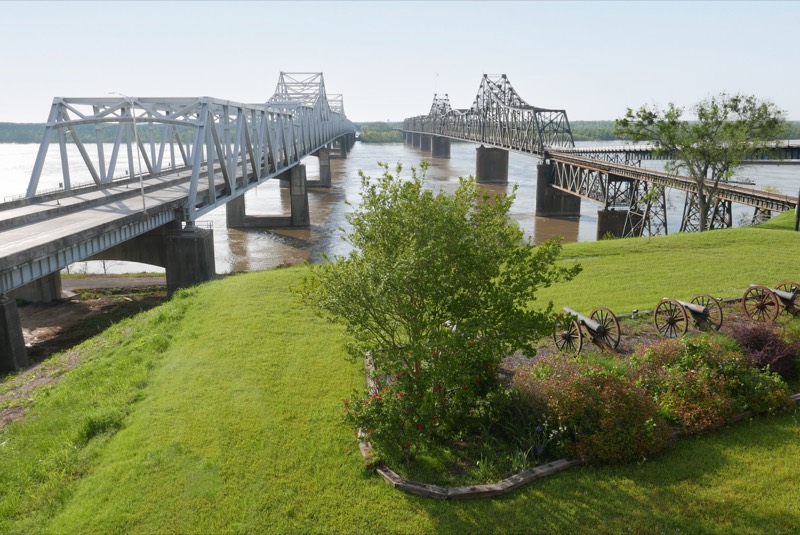
Mississippi law calls data center power deals trade secrets and takes them out of regulatory review. A guest essay in Mississippi Today on Oct. 13 laid out the statute. Senate Bill 2001, passed in 2024 and codified at Mississippi Code Annotated section 77-3-271, exempts these projects from Public Service Commission review and designates the deals trade secrets, which shields them from the Public Records Act. Under the used-and-useful standard, Entergy can pass infrastructure costs to customers and exceed the state’s 4% annual rate-increase cap. All but one senator and all but two House members voted for it. The no votes were Reps. Dan Eubanks and Solomon Osborne and Sen. Kathy Chism.
The authors are Brooke Floyd, director of programs and community-led governance at the People’s Advocacy Institute, and Korbin Felder, a Jackson civil rights attorney. Citing a report by Earthjustice and Environmental Advocates Mississippi, they write that Entergy residential ratepayers have paid approximately $38 million as of March 2026 for data center-related investments and will contribute $74 million by the end of 2026, and that the average residential bill is about $10.60 a month higher. They report that Entergy is adding 3,500 megawatts of gas-fired generation capacity to serve Amazon’s central Mississippi data centers, that Amazon claims 2,000 jobs statewide, and that a newly announced Jefferson County data center is expected to create 200 permanent jobs. Jackson’s City Council passed what they describe as the state’s first data center moratorium.
Three states in this issue reached the same opacity by three different legal routes, and the vocabulary matters because the remedy differs. In Lowndes County, Alabama the agreements were simply never handed over, which is an open records and open meetings question. In Russell County, Virginia an authority denied a request citing a nondisclosure agreement, which is a contract the authority chose to sign. In Mississippi the legislature wrote the exemption into the statute, which means no records request will work and no commission proceeding exists to intervene in.
That makes Mississippi the one place in these nine states where the fight is in the legislature rather than at an agency. Section 77-3-271 is a statute, and statutes get amended. The three legislators who voted no are a starting list of who to ask about a repeal bill in the session that opens in January.
Opponents called Entergy’s power plan for Meta’s Louisiana data center absurd, and protested in New Orleans. Members of the Take the Power Back campaign protested at New Orleans City Hall on Oct. 13 against a proposed zoning change that would allow smaller data centers in the city, and against the Richland Parish project. Entergy has asked the Louisiana Public Service Commission to fast-track 10 new gas-fired power plants for Meta’s north Louisiana data center. In a filing last month with the regional grid operator, Entergy said a proposed substation near the data center will generate 4,500 megawatts for the facility.
Entergy says Meta’s 20-year deal requires the company to pay for the electrical infrastructure so other customers do not subsidize it, cites more than 1,500 jobs tied to the buildout, and calls suggestions of higher costs for other customers false. Volunteer organizers Kendall Berry and Devorah Lea of Take the Power Back say bills will rise. Neither side gave figures. Lea said the data centers strain “our water supply” without a water-use figure.
Richland Parish is 36.1% Black, and issue 06 carried the moment this 4,500-megawatt figure first came out in a hearing rather than an application. What is new is the New Orleans end of it. A zoning change in the city would let smaller facilities in, which is how a fight that looks like a rural north Louisiana story becomes a New Orleans one.
Louisiana elects its public service commissioners, which is unusual in this coverage area and is the reason to pay attention here rather than only in Richland Parish: the people deciding whether Meta or every other ratepayer carries the cost of 10 gas plants answer to voters.

A Georgia school board started working out how to hand data center money back to homeowners. The Columbia County school board began discussing using revenue from the Google data center under construction there to lower the school portion of property taxes, which makes up more than half of each property tax bill. The board voted 4-0 with one abstention to move the process forward. It approved no legislation. District 4 member Katie Allen abstained, saying the board is rushing and that “we need to be making sure that we’re following processes and giving this the time and diligence that it deserves.” Superintendent Steven Flynt said the board wants the additional revenue to “go back to the taxpayers and again, specifically homeowners.” A separate county property tax relief measure tied to the data center is on the ballot in Columbia County in November.
Next to Lowndes County the contrast is plain. Both counties have a data center, and one is deciding how to route the revenue to homeowners while the other voted away half its non-educational taxes for 20 years before anyone saw the agreement. The difference is not the technology.
The caution is that no dollar figure exists here either. The board has no abatement total, no revenue total and no estimate of what the tax reduction would be per household. A homeowner in Columbia County cannot yet tell whether this is meaningful or symbolic, and the question to ask the board is the amount.
Data center construction is now the largest financial bet in American history, and the South holds much of it. Stateline sized the buildout against every previous American construction boom on Oct. 16, putting projected total investment at about $10.3 trillion and data centers at nearly 4% of gross domestic product in annual economic impact. Projected three-year construction cost by state puts Texas at $638 billion, Virginia at $249 billion, Ohio at $169 billion and Georgia at $160 billion. Census figures through August show about $85 billion a year in new data center construction value put in place, roughly double two years ago, while the value of all other construction fell 8%. Since 2024, data center construction value is up about $48 billion and house and apartment construction value is down about $29 billion. A Carnegie Mellon and North Carolina State analysis from July projects retail electricity bill increases of 8% nationally and up to 25% in parts of Virginia.
A companion Stateline piece on Oct. 12 counted the political reaction. At least 36 cities, counties and townships vote in November on measures that could ban data centers, and Ballotpedia counts 39 data center ballot measures across eight states. A University of Massachusetts Amherst poll found 11% of Americans would support a local artificial intelligence data center against 65% opposed. Current American data center electricity demand is about 49 gigawatts, with nearly 350 gigawatts planned or under construction, which is about a quarter of current American generation capacity.
Virginia at $249 billion and Georgia at $160 billion over three years are the two figures to carry out of this. They are projected capital spending, which means they are what companies say they intend to spend, and they are large enough that every rate case, siting decision and abatement vote in this issue sits inside them.
The ballot-measure count is the part with a date on it. At least 36 local governments are voting in two weeks on whether to ban these facilities, and none of the eight states named in the reporting is one of these nine. That absence is worth knowing if you are organizing here: the places putting this to a direct vote are mostly in Ohio, Kansas, Pennsylvania, Texas and Utah, and the mechanism they are using is a municipal ballot measure.
Federal
A court found the company that runs school and library internet money was created unlawfully.

The Universal Service Fund is the federal pot that pays for discounted internet at schools and libraries through E-Rate, for the $9.25 a month Lifeline subsidy for low-income households, for rural high-cost support and for rural health care connections. It spends roughly $8.5 billion a year. It is collected as a percentage surcharge on interstate and international telecommunications revenue, and it is administered by a Delaware nonprofit called the Universal Service Administrative Company, which the Federal Communications Commission arranged to have created in 1997.
On Oct. 15 a Fifth Circuit panel held that the commission never had authority to create it. Writing for Chief Judge Jennifer Walker Elrod and Judge Andrew Oldham, Judge Edith Brown Clement found that the commission established the company within the meaning of the Government Corporation Control Act of 1945, which at 31 U.S.C. section 9102 bars an agency from establishing a corporation to act as an agency without specific authorization from Congress. The court rejected all three authorities the commission offered: its general necessary-and-proper provision, an implied authorization read into the statute covering Lifeline administration, and ratification through the Affordable Connectivity Program and Emergency Connectivity Fund statutes, which were not part of the fund. Because the commission relied on the company’s projections to set the rate, the court vacated the fourth quarter 2025 contribution factor of 38.1% and remanded.
What the court did not do matters as much. It did not strike down the Universal Service Fund. It did not eliminate the obligation to contribute. It did not order refunds. It declined to reach the petitioners’ nondelegation argument and their Appointments Clause challenge to the company’s directors, saying the 1945 statute decided the case. A commission spokesperson told Broadband Breakfast the order takes effect two months from now at the earliest. A law firm analysis published the next day advised providers not to suspend contributions, stop collecting surcharges or change their reporting on the strength of the ruling.
The current rate is higher than the one the court threw out. The fourth quarter 2026 contribution factor is 42%, which has been described as a record, and the Benton Institute’s analysis attributes that mainly to a shrinking base of assessed phone revenue rather than to rising program spending. That rate was not before the court.
The Fifth Circuit covers Louisiana, Mississippi and Texas, so this is now binding law in two of these nine states. Louisiana and Mississippi are also among the heaviest users of what this fund pays for, which is rural telephone and broadband support and school and library discounts. We looked for an in-window figure quantifying that dependency and did not find one, so we are not printing a number for it.
Read this as a question about who administers the money rather than whether it exists. The fund is statutory and the court left it standing. What is now unsettled is the entity that calculates the quarterly rate and writes the checks, and the commission has at least two months to answer for that on remand. A school district or library that depends on E-Rate should expect the program to keep paying in the near term and should not expect clarity about 2027.
The thing worth watching is whether the commission uses the remand narrowly, to fix how the rate gets set, or broadly, as an occasion to restructure a program it has separately proposed narrowing or ending. The same agency is doing both things at once, which is the item below.
A total of 111 members of Congress asked the FCC to drop its plan to narrow or end E-Rate, and four of these nine states sent nobody. Sen. Ed Markey, Senate Democratic Leader Chuck Schumer and Reps. Doris Matsui, Rob Menendez and Grace Meng led 46 senators and 65 representatives in a letter to Chairman Brendan Carr on Oct. 15 urging him to withdraw the proposal. The letter rejects child safety as a justification, on the ground that E-Rate funds broadband service rather than devices or content and that recipients must already comply with the Children’s Internet Protection Act. The release says E-Rate supported more than 158,000 schools and libraries in 2025 and has invested more than $69 billion in connecting them since it began nearly 30 years ago.
Here is who signed from these nine states, read off the release itself. Virginia: Sens. Tim Kaine and Mark Warner, and Reps. Jennifer McClellan of the 4th District and Suhas Subramanyam of the 10th. North Carolina: Reps. Don Davis of the 1st and Deborah Ross of the 2nd. Georgia: Sen. Raphael Warnock. Louisiana: Rep. Troy Carter of the 2nd. Mississippi: Rep. Bennie Thompson of the 2nd. No signers from Alabama, South Carolina, Arkansas or Tennessee appear on the release. The letter was organized among Democrats, which accounts for part of that, and these four states do have Democrats in their delegations.
The absence is what a constituent can act on. Four of these nine states have no name on a letter about a program that pays for internet at their own schools and libraries, and three of the four, Alabama, South Carolina and Tennessee, have Democratic House members who could have signed. A school board or library board in those states has a specific, answerable question for its own representative, and the answer is a matter of public record either way.
Reply comments in the proceeding close Nov. 12, in docket WC 26-133, and anyone can file. A school board, a library board or a county commission can send a plain letter with no lawyer and no fee. What carries weight in a record like this is a named building: what the discount actually buys in one district, and what stops without it.
A Senate committee report says consultants are attached to 82% of E-Rate money, and uses a Virginia district as its example. Senate Commerce Committee majority staff released an 11-page report on Oct. 13 titled “The Cost of Connection: E-Rate’s Hidden Consultant Ecosystem,” timed to the close of initial comments in the commission’s E-Rate review. The committee’s own release says paid intermediaries are associated with applications for roughly 82% of E-Rate funding commitments by dollar value, and estimates consultants collect $200 million to $400 million a year from schools and libraries for application, bidding and reimbursement help. It recommends simplifying the rules, requiring public disclosure of consultant compensation, considering annual appropriations for the program and focusing support on high-cost and high-need schools.
Benton’s analysis adds the detail from the report: more than $1.9 billion of roughly $2.4 billion in 2025 commitments associated with consultants, more than 500 consulting firms, nearly $900 million and more than 38% of 2025 dollars going to 10 firms, 143 publicly available consulting agreements reviewed, and eight of 18 board members at the administering company tied to beneficiaries, consultants, providers or advocacy groups. Its pricing example is a comparison: Fairfax County Public Schools in Virginia, with 177,000 students, paid $33,125 to $45,750 a year to the same firm that charged District of Columbia Public Schools, with 52,000 students, $129,500 to $135,500 a year.
The complexity complaint is real and small districts feel it worst. A county system with one technology director and no grant writer either hires a consultant or leaves money on the table, and that is why the consultant ecosystem exists. A report that documents it and then recommends appropriating the program annually is making two different arguments, and only one of them is about complexity.
The Fairfax comparison cuts the other way from how it reads at first. The large, well-resourced district got the cheap rate and the smaller one paid roughly three times as much for the same firm. If that pattern holds, the districts paying the most per student for help getting the discount are the ones least able to afford it, and no Southern district appears in the report at all. A superintendent in these nine states could usefully ask what their own system pays and compare it to those two numbers.
Someone counted the comment record, and 98.6% of filings that took a position said keep the program. Funds For Learning analyzed the docket on Oct. 15 and found that of 2,514 filings taking a position, 2,479 urged the commission to preserve E-Rate, 21 asked to limit or narrow it and two asked to end it. Those are counts of filings rather than of organizations or people. The disagreements among supporters are about federal screen-time rules, consultant rules and the composition of the administering company’s board. Route Fifty’s own review of the record found hundreds of school systems and libraries among the commenters, and quoted Superintendent Daniel Hornick of Orange County Public Schools in Virginia, who filed. The Ohio School Boards Association put its state’s fiscal 2025 E-Rate support at about $82 million. A coalition of state attorneys general also filed in support, and the roundup naming it does not list which states joined, so we cannot say whether any of these nine did.
A lopsided comment record is not a vote and the commission is not bound by it. What it does is build the administrative record a court would later review, which is why the ratio is worth knowing and why the reply-comment deadline on Nov. 12 is worth using.
The attorney general letter is the piece nobody has followed up. A state attorney general signing a multistate filing to protect school internet funding is a meaningful political fact in a Southern state, and nobody has published the list. Asking your own attorney general’s press office whether the state signed is a short email with a yes or no answer.
The commission circulated $162 million more for Alaska mobile service in the same week its funding vehicle was held unlawful. Chairman Carr’s office circulated a draft order on Oct. 14 adding $162 million for rural mobile service in Alaska, to be voted at the Oct. 29 meeting or on circulation. The Alaska Connect Fund already pays $203.8 million a year from 2027 through 2034, about $1.6 billion in total, succeeding a 2016 plan worth $1.5 billion. GCI chief executive Ron Duncan has said federal support accounts for 60% of total telecommunications revenue in Alaska.
There is no Southern angle here and we are running it anyway, because of the timing. In the same week a court held the administering company was created unlawfully and a Senate committee argued the fund should be appropriated annually, the commission moved to spend $162 million more out of it on one state. The fund is simultaneously being defended, attacked, restructured and expanded, which tells you the outcome is not settled in any direction.
The 60% figure is the one to hold for argument. In a state where federal support is most of the industry’s revenue, nobody treats the high-cost fund as optional. The same logic applies in rural counties across these nine states, and it is the argument against winding the fund down.
BEAD watch

Arkansas put the first federal broadband construction dollars out the door in these nine states. The Arkansas State Broadband Office released $2.6 million to Brightspeed on Oct. 13 after the provider completed Milestone 1, which covers project plans, budgets, environmental review milestone schedules and network designs. It is the state’s first disbursement under the Broadband Equity, Access and Deployment program, the $42.45 billion federal construction program better known as BEAD. Brightspeed has 13 BEAD projects across 25 counties, which the office says will reach more than 13,700 homes and businesses with fiber, at a total investment of nearly $66 million including more than $39 million in private capital from the company. Arkansas’s federal allocation is $1.024 billion and the state has committed to serve more than 77,000 homes and businesses. The office uses fixed-amount subawards, which release money on verified milestones rather than reimbursing expenses.
Glen Howie, who directs the office, is also the only state broadband official in these nine states who said anything on the record about the coming supplemental round. He told Broadband Breakfast the week before that the federal eligible-location lists may not arrive until November, and that Arkansas has signed contracts with all its BEAD winners with construction expected around December 2026 or January 2027.
This is a real milestone and it is worth saying plainly: money that was appropriated in 2021 reached a provider in these nine states for the first time this week. It also went to planning and design rather than to buried fiber, which is what Milestone 1 is.
The unit here decides what the number means. “More than 13,700 homes and businesses” is a count of premises that will be passed, which is availability. It is not 13,700 households connected, not 13,700 subscriptions and not 13,700 people online. The number nobody publishes is the price at those addresses once the line is lit, and whether Brightspeed is required to offer a low-income plan there. The office that holds the subaward agreement is the office that can answer that, and 25 counties is a short enough list to ask about.
The federal estimate of how many places still need money doubled in a month, and nobody has a Southern breakdown. Brooke Donilon, chief of staff at the National Telecommunications and Information Administration, told a Wireless Infrastructure Association panel on Oct. 14 that the coming supplemental BEAD round may cover 600,000 to 1 million locations. The agency’s estimate the prior month was about 477,000 locations. An independent count from the Advanced Connectivity Law and Policy Institute puts it near 1 million, counting every location eligible in BEAD’s main bidding round, which is not the same universe. Of the $42 billion program, the agency reports about $18 billion spent and slightly more than $21 billion in stated savings. Donilon raised $3 billion and $6 billion as scenarios while saying the cost is unclear, and an earlier $2 billion figure was a cap on potential state funding rather than a cost estimate.
Administrator Arielle Roth said the same day that this may be the program’s only chance to run a cleanup round and that the agency is waiting on updated Federal Communications Commission coverage data before sending states their lists. The latest available coverage data is from Dec. 30, 2025, and the agency is waiting on the June 30, 2026 data. Separately, the Vernonburg Group published its own estimate on Oct. 15: about 900,000 remaining unserved and underserved locations needing about $5.3 billion, down from about 1.1 million locations and $7.6 billion in February. It applies the agency’s own method, multiplying each state’s approved average cost per location by the locations on its supplemental list, assuming a technology mix like the approved final proposals.
Four numbers are in circulation for the same thing: 477,000, 600,000, 900,000 and 1 million locations. They differ because they count different universes, and the agency’s own figure moved the most. None of them is broken out by state, which means no county manager, cooperative or organizer in these nine states can find out this week how many addresses in their own place are on the list.
The practical consequence is a calendar problem. The supplemental challenge window runs 30 days and it starts when a state publishes its list, whether or not anybody is told. Arkansas has said publicly that the lists may not come until November. Watch each state’s BEAD document pages rather than its news page, because that is where a list appears first, and a weekly reminder to check is the only protection against missing the window.
The $21 billion in savings is the other half of this and it has no guidance attached. That is money appropriated to connect people in these nine states that is sitting unspent while the agency sequences the location list first.
Louisiana says Coushatta is the first community in the country to get fiber service through BEAD. The state’s broadband office announced two claims of national firsts: Pelican Broadband connected its first BEAD fiber customers in Coushatta, in Red River Parish, and SkyRider Communications became the first provider in the country to begin BEAD fiber construction, building across northern Louisiana with the contractor Etheridge Pipeline & Conduit. The release carries no count of locations, households or customers and no dollar figure. Separately, Gov. Jeff Landry announced in Ruston on Oct. 12 more than $3.5 billion in rural investment across broadband, health and infrastructure, with the broadband share reported at more than $1.53 billion in federal funding. ConnectLA executive director Veneeth Iyengar said 95% of Louisiana is expected to have access to reliable internet by the end of 2026. Landry said more than 140,000 residents have been connected over the prior 18 months across 26 mostly north Louisiana parishes. The state projects $400 million in consumer savings over four years, which KNOE flagged as a state projection rather than realized savings.
Louisiana is the only one of these nine states that put out broadband news through its own office this week, and it did so three times. That is worth crediting, and it is also worth reading carefully, because a national-first announcement with no number in it invites a number the state did not give.
Three different units are doing work in these claims. The 95% is availability, which means service is offered. The 140,000 residents is a connection claim, which is closer to subscription, and the unit is residents rather than households or locations. The $400 million is a projection of savings that have not happened. Each is a defensible thing to say and they are not interchangeable, and a parish official quoting the 95% to describe how many people are online would be using the wrong one.
Virginia
Russell County denied the records request and cited the agreement it would not show.
Oasis Digital Properties, a Northern Virginia developer, plans three or four data centers at the former Moss No. 3 coal mine site near Cleveland, in Russell County. County leaders recently rejected the same site for a landfill. Officials cited a nondisclosure agreement with Oasis in declining to answer questions about the plan, and the county’s industrial development authority denied a Freedom of Information Act request, citing both the agreement and exemptions in the Virginia code. The authority retains control of the property while Oasis develops it, and development depends on the company finding tenants.
Ross Litkenhous, a co-founder of Oasis, said Appalachian Power could provide 300 megawatts to the site. Russell County adopted a machinery and tool tax in December 2025 at 24 cents per $100 of assessed value, and residents are asking for what they call a fair tax rate. Residents have raised concerns about the Clinch River and about noise near Cleveland. About 10 people protested on Oct. 3 at Church Avenue and Main Street in Lebanon, and 12 spoke against the project at an authority meeting. Oasis will host a community forum on Nov. 18 at the county government center at 139 Highland Drive in Lebanon, according to authority director Laura Gilmer.
The land is public: the authority owns it, the authority signed the agreement, and the authority used that agreement as the reason it would not answer questions about what happens on it. That sequence is the one worth naming, because the nondisclosure agreement was not imposed on the county. A public body chose to sign it and then invoked it against the public.
Virginia’s Freedom of Information Act puts the burden on the public body to justify a withholding by specific exemption, and a denial has to cite the section it relies on. The reporting says the authority cited the agreement and code exemptions without naming them in a way we could verify. A requester who asks the authority to identify the specific subsection, and who asks for the agreement itself as a separate record, is making the authority do what the statute requires. The Virginia Freedom of Information Advisory Council issues written opinions on exactly this kind of question, and asking for one costs nothing.
The Nov. 18 forum is the developer’s meeting, not the county’s. That is a different thing from a public hearing, and the questions worth bringing are the ones the county would not answer: what the agreement says, what the tax arrangement is and what the water plan is for a site above the Clinch River.
Statewide data center moratorium bills are stacking up for the session that opens in January. Senate Bill 843, from Sen. Russet Perry of Loudoun County with Sen. Danica Roem of Prince William County, would bar localities, the Department of Environmental Quality and the State Corporation Commission from approving data center building permits statewide from July 2027 to July 2030, and would pause distribution lines, on-site generation and related projects serving only data centers. A separate Roem bill would block new approvals until Dominion’s interconnection queue is energized and built. A House bill from Del. Irene Shin of Fairfax County, carried over from 2026, would block local zoning and permit approvals until pending distribution interconnection requests are fulfilled or until July 2028, whichever comes first. Sen. Glen Sturtevant of Chesterfield County plans his own moratorium bill and wants to revisit the sales and use tax exemption. Sen. Louise Lucas of Newport News has previously proposed ending that exemption and the legislature rejected it. Sen. Richard Stuart of King George County joined Perry in asking Gov. Abigail Spanberger for a special session on water, and she declined.
Perry said this “billion-dollar industry has grown unchecked and without guardrails for years” and that “we cannot keep rubber-stamping new data centers when we can’t even manage the ones already built.” She said “massive transmission lines threaten our homes, schools, churches, and farms” and cited 765-kilovolt lines in her district. Dominion has about 25,000 megawatts assigned to projects with an energized date and an additional 75,000 megawatts for projects without power dates, and estimates about seven years for queued customers to receive power. The International Brotherhood of Electrical Workers and the Data Center Coalition oppose the moratoriums.
Where the sponsors are from matters. Perry represents Loudoun County and Roem represents Prince William County, which is where the load concentrates, and their bills are statewide and pitched on rural transmission corridors. Sturtevant represents Chesterfield County and Lucas represents Newport News, both inside the Dominion territory where most of the state’s Black households live and where the rate increases land. A statewide pause written by legislators from the two counties that got the data centers is a different proposition from one written by legislators whose constituents only got the bill.
The tax exemption is the quieter lever and it keeps coming back. A moratorium expires by its own terms in 2030. Ending the sales and use tax exemption on data center equipment changes the economics permanently, and the legislature has already rejected it once. Both Sturtevant and Lucas have now raised it, from opposite parties, which is the only bipartisan overlap in this list.
Dominion has 53.8 gigawatts of data centers in contracting and signed agreements for 12 of them. Data Center Frontier published the clearest ledger of Virginia’s siting and rate rules on Oct. 14. Dominion reported about 53.8 gigawatts of data center capacity in various contracting stages in July 2026, of which only about 12 gigawatts was covered by executed electric service agreements. Both are capacity figures at different stages of commitment and neither is energy delivered. Data centers were 28% of Virginia Power’s electricity sales in 2025, up from 26% the prior year.
The cost rules now on the books are specific. A new rate class called GS-5 covers customers with at least 25 megawatts of demand on a contiguous site and a load factor of at least 75%. It was approved in November 2025, starts Jan. 1, 2027 and carries a 14-year minimum term, with minimum billing at 85% of contracted transmission and distribution demand and 60% of generation demand, subject to exemptions. A statewide data center electricity consumption tax took effect July 1, 2026 at 1.1 cents per kilowatt-hour, running through June 2028, with a refund mechanism above $600 million a year. The State Corporation Commission also approved a framework for assigning the cost of dedicated transmission connections directly to large-load customers where those facilities would not otherwise be needed, with implementation still pending. On siting, Prince William County cut its data center overlay from roughly 9,700 acres to about 3,641. Loudoun eliminated most by-right development in March 2025. Henrico eliminated by-right in June 2025 and has 37 data centers plus about 17 approved facilities in its pipeline. Stafford County approved a rezoning for a roughly 590,000-square-foot campus on 121 acres by a 4-3 vote on Oct. 7.
The gap between 53.8 and 12 gigawatts is the most useful number in this issue for anyone arguing about demand forecasts. Four fifths of what Dominion reports as data center capacity in contracting has no signed electric service agreement behind it. Every transmission line, gas plant and rate increase justified by projected data center load is justified by a number that includes all 53.8.
GS-5 is the thing to learn the name of, because it is the closest Virginia has come to making these customers carry their own cost, and it does not start until January 2027. The minimum billing provisions are the teeth: a customer who contracts for capacity pays for 85% of the transmission and distribution demand whether it uses it or not, which is what stops a developer from reserving capacity it never takes. Whether the exemptions swallow that is the question a Richmond or Petersburg ratepayer has a direct stake in, and the commission has not finished writing the implementation.
The $67 billion utility merger is now a three-state ratepayer fight, and two states decide in January. Speakers at the State Corporation Commission’s two in-person local hearings asked regulators to deny the Dominion Energy and NextEra Energy merger or to condition approval on guarantees that data centers pay their own infrastructure costs. The hearings were held Oct. 7 in Newport News and Oct. 9 at the Fairfax County Government Center, and issue 06 covered them. U.S. Rep. Eugene Vindman said “data centers need to pay their fair share.” Del. Kirk McPike opposes the merger without “ironclad guarantees that costs will not increase for Virginia taxpayers.” The commission decides in January under a 180-day clock, with telephonic hearings Nov. 5, 9 and 10 and an evidentiary hearing beginning Nov. 17. Federal energy regulators sent a Sept. 23 letter calling the application incomplete and requesting more information, including on rate impacts.
The South Carolina end of the same transaction moved this week. NextEra chief executive John Ketchum testified for roughly two hours on Oct. 15 before the Public Utilities Review Committee, the legislature’s utility oversight body, in his first public hearing in the state on the deal. He cited data center growth as part of a substantial opportunity in South Carolina, alongside future work with Santee Cooper, and gave no megawatt figures. Senate President Thomas Alexander chairs the committee and Senate Judiciary Chairman Luke Rankin also raised concerns. The South Carolina Public Service Commission holds a formal hearing Dec. 8 with a final vote scheduled for January, the same month Virginia decides. North Carolina approval is also still required. About 800,000 South Carolina electric customers are still paying off debt tied to the abandoned VC Summer nuclear reactors in Fairfield County, which is the backdrop to every affordability question put to Ketchum. He pledged to prioritize rate affordability and proposed reviving the name South Carolina Electricity and Gas for the new state subsidiary.
One transaction, three states, two decisions in the same month. That is the shape to hold, because the arguments are being made separately in each state and the company only has to satisfy each regulator once. South Carolina heard the chief executive in person this week; Virginia heard residents at two hearings and the three commissioners who decide did not attend either one.
The VC Summer debt is the most important fact in the South Carolina half. Eight hundred thousand customers are still paying for reactors that were never finished, which is the clearest available example in this coverage area of ratepayers carrying the cost of a generation decision made on a demand forecast. The forecast now is data center load. A South Carolinian who wants to make one point at the Dec. 8 hearing could make that one.
A university analyst told Virginia Beach commissioners to demand commitments a community can verify. Joao Ferreira, acting director of the Center for Economic and Policy Studies at the University of Virginia’s Weldon Cooper Center, briefed Virginia Beach planning commissioners on Oct. 14. “So for me, it’s always about transparency before the local approval,” he said, and “local policy can connect promises to performance.” The question he told them to ask is “what can the community verify over time?” He distinguished very large hyperscale facilities from smaller ones with lower water and power demand, and noted that the biggest projects are not necessarily looking at Hampton Roads.
Planning Commission Chair John Coston warned in May that data centers are undefined in the city’s zoning and could be built by right in industrial districts. City Council paused considering applications in August for 12 months or until zoning rules address the facilities, and a conditional use permit process is one option under discussion. City officials said no new applications have arrived and that existing data centers there are tied to the subsea cable landing industry, which the city wants to protect. Commissioner Bryan Plumlee wanted better understanding of water use, noting the city draws water from Lake Gaston. Commissioner John Cromwell said “water would be a major concern from my standpoint.” Coston said he is “happy with where we are right now, that we’re not going to build these things in Virginia Beach.”
This is the only Hampton Roads item we found this week, and it is a process story with no numbers in it. That is worth saying because Hampton Roads is where a large share of Virginia’s Black households live, and nothing published this week touched Petersburg, Southside or the Hampton Roads historically Black universities at all.
The verifiable-commitment framing is the transferable part, and it is the direct answer to Lowndes County at the top of this issue. A county that writes a promise into an agreement with no reporting requirement, no metric and no consequence has written a press release. The questions are what gets measured, who measures it, how often it gets reported publicly and what happens if the number is missed. Those four questions fit on an index card and they work in any of these nine states.
Fauquier County restricted where data centers can go, and left three projects out of it. The Fauquier County Board of Supervisors adopted a zoning text amendment 4-1 on Oct. 8, reported Oct. 12, restricting new data centers to land zoned for planned commercial industrial development, removing them as a permitted use in business park districts and requiring a special exception even in the permitted zone. Future facilities must use closed-loop or air-cooled systems and must place power lines underground. Supervisor Daron Culbertson of the Lee District dissented. Vint Hill is the only part of the county currently zoned for planned commercial industrial development. The changes do not apply to three projects already approved or in process, including an operational OVHcloud facility.
The cooling requirement is the piece that cannot be added later, and Fauquier wrote it before it had a hyperscale application in hand. Closed-loop and air-cooled requirements are cheap to impose at design and impossible to retrofit, which is the same point Memphis faces on Oct. 20 with its own water ordinance.
The carve-out for three existing projects is the pattern in almost every item in this issue. North Carolina’s proposed large-load tariff exempts contracts signed before June 1, the Tennessee Valley Authority’s new charge exempts load contracted before Oct. 1, and Charlotte’s moratorium does not reach its two largest projects. Rules in this field arrive after the biggest projects are already under contract, which means the rule governs whoever comes next rather than whoever is already building.
Around the states
All nine states produced news, and almost none of it came from a broadband office or was about broadband. This is a change from the last two issues and it is worth stating precisely. Every one of these nine states produced something in this window, which has not happened before in this newsletter. But the week’s state-level news was overwhelmingly about electricity, land use and data centers rather than about broadband, and only two of the nine state broadband offices published anything at all.
The two that published were Arkansas, with its first BEAD disbursement on Oct. 13, and Louisiana, with three announcements. The other seven published nothing in the window. Alabama’s Be Linked broadband news feed has nothing newer than March 24, 2026, and its parent department posted seven items in October, none of them about broadband. Mississippi’s BEAM office publishes essentially nothing current: its news page and archive hold 2019 and 2020 placeholder content and its news and events page stops at January 2024. Georgia’s Technology Authority press page reads “No press releases,” and broadband.georgia.gov has nothing dated newer than July 20, 2021. South Carolina’s Office of Regulatory Staff broadband news archive for 2026 holds three items, the newest dated June 30. North Carolina’s Division of Broadband and Digital Equity has nothing newer than Sept. 23. Tennessee’s economic and community development newsroom posted once in October, on a superintelligence computing consortium, not broadband. Virginia’s housing and community development news feed has three October items, none about broadband and all before the window.
The rest of the week by state, beyond what is reported elsewhere in this issue: in Mississippi, C Spire said on Oct. 14 that it had completed fiber builds across 12 counties under U.S. Treasury Capital Projects Fund grants, reporting 217,900 Mississippi homes passed company-wide and about 12,000 fiber route miles in the state, with a company match of 30% to 60% of build costs. In Tennessee, TDS announced on Oct. 16 that it had completed a Monroe County project making fiber available at more than 3,000 locations, supported in part by a $12.9 million state grant funded with federal pandemic relief money. In North Carolina, the Smoky Mountain News reported on Oct. 16 on whether broadband can expand fast enough as Verizon retires copper landlines in the western mountains, and Verizon told the commission the same week that it has reassured customers in nine states, among them South Carolina and Virginia, two weeks after the commission paused its copper retirement plan. In Georgia, The Columbus Times published an explainer on the two Public Service Commission races on the November ballot, noting that six Georgia Power rate increases since late 2022 have raised the average residential bill about $43 a month, or $516 a year, and that the commission approved nearly 10,000 megawatts of new generation in December 2025 at about $16 billion, with about 80% expected to serve data centers. In Virginia, the U.S. energy secretary announced on Oct. 16 in Lynchburg up to $50 million in federal money for grid upgrades in Appalachian Power’s territory, of which the utility receives $40 million, covering about 14 miles of reconductored transmission line and adding about 290 megawatts of transmission capacity across its Virginia system.
Two offices out of nine is better than zero, which is where the last two issues landed, and it is still seven states where a resident cannot learn from their own government what is happening with their broadband money. The supplemental BEAD location lists are expected within weeks and the challenge window is 30 days from publication. Seven of these nine states have given no indication they will announce it when it happens.
The decisions that moved in these nine states this week were about electricity rates, tax abatements, zoning and records access. Broadband money moved twice. If you are organizing on digital equity in the South right now, the rooms where the consequential votes are happening are county commissions and utility commissions, not broadband offices.
Two of the week’s items are worth a second look for local use. The Georgia Public Service Commission races are on the ballot Nov. 3 and all Georgia voters cast ballots in both, which makes them the only statewide vote in this coverage area that directly selects people who decide data center cost allocation. And the Columbus Times explainer came from a Black newspaper serving Columbus, Phenix City and Fort Benning, which is the kind of outlet that covers these races when nobody else does.
Cost and access
States are building their own broadband affordability programs, and none of them is in the South. With the Affordable Connectivity Program expired since 2024 and the 2025 BEAD restructuring having stripped states of authority to set low-cost plan terms, Pew Charitable Trusts reported on Oct. 13 that states are using two levers instead: requirements on providers, or subsidies funded by user fees. The federal Lifeline benefit is up to $9.25 a month per eligible household and has not changed since 2012, against an average broadband plan price of $98.49 a month in the commission’s own methodology report. Connecticut caps eligible households at $40 a month for at least 100 megabits per second download, effective Oct. 1, 2026. New York requires $15 a month at 25 megabits or more and $20 a month at 200 megabits or more, exempting providers serving fewer than 20,000 households. Oregon tops the federal benefit to $24.25 a month, or $49.25 on tribal lands. New Mexico caps subsidies at $30 a month, or $70 on tribal lands, drawing up to $10 million initially from its state universal service fund and up to $45 million a year thereafter.
A companion Pew brief on Oct. 14 proposed four durable state policies and reported that unserved and underserved locations fell from about 12 million in 2022 to about 4 million today, with 1 million to more than 2 million locations likely to remain without broadband after BEAD money is spent. It counts more than $1.3 billion in major state-led broadband investments in 2025, with Texas at $461.8 million a year. Pew’s own scorecard says 34 states have at least two of its four policies and two states have all four. A separate Pew piece on Oct. 14 notes that Florida added affordability and adoption assistance to its BEAD scoring criteria and that Louisiana awards points partly on proposed consumer prices, giving no figures for either.
Four states appear in the affordability column and not one of them is in the South, which is the finding. Connecticut, New York, Oregon and New Mexico have either required low prices or funded subsidies, and these nine states have done neither, in the region with the highest concentration of households that cannot afford a connection.
Two of these nine states have taken the smaller step, and it is worth knowing which. Louisiana awards points in its BEAD scoring partly on the prices a provider proposes to charge, which is the one place in this coverage area where price enters a state decision. That is a scoring criterion rather than a cap, and the Arkansas item above is the reason it matters: when a state signs a subaward agreement, the price at those addresses is a term that could have been negotiated.
New York’s structure is the one to copy because it survived a legal challenge. A requirement on providers costs the state nothing, which matters in states with no appetite for a new fund, and the exemption for small providers is what makes it politically survivable in rural areas.
A device ownership index got a second week of coverage, and the two headline numbers measure different things. Digitunity’s National Computer Ownership Index, launched Oct. 7 and therefore outside this window, was carried by Government Technology on Oct. 15 and by Benton’s digest on Oct. 13. The two write-ups lead with different figures. Benton reports 32.9 million people lacking reliable access to a large-screen computer, of whom 25.8 million rely on a smartphone alone. Government Technology reports that people with no computing device at all fell from 21.9 million to 7.1 million since 2016. Those count different things and are not interchangeable: access to a large-screen computer is one measure and having any device at all is another. Both are counts of people rather than households. The index is built on 2024 American Community Survey data, so the current picture it describes is two years old. Digitunity says the index will track state and county trends over time, and published no state or county figures at launch.
Which number gets quoted matters here. The drop from 21.9 million to 7.1 million is the most encouraging framing available in this data, and it is the one the trade coverage led with. The 25.8 million who have a phone and nothing else is the number that describes the problem a digital navigator actually meets, and it went up since 2016 rather than down.
A phone is not a job application, a nursing prerequisite, a tax return or a public comment filing in a commission docket. Every action this issue suggests, from filing in the E-Rate docket to requesting the Lowndes County abatement agreement, is easier on a large screen. The index would be genuinely useful at the county level in these nine states and no county figures have been published, which makes it a citation rather than a tool for now.
One older figure is circulating with it and you should know its age. Digitunity’s state-level analysis saying a Mississippi household is about three times as likely as a Utah household to lack a large-screen computer is dated Oct. 10, 2025. If you see it described as new this month, it is a year old.
Algorithms
North Carolina is the only one of these nine states with algorithm bills in a national tracker. The Transparency Coalition’s legislative update on Oct. 16 lists pending state bills on automated decision tools, algorithmic rent setting, insurance algorithms and surveillance pricing. North Carolina is the only one of these nine states that appears. Its tracked bills include Senate Bill 316, which would bar an artificial intelligence algorithm from being the sole basis for denying a utilization review determination in health coverage, sitting with the House Health Committee since May 6; House Bill 565, its companion, in Senate Rules since June 23; House Bill 1161, an omnibus covering artificial intelligence in elections, education, employment, courts and insurance, in Appropriations; Senate Bill 963, a chatbot licensing bill, also in Appropriations; and Senate Bill 988, which would create a workforce transition program for displaced workers.
Elsewhere, Pennsylvania’s insurance algorithm bill passed the House 144-59 on Sept. 30 and went to a Senate committee on Oct. 14. New York’s algorithmic pricing bill has passed and awaits the governor, who has until Dec. 31. Michigan, New Jersey, Massachusetts and Ohio have bills on employer monitoring, automated decision tools and algorithmic rent setting. The tracker covers no bills on credit algorithms, facial recognition, predictive policing or benefits determination. Separately, Route Fifty reported on Oct. 13 on California’s No Robo Bosses Act, Senate Bill 947, which bars employers from relying on automated systems for firing or discipline without human review, requires notifying employees when an automated system assisted such a decision and bars use of systems whose output a human reviewer cannot verify. The governor signed it in late September, so the law is not new this week and the coverage is.
Eight of these nine states have nothing pending that a national tracker can find. That is the fact, and it sits oddly beside the rest of this issue: the same legislatures writing data center tax exemptions and utility review carve-outs have written nothing about the algorithms deciding health coverage denials, rent, insurance rates and hiring for their own residents.
North Carolina’s Senate Bill 316 is the most concrete of the lot and the easiest to explain. It would say an algorithm cannot be the only reason a health insurer denies care. It has been sitting in a House committee since May. A bill that has not moved in five months moves when somebody asks about it, and the committee is the address.
California’s law is the template to read even though no Southern state is near it. Rather than a ban, it requires a human review, notice to the worker that an automated system was involved, a right to see the data used and a prohibition on systems whose output a reviewer cannot check. Those four requirements are separable, and a state or a city could adopt any one of them by itself.
A county budget figure came back 53% too high when an AI assistant was asked for it. Georgetown University’s Beeck Center published a practice guide on Oct. 14 arguing that as residents increasingly get government information through artificial intelligence assistants, agencies have to manage crawler access, accuracy and page structure. Its illustrative case is Mendocino County, California, where a ChatGPT answer about public safety spending came back 53% higher than the county’s own budget tool reported. A second example, a 30 to 60 day special event permit processing time in Larimer County, Colorado, was returned accurately. The guide names nine crawlers in a first-tier list current as of mid-2026. The authors describe it as a practice guide, not a controlled test, and it is not measured research.
This is the most directly useful item of the week for county staff and the one least likely to be read as a digital equity story. A county that publishes its budget in a JavaScript dashboard, or that blocks crawlers with a bot-management tool, has made itself illegible to the systems a growing share of its own residents use to ask questions about it. The answer those residents get instead is whatever the model infers.
Hold it next to the Lowndes County item at the top. Residents there could not get the agreements at all. In the Mendocino case the information was public and the answer was still wrong by half. Publishing a document and publishing it in a form that can be read correctly are two different obligations, and only the first one is in most open records laws.
The practical step is small enough to actually happen: ask your county whether its budget and permit pages are machine-readable and whether its bot-management settings block the major crawlers. Both are questions for whoever runs the website, and neither requires a policy change to answer.
The African Diaspora
The United States committed $175.8 million to Caribbean undersea cables and named no cable and no country. Deputy Secretary of State Christopher Landau announced a package of more than $340 million at the opening of the U.S.-Caribbean Dialogue in Washington on Oct. 15. Of that, $175.8 million goes to an undersea cables program for the Caribbean and Central America, for high-speed connectivity and resilient communications networks. Two regional outlets agree on that figure. Neither names a single cable, route, landing point, operator or recipient country. The package also includes $61.5 million for a regional health workforce initiative and $37 million in Caribbean Basin Security Initiative programming, which one outlet frames partly as protecting critical digital infrastructure. The law enforcement and military financing components do not reconcile between the two accounts, at $55.5 million plus $11 million in one and about $66 million combined in the other.
Undersea cable money is the most consequential and least covered kind of connectivity spending there is. A Caribbean island’s entire internet depends on one or two physical cables, and a cut takes everything down at once, which is why resilience is the word in the announcement. This is $175.8 million for that, and nobody has reported where it goes.
The reason to track it from here is that the Caribbean diaspora in the American South is large, and remittances, family calls, telehealth and small business all run across those cables. The open question is simply which islands and which routes, and the State Department has not said.
A report on African digital infrastructure is getting fresh attention, and it came out in September. The Collaboration on International ICT Policy for East and Southern Africa published its State of Internet Freedom in Africa 2026 in September and launched it at a forum in Mauritius that ran from late September into Oct. 1. Two pieces this week describe it as a fresh release. Its argument is that technical integration of digital public infrastructure across 11 African countries is outpacing the legal and institutional safeguards around it, that mandatory links between digital identity and public services turn technical failures into mass exclusion, and that shared dependencies mean one cable cut, power failure, cloud outage or shutdown can take down identity, payments and public services at once. It reports internet use in Africa at 38% of the population, 57% urban and 23% rural, against a global average of 67%. It counts 540 million people in Africa without a foundational legal identity document, at least 49 countries operating biometric identity systems and at least 44 with data protection laws, and 72 data centers across the continent concentrated in Egypt, Kenya, Nigeria and South Africa.
The mechanism is the one running through this entire issue. A system gets built, the integration races ahead of the rules governing it, and the people inside it discover what was decided when something stops working. The report’s word for it is exclusion by technical failure, and the American version is a benefits database mismatch or a records request denied.
Read the 38% carefully, because it is internet use and not availability or subscription, and the rural figure of 23% against the urban 57% is the gap that matters. That is the same shape as the gap between a Southern city and the county next to it, measured with the same kind of number.
A 20-megawatt artificial intelligence data center in Morocco added an engineering partner. FiveNines Group joined Nexus Core Systems on a planned 20-megawatt artificial intelligence data center in Morocco, part of a broader 180-megawatt facility, Connecting Africa reported Oct. 13. FiveNines leads design management, technical governance, consultant coordination, constructability and procurement planning. The work is at the briefing, feasibility and concept stage, aimed at a permit package. The companies signed a memorandum of understanding with Moroccan government agencies at a technology exhibition in April. The larger facility is planned for delivery next year. No city, dollar investment figure or processor count is given.
Twenty megawatts is small next to Lowndes County’s 1,500. Putting them side by side is the point: the campus one Alabama county approved in a 10-minute meeting is roughly 75 times the capacity of a facility that merits a national announcement in Morocco, and about eight times the 180-megawatt total the Moroccan project is building toward.
What is missing from the Morocco reporting is the same thing missing from most of this issue: no city, no cost, no water plan and no electricity source. The questions do not change with the continent.
People and money
A judge halted the $480 million sale of a rural Southern cable operator’s stake, and its lender called it insolvent. A New York federal judge issued a temporary restraining order blocking Cable One’s $480 million purchase of a 55% stake in Mega Broadband Investments on the day the deal was to close, after the lender CoBank sued. CoBank called Cable One “currently insolvent.” Issue 06 carried the first order in this matter. Cable One’s stock collapse has cost former Washington Post owner Donald Graham a paper loss of about $1 billion so far.
Cable One is a major cable operator in small Southern towns, and Mega Broadband owns the regional provider Vyve, which is also widely described as rural and southern. Issue 06 said we could not confirm the footprint from any dated source and we still cannot, so the Southern exposure here stays unproven rather than asserted.
The thing worth watching is what a lender calling an operator insolvent means for the people on its lines. Service commitments, prices and low-income plans get renegotiated when ownership or financing changes, and customers have no venue in it unless their state commission requires approval for a transfer. Which states require that is a question worth knowing the answer to before it matters.
Applications are open for a national connectivity policy cohort, and they close Oct. 30. The National Digital Inclusion Alliance and Public Knowledge opened applications on Oct. 14 for the 2027 Connectivity Policy Corps. The commitment is four to eight hours a month, each member must host at least one event with government representatives, and the position is uncompensated. Selection weighs geographic and organizational diversity along with digital equity experience. Applications close Friday, Oct. 30 at 11:59 p.m. Pacific time.
Geographic diversity is a selection criterion and the South is where the money and the fights are. Somebody from Lowndes County, Shelby County or Richland Parish applying to this would arrive with more current material than most applicants will have.
It is unpaid, which is a real cost and worth naming. Four to eight hours a month for a year, plus hosting an event, is a meaningful ask of someone already doing this work without funding.
On the calendar
Oct. 20: the Memphis City Council takes up its data center ordinances. Ordinance 5982, the 12-month moratorium, at third and final reading, with the review district and water ordinances alongside it. The vote has been pushed twice. City Hall, 125 N. Main St.
Council meeting · Carried in issue 06 and confirmed this week by WMC Action News 5, Oct. 14Oct. 22: the first Fairfield County, South Carolina town hall on data centers, in Jenkinsville. Ridgeway follows Jan. 7 and Winnsboro Jan. 21, with a Planning Commission hearing March 25. Fairfield County is 51.4% Black and is where the abandoned VC Summer reactors sit.
Town hall · Carried in issues 05 and 06 from WIS News 10, Sept. 29Oct. 27: the Pulaski County, Arkansas quorum court is expected to vote on overriding the data center ordinance veto. Nine of 11 justices of the peace are required. Until then the county has no data center regulations.
Expected vote · Carried in issue 06 from KATV, Oct. 6Oct. 29: the Census Bureau releases the 2025 American Community Survey one-year estimates. Embargo access opens 10 a.m. Eastern on Oct. 27 and a prerelease webinar is Oct. 22. The geography thresholds are populations of 65,000 and above for the one-year estimates and 20,000 and above for the supplemental estimates, which means most rural Southern counties will not be covered. Educational attainment figures follow Oct. 28.
Data release · Primary source we read: Census Bureau tip sheet, Oct. 16 · The release description does not name counties as a published geography · No computer or internet use data is in this releaseOct. 29: the FCC’s open meeting. Seven items on the tentative agenda, including a proposed rulemaking implementing the Rural Broadband Protection Act, which would vet recipients of high-cost universal service support; a proposal on eliminating accessibility barriers; and a further notice on auctioning 25 megahertz of mid-band spectrum. The $162 million Alaska order may also be voted here.
Meeting · Tentative agenda announced Oct. 9, outside this window, read in Benton’s republication · fcc.gov pages did not load for us · Nothing on Lifeline, broadband labels, pole attachments or the broadband map is on the agendaOct. 30: applications close for the 2027 Connectivity Policy Corps. 11:59 p.m. Pacific time. Geographic diversity is a selection criterion.
Deadline · National Digital Inclusion Alliance, Oct. 14Nov. 3: general election. Two Georgia Public Service Commission seats, which all Georgia voters vote on. The Columbia County, Georgia property tax relief measure tied to data center revenue. The Mississippi U.S. Senate race. The Pulaski County judge race in Arkansas. And at least 36 local measures elsewhere in the country that could ban data centers, none of them in these nine states.
Election date · The Columbus Times via Atlanta Community Press Collective, Oct. 13; WRDW, Oct. 13; and Stateline, Oct. 12Nov. 5: three things at once. Charlotte’s data center moratorium expires. Guilford County, North Carolina is expected to return to its own moratorium decision. And telephonic public hearings begin in the Virginia merger case, continuing Nov. 9 and 10.
Expirations, an expected vote and hearings · WUNC, Oct. 12; WHQR, Oct. 16; and Utility Dive, Oct. 12Nov. 12: reply comments close in the FCC’s E-Rate proceeding. Docket WC 26-133. Anyone can file. Of the 2,514 filings that have taken a position, 2,479 have asked the commission to keep the program.
Deadline · Sen. Markey’s office, Oct. 15, and Funds For Learning, Oct. 15Nov. 17: the evidentiary hearing begins in the Virginia merger case. Written comments closed Nov. 9. The commission’s decision is due in January.
Hearing · Utility Dive, Oct. 12, with the comment deadline from issue 06Nov. 18: Oasis Digital Properties holds a community forum in Russell County, Virginia. County government center, 139 Highland Drive, Lebanon. This is the developer’s meeting and not a public hearing, and it is the only scheduled occasion to ask about a project the county’s own authority will not discuss.
Forum · Cardinal News, Oct. 14Dec. 8: the South Carolina Public Service Commission holds its formal hearing on the Dominion and NextEra merger. The final vote is scheduled for January, the same month Virginia decides.
Hearing · South Carolina Public Radio, Oct. 16Jan. 13, 2027: the Virginia General Assembly session opens. At least four data center moratorium bills and two proposals to revisit the sales and use tax exemption are expected.
Session date · Virginia Mercury, Oct. 16Coming up
Lowndes County’s agreements are still not public, and the clock on challenging the vote has started.
“None of those agreements were provided to the public.”
A coalition including the NAACP has alleged the Oct. 13 meeting did not comply with Alabama’s open meetings and open records laws. Nobody has filed anything yet. The project development agreement and the abatement agreement are county records that have not been released, and the posted agenda for that meeting did not list the item that was voted on.
Alabama’s Open Meetings Act lets a citizen of the affected jurisdiction bring an action, and the remedy can include invalidating the action taken. That is a narrow window and it closes. The other route is slower and surer: a written request for the agreements, the agenda as posted and the minutes as recorded. Construction is expected in the first quarter of 2027 and the customer who will occupy the campus has still not been named.
There is a difference between a decision people disagree with and a decision people were not told about. The first is politics and the second is a procedural question with a legal answer. This one is the second kind, and the documents that would settle what the county gave away are county records that somebody has to ask for.
Still tracking. The Digital Equity Act litigation had a meet-and-confer deadline on Oct. 16 in NDIA v. Trump in federal district court in Washington. We could not confirm whether anything was filed: the court docket service blocks automated access, no trade outlet covered it and the case tracker has not been updated. The government has said it targets December to reopen the competitive grant program without the racial and ethnic minority covered population a judge struck down in July. We are also watching for the supplemental BEAD eligible-location lists, the written Lowndes County agreements, and which states signed the attorneys general letter on E-Rate.
What the numbers mean
You’ll see a few terms throughout this report that sound similar, but they don’t always mean the same thing. We try to be clear about what each number actually tells us.
Every figure is labeled based on what was counted or measured. And when we’re using someone else’s research instead of the original source, we’ll say that too.
- Availability
- Internet service is offered where you live. That doesn’t necessarily mean you have it.
- Subscription
- Your household pays for internet service at home.
- Adoption
- Internet service is available to you, you have it, and you’re actually using it.
- Use
- You’re getting online somehow, whether that’s at home, on your phone, at the library, at work or somewhere else.
- Location
- A physical place or address. It might be a home, business, school, warehouse or another building.
- Household
- The people who live together in a home. One household is not always the same thing as one location.