The
DEAP
Roots
Report.
A weekly newsletter on digital equity for Black people in the South.
A lot can happen in a week, especially when billions of dollars, new infrastructure and public policy are moving at the same time.
Each Monday, we break down the decisions that shaped the previous week across nine Southern states: Alabama, Mississippi, Georgia, Louisiana, South Carolina, North Carolina, Arkansas, Tennessee and Virginia. We follow the broadband money, the data center approvals, the policy changes and the numbers behind them, then ask the question that often gets skipped: What does this mean for Black communities?
We also track the national decisions influencing what happens across the South.
“The black man asks for justice and is given a theory of government. He asks for protection and is confronted with a scheme of governmental checks and balances.”
Kelly Miller, born in Winnsboro, South Carolina
Chapter II, “Lawlessness,” in An Appeal to Conscience: America’s Code of Caste, a Disgrace to Democracy, New York, The Macmillan Company, copyright 1918, published June 1918, page 43. Full text of the Macmillan edition at the Internet Archive. Spelling and capitalization are the 1918 printing’s.
The week in one minute
- Memphis held its data center pause for the second time, pulled two companion ordinances off final reading with it, and police cleared the council chamber.
- Alabama regulators wrote down that a data center power contract is approved if nobody votes on it within 90 days.
- Georgia fined a data center and the power plant beside it $42,500 for installing engines in a majority-Black county before the permits came.
- Entergy told Louisiana regulators for the first time that Meta’s Richland Parish data center will draw 4,500 megawatts.
- Virginians got two minutes each on a $67 billion utility merger, and not one of the three commissioners who will decide it was in the room.
- The South draws more school and library internet money than any other region, and comments on ending the program close tomorrow.
- A proposed federal rule would bar questions about race and ethnicity from the 2030 census short form.
- For the second week running, not one of the nine state broadband offices published anything.
Memphis and Southaven
Memphis held the vote again, and police cleared the room.
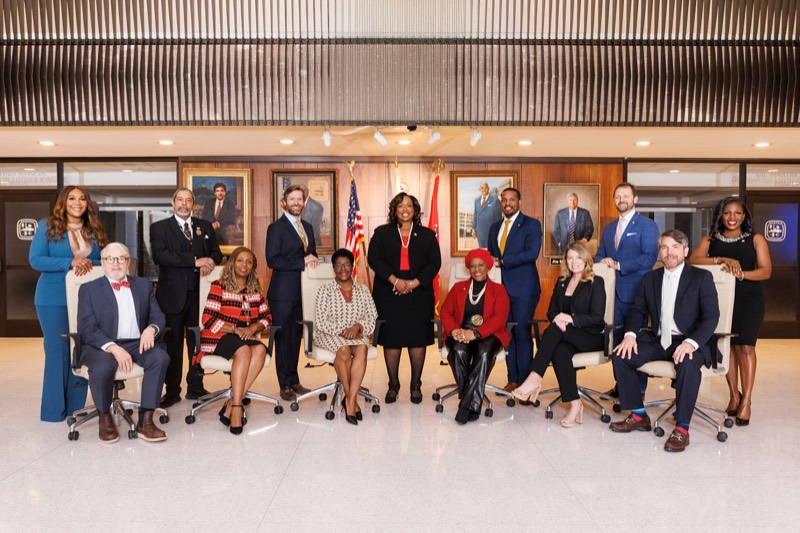
The Memphis City Council was set on Oct. 6 to take the third and final reading of a 12-month pause on new large data centers. It voted 7-5 instead to hold that ordinance and two companion data center ordinances until Oct. 20. Vice Chairman Chase Carlisle made the motion after discussion showed the council split. The Tri-State Defender reported Oct. 8 that supporters refused to leave the chamber afterward, that police were called to clear the room, and that a fight broke out between two women in the City Hall lobby while protesters kept chanting. One person was detained.
This was the second time the vote had been pushed. Voting to delay were Ford Canale, Rhonda Logan, Philip Spinosa, Jeff Warren, Janika White, Yolanda Cooper-Sutton and Carlisle. Voting against the delay were Chair Jana Swearengen-Washington, Jerri Green, Pearl Eva Walker, Michalyn Easter-Thomas and JB Smiley Jr. The council agreed to meet that Thursday to work through what was left.
“We’ve got a little bit of time, not all the time in the world, to work this out,” Carlisle said. Green, who voted against the delay, said, “To delay is to shirk the responsibilities we signed up for when we asked voters to elect us to serve.” Cooper-Sutton, who voted for it, said, “I have been for a pause since day one since I found out about it.” KeShaun Pearson, executive director of Memphis Community Against Pollution, called the day “extremely disappointing.” Councilwoman White told WMC Action News 5 that five data center ordinances are now before the council, and that the moratorium would stop new facilities and expansions rather than shut down anything already running. Smiley put the number of people who had come to object at more than 200, which is his count rather than a recorded attendance.
The council’s own posted agenda for Oct. 6 names them. Item 21 is Ordinance 5982, the temporary moratorium, held from Sept. 15. Item 19 is Ordinance 5985, which would replace a blanket pause with a tiered review program and a “Memphis Digital Infrastructure Development District No. 1.” Item 20 is Ordinance 5986, which would bar routine evaporative and once-through cooling, require closed-loop water and set a phase-out schedule for carbon-based electricity. The Defender reports a fourth item, number 31, going with them; the posted agenda runs only to item 23, so we cannot match that number to a document.
Two figures from the Defender’s account are worth holding. It puts the number of unregulated data centers now operating in Memphis at 13 to 16. And it reports that the community benefits agreement tied to the existing facility is expected to generate $100 million in property taxes, with 25% of that earmarked for investment within a five-mile radius, while council members say they have not seen a spending plan for $3.2 million that arrived in July.
Memphis is 62.9% Black and Shelby County is 51.7% Black. People filled a chamber to speak about this ordinance, and what the council decided was when to decide. A pause at third reading is one vote from being law. Holding it is not a no and it is not a yes, and every permit that arrives before Oct. 20 is governed by the code the city already has.
What got pulled alongside it is the real argument. Ordinance 5982 would stop new facilities for a year. Ordinance 5985 would skip the pause and set up a review district instead. Ordinance 5986 would write water rules whether or not there is a pause. Those are three different answers, and holding all of them together means the council has not chosen between stopping and regulating. They are all on the city’s posted agenda, and reading them side by side is the most useful hour a resident could spend before Oct. 20.
The water language in 5986 is the piece that is cheap now and impossible later. Closed-loop requirements and limits on local withdrawals are the only things in any of the three ordinances that speak to the Memphis Sand Aquifer, and a company that builds first will not retrofit.
A state representative made the case for the pause and showed his math. Tennessee state Rep. Justin J. Pearson of District 86 argued for Ordinance 5982 in an op-ed published by MLK50 on Oct. 5 and reprinted by Scalawag on Oct. 8. He writes that the existing facility was brought in through secrecy, that the gas turbines in Memphis and across the state line in Southaven pollute air in nearby Black neighborhoods, and that the city’s Unified Development Code was not written for facilities at this scale. “Our lives matter more than hyper-scale data centers,” he writes.
Pearson states his method rather than citing an agency. From 30 turbines with available emissions data, assuming 80% capacity, he estimates roughly 2,500 tons a year of nitrogen oxides, about 4,000 tons of carbon monoxide and 22 tons of formaldehyde. He puts city and county tax revenue from the facility at $30 million and cites a poll finding 65% of Americans opposed to new large data centers in their communities.
Gas turbines have been running next to Black neighborhoods in Memphis and Southaven for more than a year, and the emissions number a resident can actually pick up and use came from an elected official doing the math in public. He stated the capacity assumption his estimate rests on and put his name on the result, which is more than most figures in this fight arrive with.
The measured version of that number exists. The Shelby County Health Department permits these turbines and receives the stack test results, and those records can be requested by anyone. Ask the health department for the stack tests and the monitoring reports for the turbines already running, and bring them to the council on Oct. 20 alongside Pearson’s estimate.
The council chair then barred him from the next two council meetings. Memphis City Attorney Allan Wade confirmed to WMC Action News 5 on Oct. 9 that Justin Pearson is barred from the next two City Council meetings. The letter carries the signature of Council Chair Jana Swearengen-Washington, and Wade said the chair holds sole authority to bar people from meetings and that the decision is “totally consistent with our rules of procedures.” Wade tied it to the Oct. 6 meeting that ended early. KeShaun Pearson, executive director of Memphis Community Against Pollution, is also on the list. Wade said others are barred and did not name them. LJ Abraham, who was also barred, said, “I also feel it was politically motivated and that I am being targeted.”
Pearson says he never received a physical copy of the letter, and that a version of it showing his home address is circulating online. He says the chair told him he was being disruptive. “I was not being disruptive,” he said. He attended the Thursday Oct. 8 meeting and was not turned away at the door, and he asked council members from the floor, “Do you know anything about that?” Of the week, he said, “This is a horrible moment in Memphis history.” At that Thursday meeting the council passed two ordinances amending the city’s zoning code for data centers on first reading. Both need two more readings before they take effect, and WREG reported that the agenda packet included few details. The moratorium stays set for Oct. 20.
Neither the letter nor the coverage names which two meetings are covered, so whether the ban reaches Oct. 20 is not established. That is the first thing a resident should want answered, because Oct. 20 is when the moratorium comes back.
Read the alignment carefully before calling this a fight between a pro-pause bloc and an anti-pause bloc. Swearengen-Washington sponsored the moratorium and voted against delaying it on Oct. 6, and she is the signature on the letter. Two things can be true at once, and a chair who agrees with a movement on the ordinance can still move to control the room.
Council rules of procedure are a public document and a letter barring a named resident is an administrative act, so both can be requested in writing. Anyone planning to speak on Oct. 20 can ask the council for the specific rule the ban was issued under and for the letter itself. The address on the circulating copy is a separate matter and belongs in the same request, because the office that generated the document is the office that can say how it got out.
The mayor ordered a 90-day study that waits on nothing. Mayor Paul Young signed an executive order on Oct. 9 creating a working group on large and hyperscale data centers, chaired by the city’s chief operating officer. The city’s own announcement sets out the scope. The group covers six areas: land use and neighborhood protections, including distances from homes and schools in the Unified Development Code; engineering standards for stormwater, sewer, traffic and landscaping; air quality permitting and enforcement, with recommendations going to the Shelby County Health Department; water and aquifer protection, including treated wastewater for cooling, for Memphis Light, Gas & Water; energy and utility costs, including rate structures that protect other customers; and noise limits.
A written report is due to the mayor within 90 days. The order requires at least three community education sessions, a written public comment period and an open presentation of findings, and it directs the Engineering Department to apply an added review period of at least five business days to permits while the study runs. The city states plainly that the order “does not suspend, delay, restrict, or interfere with Council action.” Young said, “My responsibility is to protect Memphians and make sure our city benefits from the investments coming here.” Asked about criticism of his leadership that week, he told Action News 5, “I’m human just like everybody else.”
An executive order creating a study approves nothing and restricts nothing, and this one says so about itself. The five extra business days of permit review is the only thing in it that changes an outcome this month.
The three community education sessions are the piece residents can still claim. No dates have been announced, and a mayor’s office that has committed in writing to holding them can be asked when and where. Ask for one in the neighborhoods nearest the existing facility rather than downtown.

Musk-linked money went to the Southaven police while the city was approving the data center. Organizations tied to Elon Musk gave the Southaven, Mississippi police department a combined $3.23 million between December and February, while SpaceXAI was seeking approvals for its data center in the city, Mississippi Today reported Oct. 7. MZX Tech LLC, a SpaceXAI subsidiary, sent $1.38 million earmarked for the department, and a city clerk signed the receipt Dec. 17, the day after the Board of Aldermen approved a memorandum of understanding with the company. The Musk Foundation gave $1.85 million under a grant agreement signed Dec. 29 by the city finance director, for equipment including Flock cameras and an autonomous drone system.
The department’s 2024 budget was $21 million. Purchases include 13 Dodge Durango SUVs for about $540,000, a Flock drone system for $250,000 and five Dodge Ram trucks for about $195,000. Separately, the memorandum has MZX Tech contributing $3.46 million to widen and resurface roads near the power plant and data center. In August the mayor told the Board of Aldermen the company had offered $40 million for a new police and fire training facility in exchange for a city-owned 51-acre lot next to its power plant. The donation agreement contains a clause stating there is no quid pro quo. Mayor Darren Musselwhite called the MZX donation an “unrelated transaction” and said the perception of a conflict of interest is “simply just not true.” Police Chief Seth Kern said other departments around the country also received Musk Foundation grants.
Nothing here is alleged to be illegal, and the appearance question is the whole point. A city negotiating with a company, while that company funds the city’s police department, has made it harder for its own residents to believe the negotiation was at arm’s length. That is a cost the city paid whether or not anyone did anything wrong.
Southaven is 39.3% Black and DeSoto County is 36.5% Black, and the equipment bought with this money is surveillance equipment: license plate readers and an autonomous drone. Two separate questions are now sitting in the same file. Who the cameras point at, and who paid for them. A board of aldermen can answer the first with a written policy on how long plate data is kept and who may query it, and that policy does not exist in most cities until somebody asks for it.
The Southaven renter in last week’s lead says her landlord took the buyout. Danielle Dillard, the single mother whose Nov. 30 move-out notice led issue 05, told WMC Action News 5 on Oct. 8 that her landlord accepted a buyout from SpaceXAI. Issue 05 reported, from DeSoto County News, that she had been told the property was being sold. This adds who the buyer was. She has been approved for a new home but says she cannot find rent she can afford in the same school district. “Being a single mom, I live by a very strict budget in this economy that we live in,” she said. The company has offered buyouts to property owners near the plant in exchange for agreeing not to join the residents’ class action over noise.
Issue 05 said a buyout program is not relief for a renter but the mechanism that removes the building they live in. This is the same household one week later, with the chain of custody filled in: company offers, owner signs, tenant leaves.
The school district detail is the part that does not appear in any agreement. A relocation payment, if anybody ever writes one into a development agreement, is a dollar figure. Staying in the same school is a geography, and there is no clause in anything filed in DeSoto County that addresses it.
The mayor’s written advice to a homeowner who cannot sleep was to consider selling. CBS News published an account on Oct. 5 of Southaven residents within a mile of the plant serving the xAI data centers who report headaches, ringing in the ears and lost sleep. Jason Haley, 46, one of three residents who sued in June over noise and vibration, says it began in August 2025 and that he has measured above 60 decibels from his own backyard as late as 10:15 p.m. The World Health Organization’s recommended annual average nighttime level outdoors near bedrooms is under 40 decibels. Mayor Darren Musselwhite acknowledged the noise and wrote in March that Haley “may want to consider selling” his home: “I know they want houses for employees, so you may want to consider selling your home.”
The turbine count at the plant has gone from 27 to 59 over time, and the Mississippi air permit under appeal allows 41 permanent methane gas turbines. The NAACP sued in April and is appealing that permit. Taylor Logsdon, a plaintiff, said, “I would move tomorrow if I could.” Haley said, “I can’t live in this. How was this ever approved?” Southaven’s median household income was over $70,000 in 2024, about $20,000 above the state average.
Issue 05 reported two turbine counts in circulation, 27 and 69, and declined to reconcile them. Here is a third framing: the plant grew from 27 to 59 units, and the permit being appealed covers 41 permanent ones. All three numbers can be true at once because they count different things at different times, and anyone quoting one in a hearing should say which.
The decibel readings are a resident’s own, taken with his own meter. That is a gap in the public record rather than a weakness in the reporting. No agency has published continuous nighttime monitoring at the property line, and the Mississippi Department of Environmental Quality is the body that could be asked to.
Data centers
Alabama wrote down that silence counts as a yes.
On Oct. 6 the Alabama Public Service Commission approved, unanimously, the procedures it will use to review Alabama Power contracts with large data centers under Act 2026-610. Alabama Power must publish a summary of each contract naming the contracting company and its parent entities, the project’s city or county, and the maximum electricity the project could use. The commission and the Alabama attorney general’s office read the unredacted contract. The public does not, and there is no public hearing and no comment period on an individual contract.
The rules say the commission “shall” vote on each project above 150 megawatts. A late amendment from Commissioner Chris Beeker III provides that a project not voted on within 90 days is approved by default. Beeker described the mechanism himself: “So it’s deemed approved unless you want to disapprove it.” The commission’s July proposal had used 60 days. The window it replaces was 10. The confidential package includes the full contract and a Rate Impact Measure test, which is the analysis that would show whether other customers are better or worse off.
Commission President Cynthia Lee Almond said, “I feel strongly that we should take a public vote as a commission on data centers.” Jaclyn Brass, a staff attorney in the Birmingham office of the Southern Environmental Law Center, said, “It’s disappointing the commission would not commit to taking public votes on all contracts,” and noted that commission staff had originally recommended an affirmative vote on every contract. Daniel Tait, executive director of Energy Alabama, put it this way: “Ninety days is better than ten, but silence still counts as yes.” His colleague John Dodd called the provision a “rubber stamp.” Energy Alabama added on Oct. 8 that the commission also ordered Alabama Power to file a large load tariff within 10 days of the written order, and that commissioners said they intend to hold public votes inside the 90 days.
The law says a data center must pay the full cost of serving it, while the procedure says the contract can take effect without anyone voting and that the only people who can check the numbers work for the commission or the attorney general. Issue 05 made this point when the law took effect Oct. 1, and the procedure is now on paper.
Ninety days is nine times longer than 10, and that is a real improvement. It is nine times the chance that somebody notices a filing and asks for a vote. The way to hold the commissioners to what they said is to watch one document: the large load tariff Alabama Power must file within 10 days of the written order. That filing is public, and it is the first place the cost allocation becomes legible to anyone outside two state offices.
One structural change is coming. The commission goes from three members elected statewide to seven elected by district in 2027, which means every household in the state will sit inside one commissioner’s district instead of voting in a statewide field.
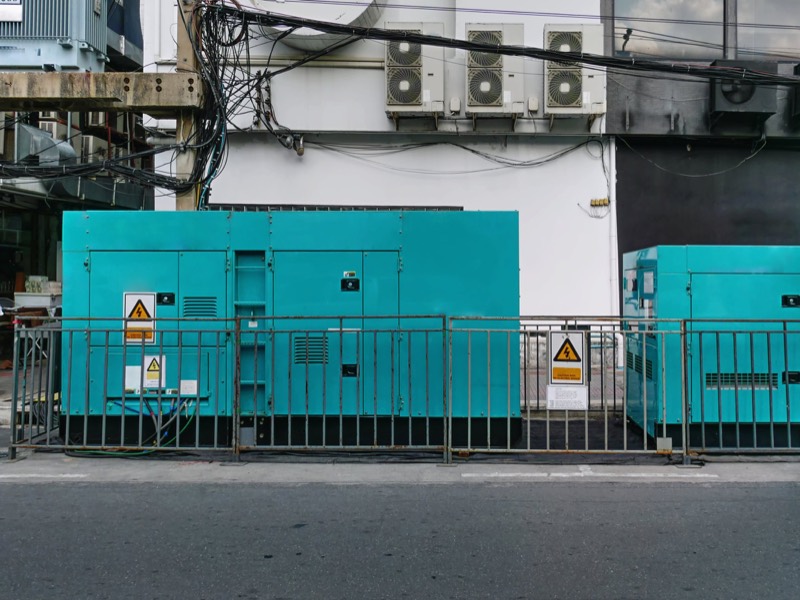
Georgia fined a data center and the power plant beside it for installing engines before the permits came. Georgia’s Environmental Protection Division fined two companies a combined $42,500 under consent orders for installing engines in Newton County before they had construction permits, Atlanta News First reported Oct. 6. VoltaGrid LLC, which owns and operates the power plant, agreed to pay $11,500 within 30 days. Serverfarm, which owns and operates the data center, agreed to pay $31,000 within 30 days.
The timeline in the orders is specific. The division received a complaint June 25 and inspected both sites June 29, finding eight engines in various stages of installation at the power plant, none connected to gas or power, and 37 diesel-fired emergency generators at the data center, none connected to fuel or power. It issued Serverfarm its construction and operation permit the same day. Notices of violation followed July 2, including a stop-work order for VoltaGrid, and a July 22 inspection found construction stopped with 11 engines on site. VoltaGrid said installation began on or about May 29. Serverfarm said construction began March 9. Both consent orders state they are not a finding or adjudication of a violation, and neither company admitted liability. Serverfarm said, “None of the generators have been operated nor will they be operated without a permit.” Maurice Carter of the advocacy group Sustainable Newton said the fines are small but a step, and that “the state is going to have to step up,” adding that cities and counties need more help understanding the facilities arriving in them.
Newton County is 52.8% Black, and the whole enforcement action came from one complaint: somebody looked at a field, called the state, and four days later an inspector counted engines. That is the entire mechanism, and it is available in every county in these nine states.
The penalty has to be measured against the project. Thirty-one thousand dollars on a facility with 37 generators is a cost of doing business, and the deterrent is not the money; it is the stop-work order, which actually halted construction for three weeks, and the fact that the permit file now contains a dated record of what was built before anyone was asked. That record is what a county attorney can point to the next time the same developer applies.
Whether the Environmental Protection Division inspects proactively or only on complaint is worth asking, and in this case the answer was on complaint.
Duke Energy settled on who pays in North Carolina, and nobody has been asked what they think. Duke Energy filed a settlement with the North Carolina Utilities Commission on Oct. 6 on a large load tariff for data centers, WUNC reported Oct. 7. The Public Staff, Amazon, Google, Microsoft and other large customers signed on. Digital Realty did not. New data centers would pay upfront for dedicated facilities such as substations, while other transmission upgrade costs would initially be spread across all customers and repaid over the life of the data center’s contract. An early exit would require paying only a fraction of the remaining balance. The detailed cost allocation is deferred to the next rate case, roughly two years away.
The thresholds are at least 50 megawatts with an 80% load factor, or 150 megawatts at any load factor, measured as contracted demand. Contracts run at least 10 years below 100 megawatts and at least 15 years at or above it, with customers paying for at least 75% of contracted demand. Duke may interrupt 95% of the load for up to 50 hours a year, or 50% for up to 100 hours. The tariff would not apply to companies that signed contracts on or before June 1, 2026, which the reporting says may include Digital Realty’s Moores Chapel project and University City PowerHouse in Charlotte and Amazon’s project in Rockingham. Nick Jimenez, senior attorney at the Southern Environmental Law Center, said “the rest of us are stuck holding the bag” and that “Duke and the hyperscalers have gone from opposing any large load tariff to asking the commission to accept one.” Will Scott, North Carolina policy director at the Environmental Defense Fund, said it “gives us a clear floor” while failing “to do the same for new power plants.” Claire Williamson of the N.C. Justice Center said “the data centers can’t be allowed to walk away and leave North Carolina families and small businesses holding the bag.”
The June 1 cutoff is the sentence that matters. Three named projects, two of them in Charlotte, may sit outside the rule entirely because their contracts were already signed. A tariff that starts after the biggest customers are already under contract is a rule for whoever comes next.
The Southern Environmental Law Center says the settlement was made public Oct. 6 and has not been opened to public comment, which is the actionable fact. A settlement among a utility, the commission’s own staff and the hyperscalers is not a proceeding a household was part of, and the commission can be asked in writing to take comment before it rules. Asking is the comment.
Three North Carolina boards voted on pauses in two days and went three different ways. Raleigh approved a six-month pause on new larger data centers 7-1 on Oct. 6, WRAL reported. The draft gives staff 60 days to study impacts and draft rules and then 120 days for the legislative process, exempting facilities at 10,000 square feet or less of proposed floor area and 5 megawatts or less of peak demand. Advocates had asked for 32 months. Mary Black, a former city council member now organizing with the Raleigh Anti-Data Center Coalition, said, “What we want is transparency and input in the process, and that’s going to take more than six months.” Wake County neighbors Cary and Apex have pauses of 18 and 12 months.
Beaufort County commissioners held a public hearing on Oct. 5 and voted 6-1 for a 12-month pause, with Hood Richardson dissenting on the argument that a data center could reduce residential property taxes. And Lee County commissioners voted 5-2 against a 180-day pause on Oct. 5. Commissioner Robert Reives Sr. proposed it and Mark Lovick supported it. The county attorney advised against it, saying state law requires specific findings and that the county had adopted data center standards about six months earlier. The pause would not have reached the project issue 05 covered: the CyrusOne facility on Lower Moncure Road, permitted Sept. 25 at more than 300,000 square feet and 90 megawatts, with the building valued at about $185 million on the permit and the project put at roughly $3.6 billion with computing equipment. County Manager Lisa Minter said there is only one site in the county zoned light industrial, undeveloped and large enough for a project that size.
The three sit next to each other. Raleigh is 26.6% Black and paused for six months. Beaufort County is 22.5% Black and paused for twelve. Lee County is 17.9% Black, has one eligible site and a permit already issued on it, and declined to pause at all.
Lee County is the instructive one and issue 05 explained why: the decision that mattered was a 2025 rezoning, and everything after it was paperwork. The exemption thresholds in Raleigh’s ordinance are the detail to copy. Ten thousand square feet and 5 megawatts is a low bar, which means the pause catches almost everything rather than only the largest projects. A threshold set at 100 megawatts would have let most of the pipeline through.
Entergy said for the first time that Meta’s Louisiana data center will draw 4,500 megawatts. A multiday hearing opened Oct. 7 before Louisiana Public Service Commission chief administrative law judge Melanie Verzwyvelt on whether to approve a settlement between Entergy and commission staff covering seven new gas-fired power plants in Richland and Pointe Coupee parishes, plus transmission lines, solar farms and batteries, and allowing Entergy to skip its normal competitive bid process. During it, Entergy disclosed that Meta’s Richland Parish data center will use 4,500 megawatts, which the Advocate put at roughly four times New Orleans’s usage.
Opponents, including the Alliance for Affordable Energy, the Sierra Club and the Union of Concerned Scientists, argue ratepayers could be left holding the cost if Meta leaves before its 20-year contract ends. Three of the plants are depreciated over 32 years against that 20-year contract. Louisiana Department of Revenue data puts sales tax rebates claimed by data center developers so far at $39 million, expected to grow into the billions. Four of the five commissioners have previously voted for Entergy’s Meta plans. Entergy Louisiana chief executive Phillip May called the proposal a “transformational investment” and said, “We are in a power-first world where speed to power is what will drive who wins economic opportunity for their communities.” Entergy’s plans involve expropriation for transmission land, which has drawn landowner complaints that issue 05 reported.
Richland Parish is 36.1% Black, and issue 05 reported this campus as demand “exceeding 1 gigawatt” because that was the figure in circulation. The number is 4,500 megawatts, and it came out in a hearing rather than in an application, which tells you something about when the public learns the size of what it is paying to serve.
The depreciation mismatch is what carries the cost forward. A plant paid off over 32 years, built for a customer under contract for 20, leaves 12 years of cost with nobody assigned to it. Louisiana elects its public service commissioners, which makes this one of the few places in this coverage area where the people deciding cost allocation answer to voters directly.
A Mississippi site raised its contracted power to 11 megawatts under TVA’s new data center rate. PowerCompute, Inc. announced Oct. 6 that its subsidiary signed a power contract with Columbus Light and Water on Sept. 30, effective Oct. 1, raising contracted demand at its Columbus, Mississippi site from 8.5 to 11 megawatts and moving it off a manufacturing rate onto the local tariff implementing the Tennessee Valley Authority’s new Large Data Service Rate. Columbus Light and Water is returning the company’s $300,000 power deposit, to be replaced by a utility bond. No capacity commitment charge was assessed on the increase.
The tariff terms in the release are what matter beyond this one site. TVA adopted the rate in August 2026 and pulled data center load out of its general industrial rate class, with the definition including Bitcoin mining. Starting in the fiscal year that began Oct. 1, new or expanded data center load above the first 5 megawatts of contracted demand faces a capacity commitment charge of roughly $1.5 million per megawatt, with 2,000 megawatts of cohort capacity available first-come, first-served and load already under contract before Oct. 1 exempt.
TVA serves most of Tennessee, north Mississippi, north Alabama and slices of Georgia, and it is federal. There is no elected commission to petition and no rate case a resident can intervene in the way they can at a state commission. A charge of about $1.5 million per megawatt above the first 5 is the closest thing to a cost-causation rule in this region, and it was set by a board nobody in these nine states voted for.
Two details are worth holding. Load under contract before Oct. 1 is exempt, which is the same grandfathering pattern as North Carolina’s June 1 cutoff above. And the first 5 megawatts are free of the charge, which means a developer who splits a project into small parcels pays less than one who builds it in a single block. Lowndes County, where Columbus sits, is 45.1% Black.
A lawsuit says 500 miles of new pipeline from Mississippi to Georgia rests on inflated data center forecasts. Federal regulators approved 500 miles of new pipeline this summer running from Mississippi into Georgia, Kinder Morgan’s Mississippi Crossing Project and South System Expansion 4, to serve utilities including Dominion Energy and Southern Company, Georgia Public Broadcasting reported Oct. 6. The Southern Environmental Law Center sued on behalf of several nonprofits and landowners, arguing the demand behind the approval is grossly overestimated. It relies on an analysis by London Economics International estimating the pipelines would carry more than four times the gas shown in the utilities’ publicly available forecasts, largely because of speculative future data center demand. Under the Natural Gas Act, approval turns on present and future public need.
The two projects carry a combined announced cost of $5.2 billion and would add 3.4 billion cubic feet per day of gas. Megan Gibson, senior attorney at the Southern Environmental Law Center, said, “We think FERC authorized these projects unlawfully.” Melissa Ruiz, director of corporate communications at Kinder Morgan, said, “We don’t comment on meritless litigation.”
This is the one item this week that crosses two of these nine states on a single right of way, and the article names no counties along it. That absence is the story. Five hundred miles of pipeline runs through somebody’s land in both states, and the public record of who has not been assembled in the coverage.
The legal argument is worth understanding because it will come back. If a forecast of data center demand is enough to justify infrastructure, then a forecast is all a company needs. The lawsuit asks whether a projection counts as public need. Whatever a court says will apply to transmission lines and generation, not just pipe.
South Carolina’s Lowcountry projects are stalled, and an overlay ordinance could restart them quietly. A wire roundup published Oct. 5 lays out where things stand. A proposed campus of more than 800 acres in rural Colleton County is on hold: the county council gave final approval to a six-month moratorium, extendable, and on Aug. 10 the Planning Commission and council approved a “digital infrastructure overlay” ordinance on first reading, by title only. A landowner lawsuit also challenges the project. Jasper County has passed its own moratorium. The Coastal Conservation League warned in a Sept. 2 statement that the overlay could allow approvals without public notice and could permit a one-gigawatt facility with on-site gas generation: “If this zoning overlay passes, data centers could be approved without any notice to the public.”
The roundup also covers Project Camellia, OpenAI’s campus in the Rincon area of Effingham County, Georgia, at 3.2 gigawatts across four 720,000-square-foot buildings on 1,440 acres over five years, with about 1,000 construction and 1,000 permanent jobs promised and roughly 30,000 gallons a day of water in a closed loop. And it covers a Department of Energy plan at the Savannah River Site, which spans more than 300 square miles across three South Carolina counties, where the department chose to negotiate a phased lease for a one-gigawatt data center with about 2 gigawatts of on-site generation described as gas bridging to nuclear. For contrast, the one built facility it names is a 30,800-square-foot data center on 1.4 acres in Fairfax, Allendale County, with access to 2.08 megawatts.
Colleton County is 33.6% Black, and the thing to watch there is not the moratorium but the overlay. A pause expires, while an overlay that lets a project be approved without public notice outlasts it and removes the hearing that the pause was bought to make room for. The remaining readings on that ordinance are the whole fight, and no page we loaded gives a date for them.
The Savannah River Site is the item nobody in these nine states is tracking. It is federal land, which means a data center there is not subject to county zoning, has no conditional use permit and gives no local board a vote. Three South Carolina counties have 300 square miles of it inside their lines.
Virginia
Virginians got two minutes each, and the commissioners were not in the room.
The State Corporation Commission held the first of three in-person hearings on the proposed Dominion Energy and NextEra Energy merger on Oct. 7, at Christopher Newport University in Newport News. More than 30 Virginians spoke, Dogwood reported Oct. 9. None of the three commissioners who will decide the case attended. Chief Hearing Examiner D. Mathias Roussy Jr. presided and held each speaker to two minutes. The second hearing drew a large crowd to the Fairfax County Government Center on Oct. 9.
Amanda Doughty, a Newport News resident, told the hearing, “You need to remember that it is the people, not the corporations, that you serve.” Justin Davis, a software engineer, asked, “How does an ownership change from Virginia to Florida benefit Virginia customers?” Del. Shelly Simonds of Newport News took no position and urged the commission to weigh compliance with the Virginia Clean Economy Act. At the Fairfax hearing, Deshundra Jefferson, chair-at-large of the Prince William County Board of County Supervisors, framed it this way: “When people have to spend more on electricity, that means they’re not spending what they need on food or going out.” Fairfax Supervisor Walter Alcorn said, “My fear with this merger is we’re going to be dealing with a much larger entity.”
The day before the Newport News hearing, Lt. Gov. Ghazala Hashmi became the first statewide elected official to oppose the merger, at a Richmond press conference after a five-city listening tour through Loudoun County, Norfolk, Richmond, Charlottesville and Roanoke. “I’ve concluded that the proposed takeover of Dominion Energy with NextEra is not in the best interest of Virginians,” she said, and released 64 questions for the companies. Rising bills were the dominant concern residents raised on the tour. State Sen. Mike Jones of Richmond gave the week’s plainest description of the mechanism: “A promise and a press release are not protection on a power bill.” And: “When the commitments expire, it will not be the shareholders who pay; it will be everyday working Virginians.”
Two procedural things happened. A September amendment extended the customer bill credit to four years and added a commitment to build a headquarters in Richmond. And on Oct. 2 the hearing examiner ruled for Clean Virginia and ordered NextEra and Dominion to produce a disputed internal document, the “Robo Memorandum,” finding it discoverable. That ruling is about discoverability, not about any conduct. Gov. Abigail Spanberger declined a special session and became an official intervenor instead. The commission’s final order is due Jan. 11, 2027.
The remaining dates are the useful part. The Richmond hearing is Nov. 5, 2 to 5 p.m., in the second-floor courtroom at 1300 E. Main St., with no advance registration needed. Registration for telephone testimony closes Nov. 2. Written comments close Nov. 9.
Dominion’s territory covers Richmond, Petersburg, Chesterfield, Henrico and Hampton Roads, which is where most of Virginia’s Black households are. Issue 05 reported the state’s own energy plan projecting residential prices in that territory rising roughly 60% over the next decade. The concession on the table is $10 a month for four years.
Two minutes a person, in front of a hearing examiner rather than the three people who vote, is what this process offers. That is not a reason to skip it. The record is what the commission has to answer to in its written order, and a specific number read into that record by a Richmond or Petersburg resident does something a form letter cannot.
Richmond is the last hearing and the only one readers in the Tri-Cities can reach without a long drive. It is Nov. 5, 2 to 5 p.m., at 1300 E. Main St., with no registration. If you cannot get there, written comments are open until Nov. 9.
Every one of the eight localities on a 115-mile transmission route now formally opposes it. The Campbell County Board of Supervisors voted 4-3 on Oct. 6 to oppose the proposed Joshua Falls to Yeat extra-high-voltage line, making Campbell the last of eight affected localities to pass a resolution against it, Cardinal News reported Oct. 8. The resolutions are largely symbolic, because the State Corporation Commission rather than county boards approves transmission lines. Valley Link, a partnership of Dominion Energy, FirstEnergy Transmission and Transource Energy, plans to file with the commission this fall and hopes to finish in 2029.
The line would run about 115 miles between Campbell and Culpeper counties at an estimated $1 billion, with towers up to 160 feet and a cleared right of way 200 feet wide, crossing Appomattox, Buckingham, Fluvanna, Goochland, Louisa and Orange counties in between. Two-tenths of a mile of it sits inside Campbell County, by Appalachian Power’s account. Becky Nix, a Concord resident, asked the board “to protect the beauty of our county from the indelible scar.” Rick Summy, also of Concord, said, “We personally see no benefit of this proposed power line project to our property and none to Campbell County.” County Administrator Frank Rogers told the board the resolution “isn’t anything more than a communication of your preferences.” The county does keep real leverage on a separate front: Appalachian Power wants to relocate the Joshua Falls substation to a nearby agricultural property, which would need a special-use permit or rezoning from the board. Supervisor Matt Cline, who requested the resolution, said of that, “That’s where the teeth would come in.”
This is the middle link of the chain, and it is unusually well documented this week. Load concentrates in Loudoun and Prince William, the towers and the cleared right of way cross eight rural and exurban counties to reach it, and the bill lands on every Dominion customer in Richmond, Petersburg and Norfolk.
Eight resolutions, and none of them carries legal effect. The approval authority is a three-member commission in Richmond, and the only vote any of these counties holds is the substation permit. That is the pattern across this coverage area: the decision with teeth is a zoning decision, and it is usually smaller and later than the one everybody is watching.
No comment period exists yet because the application has not been filed. When it is, a commission docket opens and comments become possible. That is the thing to watch for this fall.
Loudoun County declined to audit its own 30 data center projects. The Loudoun County Board of Supervisors voted 7-2 on Oct. 6 to table indefinitely an independent audit of 30 data center projects, 15 approved since March 2025 and 15 under review, Loudoun Now reported Oct. 7. Supervisors Laura TeKrony and Juli Briskman had first proposed revoking grandfathering protections for some pending applications, then offered the audit instead. County staff warned that revoking the protections could draw litigation costing up to $60 million and could affect the county’s bond rating.
The figures the county’s own development director presented are the ones to keep. Fifteen applications totaling 10.5 million square feet currently meet the grandfathering requirements. Four applications totaling 1.8 million square feet have lost that status since February 2025, and one application just under 100,000 square feet was disqualified for sitting within 500 feet of residential property. The audit would have cost $200,000 and reported by April 2027. The grandfathering resolution stays in force until it sunsets Feb. 12, 2028. Supervisor Matthew F. Letourneau called the efforts “performative discussions” and said “the answer is not to go out and spend $200,000 to second guess the work that staff has already done.” TeKrony said the point was to build community trust through “an independent evaluation.”
Loudoun is not in this newsletter because of Loudoun. It is here because 10.5 million square feet of grandfathered applications stay locked in there until February 2028, and the generation and transmission to serve them get built in Campbell County and billed to every ratepayer in the state, including the ones in Petersburg who will never see a data center.
The $60 million litigation estimate did the work in that room. It is a staff estimate, not a measured cost, and it was enough to stop an audit that would have cost $200,000. Any county in these nine states that is told a review is too legally risky should ask what the estimate rests on and who produced it.
Google put $15 million into Virginia energy bills in the same week residents testified that data centers are raising them. Google committed money from a $15 million Virginia Energy Impact Fund covering Botetourt, Loudoun, Prince William and Chesterfield counties, Hampton Roads and statewide efforts, Cardinal News reported Oct. 9. Botetourt County is in line for about $1.8 million plus $260,000 for construction-related workforce development. The Virginia Community Action Partnership gets about $9.5 million for energy affordability and community resilience statewide. FLIPP Inc., a nonprofit in Dillwyn, gets $500,000 for workforce development. The story breaks out no separate amount for Chesterfield or Hampton Roads. About 80 homeowners are projected to receive repairs over the next year.
Set the numbers beside each other without editorializing and the shape is clear. Fifteen million dollars into energy affordability, against a $67 billion transaction and the $11.24 a month the average Dominion residential customer is already paying as of January. Chesterfield and Hampton Roads are named in the fund and are also in the territory the state’s own plan projects rising about 60%.
The $9.5 million to the Virginia Community Action Partnership is the piece that reaches households directly, through community action agencies that already run energy assistance. If you work with one in Richmond, Petersburg or Hampton Roads, that is the office that will know whether any of this money is coming to your county, because Cardinal News could not get a breakdown.
A developer argued it should not need a public permit on 400 acres near Chester, and we do not know how it went. WestDulles Properties, a Reston developer, appealed a Chesterfield County staff determination that a conditional use permit is required before data centers can be built on more than 400 acres at 1120 Battery Brook Parkway, near Chester. The company argues it has a vested right to build by right under the county’s previous zoning ordinance. County staff recommended denial. The appeal went to the Board of Zoning Appeals on Oct. 7, and issue 05 carried the hearing date.
We could not find or load any reporting on the outcome. We are saying so rather than leaving the item out, because a vested-rights win on 400 acres in Chesterfield would matter to Richmond-area readers and the board has rejected a similar appeal from a different developer earlier this year.
The thing being appealed is the hearing itself. A conditional use permit is what forces a public meeting, and this appeal argues the project should not need one. That is the cleanest example in this issue of the pattern running through all of it: the fight is usually not over whether a project is good, it is over whether anybody gets to say so on the record.
Chesterfield County’s Board of Zoning Appeals keeps minutes. A resident who wants the answer before we have it can ask the county for the Oct. 7 minutes, which is a phone call.
Federal
The South draws more school and library internet money than any region, and comments close tomorrow.
E-Rate is the federal program that discounts internet service and internal networks at schools and libraries, paid for out of the Universal Service Fund. The Federal Communications Commission opened an inquiry in June asking whether to limit it to rural areas, condition it on device restrictions and parental opt-out policies, or end it. Initial comments are due Oct. 13, with reply comments Nov. 12, and the docket had drawn more than 1,900 filings as of last week.
On Oct. 8 the Brattle Group released a study of what ending it would cost, commissioned by the Schools, Health & Libraries Broadband Coalition. The coalition’s own summary carries the figures. The one that matters most here is also the simplest: average annual support actually received by region, fiscal 2021 through fiscal 2025. The South received about $999 million a year, the West about $786 million, the Midwest about $454 million and the Northeast about $361 million. That is an administrative record of money paid out, not a projection.
The modeled part is separate. Removing roughly $2.6 billion a year of support produces about $4.2 billion in lost annual real gross domestic product, about $2.8 billion in real wages and about $1.5 billion in tax revenue, which the authors describe as about $1.60 of lost economic activity per dollar removed. Cutting only the internal-network category, roughly $1.2 billion, still produces about $2.5 billion in lost output. The coalition says the South would see the largest losses, because it receives the most support and has the highest ratio of E-Rate funding to education output. Its page gives no dollar figure for the South and breaks out no individual state. Benton’s write-up on Oct. 9 adds a Southern figure of about $1.58 billion and notes that Tennessee and Alabama receive less in absolute dollars but more relative to the size of their education sectors.
Joey Wender, executive director of the coalition, told reporters, “The FCC is asking whether America can afford E-Rate. This study shows America can’t afford to lose it.” Three former commissioners backed continuing the program at the coalition’s conference that week, among them Mignon Clyburn, a South Carolinian and the first Black woman to serve as acting chair of the commission, and Deborah Taylor Tate of Tennessee. On fraud, the study notes the program’s fiscal 2024 improper payment rate was 1.27% against a 1.5% statutory threshold, and that assuming 2.5% of support produces no benefit still leaves nearly all of the modeled loss intact.
Comments close tomorrow, Oct. 13, in docket WC 26-133. A school board, a library board or a county commission can file a plain letter, with no lawyer, no fee and no particular format.
What carries weight in a record like this is one named building. A superintendent writing what the discount actually buys in a specific district, and what stops without it, counts for more than another association brief. In a lot of small Southern counties the school and the library are the only two places with a connection anyone can rely on, and the library is where people without one at home file for benefits and apply for jobs.
The number to use is the $999 million, which is money received and is solid. The $4.2 billion is model output from a study the program’s own advocates paid for, which does not make it wrong and does make it arguable. The first number does not need the second.
The FCC proposed more than $10 million in fines against two phone companies that billed the low-income subsidy twice for the same people. The commission adopted Notices of Apparent Liability on Oct. 7 against two Lifeline providers under common ownership, alleging they submitted reimbursement claims for the same subscribers and other improper claims. The proposed forfeitures are $2,673,966 against AirVoice Wireless and $7,453,966 against TAG Mobility, about $10.13 million together. The counts are 74 duplicate federal Lifeline claims plus three improper reimbursement requests for the first company, and 318 duplicate claims plus three improper requests for the second. Light Reading reports both operate under Houston-based HTH Communications.
Lifeline pays $9.25 a month per eligible household and costs roughly $1 billion a year. Chairman Brendan Carr said, “The FCC has an obligation to be a good steward of federal dollars.” Commissioner Anna M. Gomez, the commission’s lone Democrat, backed the action and drew a line under it: “This enforcement action is a targeted and responsible step that holds the providers who committed fraud accountable,” adding that “we must pursue fraud and wrongdoing wherever the evidence leads, free from politics.” Her office said the fraud “was committed by providers and not by the eligible households that participate in the program,” and she argued the case should also expose weaknesses in the commission’s own systems that let it through. In a related filing the Public Utility Commission of Texas reported a multiyear Lifeline audit error rate below 0.17% and asked for a six-to-twelve-month transition if its opt-out from the federal eligibility verifier is eliminated.
Gomez drew the distinction that matters, so hold her to it: two companies are accused of billing twice, and the households were not. Every previous round of fraud enforcement in a benefit program has been followed by new paperwork for the people receiving the benefit, and Lifeline enrollment already runs at roughly one in five eligible households.
Lifeline is the last standing federal broadband subsidy after the Affordable Connectivity Program ended in 2024, and $9.25 a month is what is left. Issue 05 reported that Georgia food assistance records will be matched against Lifeline applications starting Oct. 29, with comments due the same day. That is the proceeding where a Georgia legal aid office or benefits navigator can say what happens in practice when two databases disagree about somebody’s address.
One proposal on the table would make data centers pay into the fund that keeps rural lines alive. At the Schools, Health & Libraries Broadband Coalition’s annual conference, panelists discussed expanding the Universal Service Fund’s contribution base to hyperscalers, cloud providers and other large infrastructure users, with contributions keyed to network capacity used rather than to interstate telecommunications revenue, Broadband Breakfast reported Oct. 8. The fund currently draws from a shrinking base of traditional phone revenue. A proposed contribution factor of 42% of interstate telecommunications revenues for the fourth quarter of 2026 has been described as the highest in the fund’s history.
Adeyenka Ogunleye, chief of staff and vice president of federal affairs at the National Urban League, said, “I think we really need to look hard at who contributes, what revenue streams benefit from the internet ecosystem.” Trent Harkrader, former chief of the commission’s Wireline Competition Bureau, argued for moving beyond declining phone revenue and treating hyperscalers as large end users. Virdina Gibbs of NTCA said the fund remains necessary after BEAD because BEAD builds networks while the fund supports affordability and ongoing operation. Separately, a bipartisan congressional working group is nearing a discussion draft on updating the fund, which now disburses about $8 billion a year.
This is the only item this week in which the data center build and the broadband affordability fight are the same conversation. Everywhere else in this issue, data centers appear as a cost pushed onto ratepayers. Here they appear as a potential source of the money that keeps a rural line running and a library connected.
Nothing here has been proposed formally: a panel is a panel, and a discussion draft is pre-legislative. The reason to track it is that the contribution base is the one lever that would reach the companies driving the load, and it is a federal decision rather than a state one, which means these nine states have 18 senators between them who will eventually vote on it.
Accessibility rules and a vetting process for rural subsidy recipients are on the commission’s Oct. 29 agenda. The commission announced its tentative agenda for the Oct. 29 open meeting on Oct. 9. Two of the seven items touch this beat. One is a notice of proposed rulemaking implementing the Rural Broadband Protection Act, which would create a vetting process for companies receiving high-cost universal service support. The other proposes updates to accessibility rules covering closed captioning, audio description and device compatibility. The rest is spectrum, satellite, drones and equipment authorization. Chairman Carr’s blog previewing the meeting also flags a proposed auction of 25 megahertz of mid-band spectrum.
The vetting item is the one that reaches rural counties. The high-cost fund is what makes a company willing to serve a county where the cost per line is higher than anyone would pay, and issue 05 reported two separate filings urging the commission to wind it down. A vetting process is the opposite move: it keeps the fund and screens who gets it. Both arguments are live in the same agency at the same time.
The accessibility item is the part of digital equity that falls out of the conversation most often. Captioning and device compatibility rules are what make a connection usable for someone who is deaf, hard of hearing, blind or has low vision. A tentative agenda is not an adopted rule, and the comment cycle on each notice opens after the meeting.
The one thing the broadband agency did all week was delete a grant program that expired four years ago. The National Telecommunications and Information Administration published no press release, no BEAD program notice and no Digital Equity Act notice between Oct. 5 and Oct. 11. Its only action of any kind in the window was a joint final rule with the National Highway Traffic Safety Administration, published Oct. 6 and effective immediately, removing and reserving the regulations for the 911 Grant Program. The agencies cite the program’s inactivity, the expiration of its authorization on Oct. 1, 2022, and the absence of new appropriations. No 911 grants are open for application.
The agency’s BEAD progress dashboard was last refreshed Sept. 8, and still shows 56 of 56 final proposals submitted and approved, 55 approved by the National Institute of Standards and Technology and 54 award agreements signed and returned. Those are counts of states and territories. Nothing changed during the window.
Housekeeping is housekeeping and it is worth noticing which housekeeping happens. A 911 grant program that stopped being funded in 2022 got formally erased in the same week that the agency did not publish the eligible-location lists nine state broadband offices are waiting on, and did not publish guidance on roughly $21 billion in unspent money.
The Digital Equity Act litigation also produced nothing in the window. The live date is just past it: the parties’ meet-and-confer deadline was Oct. 16, and the government has said it targets December for reopening the competitive grant program without the racial and ethnic minority covered population a judge struck down in July. If your organization intends to apply, the partnerships you sign this month are the application.
BEAD watch
States still do not have the lists, and Arkansas says they may not come until November. States had not received the lists of locations eligible for the additional BEAD round as of Oct. 7, Broadband Breakfast reported, attributing the delay to the federal agency waiting on the Federal Communications Commission’s June 2026 broadband coverage data to re-check them. Glen Howie, director of the Arkansas State Broadband Office, said, “We may not see it until sometime in November, perhaps,” and, “I think they’re waiting on the June data to take another look at their lists and see what that looks like.”
Two independent analyses the same week put the same roughly $21 billion of non-deployment money at the center. Doug Dawson of CCG Consulting argued on Oct. 8 that the agency is sequencing the eligible-locations list first and has given guidance on only “some tiny portion” of the money, which he reads as a delay: “it takes NTIA off the hook for providing guidance for the bulk of the non-deployment funds.” And a study from the Advanced Connectivity Law and Policy Institute at New York Law School, reported Oct. 8, found that BEAD builds will generate about 271,782 miles of buried fiber, roughly 57.5% of all BEAD fiber miles, producing about 1.4 million 811 locate tickets and about 8.1 million individual facility locates. Michael Santorelli, who directs the institute, said, “This could delay builds and raise costs. It could also lead to an increase in damage events,” which “can be deadly or have significant financial and practical impacts.” Common Ground Alliance damage reports attribute about 30% of all damage reports to telecom providers and internet service providers, the highest of any industry.
Issue 05 explained why the list matters: the challenge window is 30 days and it starts when a state publishes, whether or not anyone is told. Arkansas is now saying publicly it may be November. That is useful, because it is the first date any of these nine states has put on the record, and it comes from the only one of the nine whose director gave a quote all week.
The 811 finding is the practical one and nobody is treating it as a digital equity story. Eight million locate requests landing on utilities that already miss marks is how a fiber build turns into a cut gas line in a county with one locator. The institute’s own suggestion is that states could use part of the $21 billion for locators and underground infrastructure maps, which is a thing a state broadband office could propose now instead of waiting.
Louisiana broke ground on what the state calls the country’s largest BEAD-funded build. Gov. Jeff Landry, ConnectLA and REV Fiber broke ground in Central, Louisiana, in East Baton Rouge Parish, on a BEAD-funded fiber build supported by the state’s GUMBO 2.0 program. The build covers 2,840 locations, of which about 2,500 are federally funded. Construction is expected to start in November and run seven to eight months. Louisiana’s total BEAD allocation is $1.36 billion and the state targets statewide connectivity by 2028. Two days later the state announced that 1,222 fire stations, police departments and sheriff’s offices across Louisiana will receive connectivity through the same program. Light Reading reported Oct. 9 that the Central build is part of a state target of 15,000 BEAD locations by the end of the first quarter of 2027, and that the Louisiana Local Fiber Consortium of REV Fiber, T-Mobile and Swyft Fiber won roughly $378 million in BEAD funding.
Louisiana is the only one of these nine states that published anything about broadband this week, and it published twice. Say that plainly, because the other eight did not.
It is still a location count. A location is an address on a map, and 2,840 of them becoming serviceable tells a household in East Baton Rouge Parish nothing about the price. The number to ask ConnectLA for is the one nobody publishes: what the monthly rate will be at these addresses when the line is lit, and whether the provider is required to offer a low-income plan. “Largest BEAD-funded build in the country” is the state’s own characterization.
Who gets counted
A proposed rule would take race off the census short form.
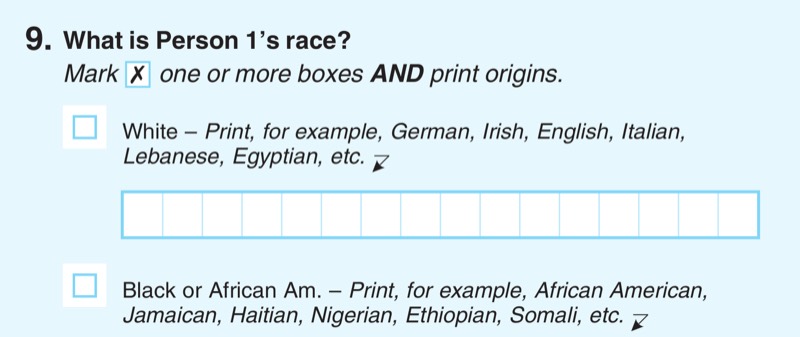
The Leadership Conference on Civil and Human Rights published an argument on Oct. 9 against a Commerce Department proposed rule on the content of the 2030 census. The rule was published Sept. 10 at 91 Federal Register 57524, in docket USBC-2026-0628 on Regulations.gov. The authors quote it as providing that “no questions about race, ethnicity, or sexual orientation shall appear on the short form” of the decennial questionnaire “or any questionnaire used for the enumeration of the population.” They are Amelia Kermis, a former Census Bureau branch chief now a doctoral student at George Washington University’s Milken Institute School of Public Health, and Meeta Anand, senior director of census and data equity at the Leadership Conference.
The draft preliminary regulatory impact analysis filed in that docket states that applying the rule “would have the effect of excluding race, ethnicity, and sexual orientation data,” and it names the replacement: “alternatives exist for some of the data collected in the short-form decennial census questionnaire,” the most important being the American Community Survey, which “contains information on demographic characteristics including race and ethnicity.” The proposed rule’s own summary says the count should not be “distorted in any way by questions about immaterial personal characteristics, such as race.”
The authors’ answer is about counting rather than principle. The American Community Survey, they write, “cannot replace the complete census count because it’s a sample of residents.” It estimates a larger population and is calibrated to the decennial count, so without decennial race totals it loses the figures it is calibrated against. They argue public health rates by race become impossible without a denominator, and that administrative records carry mismatched and missing race data. They cite a Census Bureau study in which observers correctly identified single-race American Indian and Pacific Islander respondents 62% of the time and multiracial respondents 8% to 36% of the time. The bureau also reversed a plan about four months ago to adopt updated federal race and ethnicity standards on the 2027 American Community Survey.
The health figures in the post are older and the piece does not date all of them. Chicago in early 2020: Black residents were 30% of the population and 72% of COVID deaths, which is an administrative record. Pre-exposure prophylaxis use among adults who should take it: 5.9% of Black adults, 10.9% of Hispanic adults and 42.1% of white adults, with no year printed. Sudden unexpected infant death: Black infants at roughly three times the rate of white infants, attributed to the Centers for Disease Control and Prevention, with no year printed. Lori Lightfoot, the former mayor of Chicago, is quoted calling the gap a “public health red alarm.”
This issue is built on the 62.9% in Memphis, the 52.8% in Newton County, Georgia, the 45.1% in Lowndes County, Mississippi, and the 36.1% in Richland Parish. Every one of those comes from Census QuickFacts, which runs on a count that goes to every household and asks the question.
Take the question off the short form and a sample survey is what remains. A sample gives you a state figure with a margin of error, and a county figure with a wider one. For a town of 9,000 in the Black Belt it often gives you nothing you could put in front of a commission without being told it is not reliable at that level. That is the mechanism. The data does not disappear; it loses the precision that makes it usable at the scale where land use, siting and utility decisions actually get made, which is the county and the town.
The comment is a letter, due Nov. 2, in docket USBC-2026-0628 on Regulations.gov. The strongest version of it is specific rather than general: name a decision in your own county that turned on a count of Black residents, and say what you would have had instead.
The federal survey that measures who uses a computer has not been run in three years. The Census Bureau’s Current Population Survey computer and internet use supplement, which is the government’s main household measure of device ownership and internet use, still shows November 2023 as its most recent collection, and the page was last revised in August 2024. Separately, the bureau has still not set a release date for the 2025 American Community Survey one-year estimates; its updates page carries an Aug. 6 entry saying the date is being determined, and nothing changed during this window. The newest Census broadband subscription figures anyone can cite remain the 2020 to 2024 five-year tables, which are centered on 2022.
This is the fourth issue running that the answer has been the same, and it belongs next to the item above rather than apart from it. The question is not only whether the 2030 census asks about race. It is that the federal survey measuring who actually uses a computer has not been fielded since 2023, and the county-level broadband table everyone cites describes 2022.
Which is why third parties are running the numbers themselves, and why a figure described this month as the latest Census broadband number is almost certainly a five-year estimate. When a company tells a county commission that everybody here is already connected, the newest official county data available to contradict it is four years old.
A nonprofit launched a device index and says 25.8 million people now have a phone and nothing else. Digitunity, a national nonprofit, launched a National Computer Ownership Index on Oct. 7, built from American Community Survey microdata and claiming national, state, county and population-group detail. It reports that 32.9 million people lack reliable access to a large-screen computer, about one in 10 people and about one in eight households. Of those, 7.1 million have no computing device at all, down from 21.9 million in 2016, and 25.8 million rely on a smartphone alone, up from 20.9 million in 2016. Among adults without a high school diploma, 28.8% lack a large-screen computer, as do 16.9% of adults 65 and over and 12% of unemployed people. Karisa Tashijian, the group’s chief program officer, said, “The data shows real progress, but it also shows why computer ownership continues to matter.”
Watch the direction of the two numbers. People with no device at all fell by about 15 million since 2016. People with only a phone rose by about 5 million. The gap did not close so much as it changed shape, and the new shape is harder to see, because a household with a smartphone reads as connected in almost every program and dataset.
A phone is not a job application, a nursing prerequisite, a tax return or a public comment filing. Anyone running a digital navigator program, a library lending shelf or a workforce class in these nine states already knows this; the useful thing about the index is that it is a citation for it. The group says the index carries county detail, which would be the first current county-level device figure available for these nine states. Its methodology page is robots-blocked, so we could not confirm whether the county numbers are published or how they are produced.
Cost and access
Broadband prices started climbing again after a competitive summer. Home broadband prices have begun rising again following several months of aggressive competition, according to a MoffettNathanson analysis reported Oct. 6, which cautions that the increases follow a longer downward trend and that no lasting reversal is established. Light Reading filled in the detail on Oct. 9. AT&T offered gigabit fiber at $35 a month in some aggressive markets earlier in 2026 with no step-up after 12 months; its price rose to $40 for 12 months and then $80, and it raised prices again after Sept. 1. Comcast temporarily cut its gigabit starting price from $65 to $40. As of late August the average cost over the first three years ran $60 to $65 in both aggressive and standard markets. The underlying dataset is more than 100,000 advertised price points from more than 30 operators, collected by Navi.
Comcast chief financial officer Jason Armstrong described the competitive pricing this way: “When we see fiber pricing, standalone fiber pricing, in the $30 to $40 range for a Gig, that’s what we mean by irrational.” Craig Moffett said the recent increases “come in the context of a longer trend of falling broadband prices” and that “it’s too soon to call a definitive turn.” Doug Dawson, writing the same week, made a prediction about where the increases land: he expects “the low-income neighborhoods will be paying the most for broadband,” because providers “price by customer and neighborhood.”
Every figure here is an advertised price, which is what a company offers, not what a household pays. The distinction matters because the gap between them is where promotional expiry, equipment fees and credit-based deposits live, and none of that shows up in a dataset of advertised rates.
Dawson’s prediction is a prediction and he says so. It is worth writing down anyway, because it is testable. Advertised prices by address are public: anybody can check what three providers quote at two addresses in the same county. A church, a library or a county commission that collected a few dozen of those quotes would have something nobody currently has, which is a local price map.

The cheapest smartphones are disappearing because data centers bought the memory. Artificial intelligence data centers have absorbed the memory chip supply, raising entry-level phone prices and pushing manufacturers to retire their cheapest models, Rest of World reported Oct. 5. Existing models are up about 15% globally in 2026, per Counterpoint, with new models about 25% higher than last year. By region in 2026: India up 21%, Asia-Pacific up 19%, the Middle East and Africa up 18%, the United States up 5%. Shipments of phones under $100 fell nearly 60% year over year in the second quarter of 2026, and in Africa specifically by 34%, per IDC. Samsung, SK Hynix and Micron hold over 90% of the memory chip market and shifted most supply to AI data centers in late 2025.
A GSMA report published in September puts the cost of an entry-level phone at 44% of monthly income for the poorest 20% of people globally, and 76% in Sub-Saharan Africa. Ivan Lam, a senior analyst at Counterpoint, said, “What used to be below $150 may become below $250, or even $300.” Ramon Llamas, research director in mobile devices at IDC, said, “Scarcity of memory has driven up prices for memory, and those price increases have been passed on to the consumer.” Claire Sibthorpe, head of digital inclusion at the GSMA nonprofit foundation, said, “When smartphones remain available but become unaffordable, consumers make difficult sacrifices to keep themselves online.” U.S. hyperscaler capital spending was $470 billion in 2025 and is projected at $870 billion in 2026 and over $1.3 trillion in 2027, per S&P Global Ratings.
Put this item next to the device index above and the circle closes. The data centers rising in Lowndes County, Richland Parish and Newton County are part of the same demand that is pricing the cheapest phones out of production. And the people a $100 phone was built for are the 25.8 million in the United States who have a phone and nothing else.
The U.S. increase is 5% and the Sub-Saharan African increase is 18%, on a device that already costs the poorest fifth of people there 76% of a month’s income. The cost of the buildout is not only the power bill but the price of the only computer a lot of households will ever own, and that part of the bill does not arrive as a bill.
A judge blocked a $480 million deal for a rural internet provider on its closing day. A federal judge temporarily blocked Cable One’s $480 million acquisition of Mega Broadband Investments, the owner of the regional provider Vyve Broadband, after the lender CoBank ACB sued on the scheduled closing day to stop it, Broadband Breakfast reported Oct. 9. Judge J. Paul Oetken of the U.S. District Court for the Southern District of New York found enough cause to pause the transaction. CoBank alleges the company is worth far less than $480 million. The court has not ruled on that valuation claim and the order is preliminary.
Vyve Broadband’s footprint is widely described as rural and southern, which would make this a story about who owns the line in small Southern towns. The article does not name the states and no dated source we found confirms the footprint, so that connection stays unproven here.
What is worth noting either way is the shape. A rural provider’s ownership changed hands in a courtroom in Manhattan on a Friday, and the customers on those lines had no part in it and no notice of it. Ownership changes are where service commitments, prices and low-income plans quietly get renegotiated, and the only public venue is a state commission approval if the state requires one.
Algorithms
A bill to strip federal money from governments using license plate readers names Georgia and North Carolina in the misuse record. Sen. Bernie Sanders, Rep. Alexandria Ocasio-Cortez and Sen. Jeff Merkley introduced the Ban Flock Act on Oct. 5, StateScoop reported. It would cut federal funding to state and local governments that use automatic license plate readers, bar federal agencies from using the readers or their data, and create a private right of action against the federal government. Sponsors cite data sharing with federal immigration officials and searches tied to protests. The article notes that officers in Georgia, North Carolina, Massachusetts and Wisconsin were found using the technology to stalk, spy on or harass partners or former partners. Flock claims more than 120,000 cameras installed nationwide, which is the company’s own figure.
Two other bills are in play. Sen. Josh Hawley introduced a competing Stop Flock Abuse Act in late September that would require automatic deletion of data after 10 days with an exception for criminal investigations. And Sen. Chuck Schumer wrote to Flock’s chief executive, Garrett Langley, about the company’s national lookup tool, requesting a reply by Oct. 16. Ocasio-Cortez said in a news release that “Big Tech companies like Flock Safety have built a mass surveillance system.” More than 50 agencies or communities canceled or suspended contracts, rejected proposals or deactivated cameras during 2026.
Two items in this issue are about the same company and nobody has connected them. A Flock drone system was among the equipment Southaven, Mississippi bought with $3.23 million from Musk-linked organizations while the city was approving a data center. And a bill introduced the following day names officers in Georgia and North Carolina who used plate reader data to stalk people.
Neither bill is likely to pass, and neither is the useful part. The useful part is the retention period. Hawley’s 10-day deletion rule is a thing a city council can adopt by itself, tonight, without any federal legislation, and a city that already owns the cameras can still write the policy. The question for any council in these nine states is simple: how long is plate data kept, who can search it, and does the search get logged.
One Virginia department published a year of plate reader numbers, and 21,000 searches produced 137 charges. The Alexandria Police Department released a map of its fixed license plate readers and a year of query and outcome counts under City Council pressure, ALXnow reported Oct. 6. Between August 2025 and August 2026 the department ran nearly 21,000 queries. It attributes 137 charges directly to them, 72 felony and 65 misdemeanor, which the article calculates as about 5% of the 2,694 criminal arrests in the same period. It also credits three missing persons located, 35 stolen vehicles recovered and four firearms recovered. The department operates 61 fixed readers and 10 vehicle-mounted systems, with the fixed cameras clustered in high-crime areas and at the Fairfax and Arlington borders. Neighboring jurisdictions are pulling back: Arlington voted to discontinue the cameras, Fairfax suspended new installations and the Fairfax County School Board banned them on school grounds.
A separate commentary published the same week by Brian O’Hara, the former chief of the Minneapolis Police Department and a former deputy mayor and public safety director in Newark, argues the lesson of these systems is verification before enforcement. From a two-month Los Angeles review he cites 337 stolen-vehicle recoveries from in-car reader alerts, 68 stops from those alerts and 74 arrests from those stops, and 161 alerts that officers confirmed as correct plate matches where later investigation found the vehicles were not stolen. “Compliance is the floor, not the finish line,” he writes. “An alert should prompt verification, not automatic enforcement.”
The 161 is the number to carry out of this, because it is the failure nobody expects. Those were not misreads. The camera read the plate correctly and the conclusion drawn from it was wrong anyway, which means the error is in the database the plate was checked against, not in the lens. A driver pulled over on one of those alerts has no way to know that and no obvious way to contest it.
Alexandria published these figures because a city council asked. That is the whole mechanism, and it is available anywhere. Nearly 21,000 searches producing 137 charges is a ratio a council can weigh; a department that has never been asked for the ratio has never had to weigh it. Southaven just bought a drone system with somebody else’s money, and no comparable figures for it exist.
Georgia put a chatbot in front of the Secretary of State’s services and did not say whether it uses generative artificial intelligence. Georgia’s Secretary of State launched GABBY, a chatbot that answers resident questions by drawing on content already published on the office’s website, StateScoop reported Oct. 9. The stated goal is to cut the time residents spend hunting through webpages and waiting on the call center. StateScoop reports the announcement did not say whether the tool uses generative artificial intelligence. Secretary of State Brad Raffensperger said, “GABBY puts information at Georgians’ fingertips.” The state’s Department of Labor already runs a similar tool, which officials say has handled more than 2.5 million interactions since its 2022 launch.
The Secretary of State’s office in Georgia administers elections and business registrations. A chatbot answering questions about either one is answering questions where being wrong has consequences, and the office has not said what kind of system it is. Whether it retrieves published text or generates new text is the whole difference between a search box and something that can invent a deadline.
The 2.5 million figure is a count of interactions, not of people helped and not of questions answered correctly. Nobody publishes the second number. An open records request for the error or escalation rate on the Labor Department tool would produce the first real measure of whether these things work, and Georgia has an open records law that a resident can use.
Around the states
For the second week running, not one of the nine state broadband offices published anything. We checked all nine between Oct. 5 and Oct. 11. None published a news item, a press release, a supplemental eligible location list or a challenge notice. Last week it was nine of nine, and this week it is nine of nine again.
The most recent item at each office, where it falls outside the window: Alabama’s Be Linked site has no dated item newer than November 2025. Georgia’s Technology Authority newsroom stops at June 25, 2026, and the broadband program’s own press page carries nothing newer than July 20, 2021. Louisiana’s ConnectLA news roundup stops at Sept. 10. South Carolina’s Office of Regulatory Staff news page stops at June 30, with a Sept. 28 discussion paper on whether digital subscriber line service still counts as broadband posted on the broadband office page. North Carolina’s most recent item is Sept. 23. Arkansas last posted June 11 and its monthly newsletter appears to have lapsed after April. Tennessee’s broadband office page has no dated announcement newer than Nov. 13, 2024. Virginia’s broadband program page carries no dated items at all.
Two offices did publish during the window, on other subjects. Alabama’s Department of Economic and Community Affairs posted on traffic safety grants Oct. 9 and a police vehicle Oct. 8. Virginia’s Department of Housing and Community Development announced $67 million for home energy efficiency and $615,000 in Main Street grants on Oct. 8, and $22,738,858.67 in community development block grants across 17 projects on Oct. 7. In the Oct. 7 release the word broadband appears only in the site navigation, not in the text. Dr. Tamarah Holmes, who formerly led Virginia’s broadband office and now directs the department, is quoted in it on water, sewage and housing.
Mississippi’s BEAM news pages are robots-blocked, so that state was checked through Gov. Tate Reeves’s newsroom instead. Nothing there in the window concerns broadband, and the newest item is Oct. 1.
Arkansas is the one to notice, because its director is the only state broadband official in these nine states who said anything on the record all week, and he said it to a trade publication rather than on his own site. The lists may not come until November. That is the most useful sentence any of the nine produced, and residents of Arkansas could not have learned it from the office.
The pattern is the same one issue 05 described and the stakes have not moved: the supplemental challenge window is 30 days and it starts when a state publishes. Watch the BEAD document pages rather than the news pages. A county manager or a cooperative with a weekly calendar reminder to check is doing something the state is not doing for them.
And ask about the Arkansas newsletter. An office that was first in the nation to execute a BEAD grant agreement has not published a monthly newsletter since April. Four months of silence from the state that moved fastest is worth a question.
A majority-Black Georgia county was the one Southern local government that marked Digital Inclusion Week. Digital Inclusion Week ran Oct. 4 to 10, organized by the National Digital Inclusion Alliance. Government Technology’s weekly digital equity column on Oct. 8 surveyed what state and local governments did with it. Clayton County, Georgia, whose Office of Digital Equity hosted free workshops and a block party, is the one local government in these nine states that appears. Queens University of Charlotte’s Center for Digital Equity, in North Carolina, launched a safety initiative with the Charlotte-Mecklenburg Police Department. Everything else in the column is elsewhere: nearly 6,000 laptops available for lending at 135 Connecticut libraries, $7 million behind that program, a $500,000 New York grant for digital navigators, more than $80 million allocated in Massachusetts over three years to upgrade internet in affordable housing units and $100 million more for devices and skills training, Los Angeles County’s first digital equity roadmap built on more than 8,100 survey responses, and San Diego’s broadband master plan.
Route Fifty’s own survey of the week, published Oct. 9, names no Southern state at all. The alliance itself published nothing during the week it organized, which we confirmed three ways: its blog, its homepage and its news page all show nothing newer than Sept. 14.
Clayton County has a standing Office of Digital Equity. That is the thing worth copying, and it is rarer than it should be. Most counties in these nine states run digital inclusion out of a library, a workforce board or nobody, which means the work ends when a grant ends. An office has a line in a budget.
The Massachusetts figure sits next to that. Eighty million dollars allocated to upgrade internet inside affordable housing is a category of spending nobody in these nine states has announced, and public and subsidized housing is where a lot of Black households in the urban South live. The money for it, in principle, is sitting in the non-deployment share of BEAD that nobody has guidance for.
The African Diaspora
African governments switch off the network when crowds gather, and the courts have not caught up. Governments across Africa treat internet access as protest infrastructure, and litigation has not followed, Ephraim Percy Kenyanito argued in Global Voices on Oct. 7. Kenyanito is an international lawyer in trade, technology, media and telecommunications law who has published a monthly African law roundup since January 2014. His own count, which he says matches the figure the Access Now #KeepItOn coalition reaches, is more than 70 government network restriction episodes across 32 countries every year since 2014, excluding broadcaster closures.
His legal point is specific. Shutdown cases are argued under the African Charter’s expression provision, Article 9, when the harm is often to assembly, Article 11, and no court has yet ruled on the assembly claim. In the Senegal case decided by the Economic Community of West African States court in May 2025, the shutdown was found unlawful on expression and right-to-work grounds; the assembly claim was dismissed for the association bringing it and never reached for the individual. He notes that shutdowns are also used during national exams, in Kenya and annually in Algeria, which is his evidence that the tool is about preventing coordination generally rather than silencing speech specifically. On Angola’s first recorded national shutdown in July 2025, he gives two conflicting casualty counts: at least 22 killed per Al Jazeera, and 30 dead with more than 1,500 arrested per the CIVICUS Monitor. “Cut the network during a protest, and you have not silenced a conversation,” he writes.
The mechanism travels. A government that can switch off the network can switch off assembly, because assembly now gets organized on the network. That is not a claim about the United States and it is the reason to read the case law: the question of whether a connection is infrastructure for gathering, rather than a channel for speech, has not been answered anywhere.
Two casualty counts for the same event, from two credible organizations, is also a reminder of what this newsletter says every week about numbers. Kenyanito prints both rather than choosing, and names who counted. That is the right call and it is why his own figure of 70 episodes a year, which is his compilation rather than a published dataset, should be read as an estimate.
Researchers say African tax systems could use mobile money data, and name the case where automation went wrong. Mobile money and digital public infrastructure could widen African tax bases, but only with legal limits on how tax data is used, co-design with taxpayers, accessible error correction and a human reviewing before any automated enforcement, Daisy Ogembo argued in Tech Policy Press on Oct. 8. Ogembo is a senior research fellow at the International Centre for Tax and Development at the University of Sussex, writing with Hannelore Niesten on their own research. They found that Kenya and South Africa have sector-specific data codes for banking and health but none for tax.
The World Bank puts mobile money account ownership in Sub-Saharan Africa at 40% of adults in 2024, up from 27% in 2021, which measures accounts held rather than use. African countries collect an average of about 16% of gross domestic product in tax revenue, against about 34% in the countries of the Organisation for Economic Co-operation and Development in 2023. Their cautionary case is Australia’s Robodebt, where the government later acknowledged around 470,000 debts had been wrongly raised between 2016 and 2019 by crude data matching. “Most importantly, there must be a human in the loop before automated decisions lead to enforcement action,” Ogembo writes. “The problem was not that tax data was shared. It was that the matching was crude.”
Robodebt is the clearest documented case anywhere of what crude data matching does at scale, and 470,000 wrongly raised debts is a measured count rather than an estimate. Keep it, because the mechanism is in this issue twice already. Georgia food assistance records start being matched against Lifeline applications on Oct. 29. And the 161 license plate alerts in Los Angeles were correct matches against a wrong database.
What Ogembo asks for is not a technical fix. It is a human looking at the output before anybody loses a benefit or gets a bill, and an error correction process a person can actually reach. Those are the two questions to put to any agency in these nine states that is matching one database against another.
People and money

Two Georgia seats that decide who pays for data centers are on the Nov. 3 ballot. Two of the five seats on the Georgia Public Service Commission are up on Nov. 3, and the races will shape who bears the cost of the energy infrastructure being built for data centers, Capital B Atlanta reported Oct. 8. Republicans have controlled the commission since the late 1990s. Last year Democrats Peter Hubbard and Alicia Johnson defeated Republican incumbents; Hubbard, who won a special election for the remainder of a term, now faces Fitz Johnson again, with the winner serving a term ending in 2032. The second race is Democrat Shelia Edwards of Mableton against Republican Josh Tolbert of Smyrna.
Georgia Power has about 2.8 million customers. The commission’s negotiated decision is estimated to cut about $4 a month from bills. Hubbard’s office says he and Alicia Johnson pressured Georgia Power to cut $500 million from an OpenAI data center project in Effingham County, which is a claim from the candidate’s office rather than a verified figure. Edwards said, “There’s a way for Georgia Power to make money but not have their boots on the backs of Georgians.” Fitz Johnson, asked about claims that data centers will raise bills, said “they’re absolutely wrong.” Tolbert said, “This job is technical and it’s time we send an engineer who knows how to do it.” Brionte McCorkle, executive director of Georgia Conservation Voters, said, “Black voters in particular are concerned about where these data centers are going.”
Georgia is the only state in these nine where voters pick the people who decide data center cost allocation at the same time the decisions are being made. Louisiana elects its commissioners too, and none of its seats is on this ballot. Alabama’s commission is elected and expands to seven district seats in 2027. Everywhere else in this coverage area the decision-makers are appointed.
Which makes the Georgia races the clearest test available of whether this issue moves votes. Issue 05 reported both candidates for governor taking opposite positions on a statewide pause. The commission seats are the smaller race and the bigger lever.
A Mississippi Senate candidate put a dollar figure on the data center bill, and Entergy disputed it. Democratic U.S. Senate candidate Scott Colom circulated a video claiming a data center bailout adds about $10.60 a month, or about $127 a year, to the average Entergy Mississippi household bill, and called for a pause on data center construction, the Magnolia Tribune reported Oct. 6. “Mississippi families shouldn’t be asked to foot the bill for somebody else’s AI data center,” Colom said. An Entergy Mississippi spokesperson disputed the figure, pointing to the company’s Fair Share Plus pledge requiring data center customers to pay for their own infrastructure, and to a summer rate plan approved by the Mississippi Public Service Commission that the company says avoided a $4.87-a-month July increase relative to June. The company projects rates will be lower by 2030 than they otherwise would have been. The outlet is openly conservative and spends much of the piece on Colom’s donors.
Both figures are claims and neither is audited. The campaign’s $10.60 and the utility’s $4.87 avoided increase are doing different math on different things, and the piece does not reconcile them. That is worth saying because it is the ordinary condition of this argument: the only people who can check either number are the ones who hold the cost-of-service study.
The useful question is the same one Alabama raises at the top of this issue. Who outside the utility and the commission has read the analysis showing data centers pay the full cost? In Mississippi the answer is nobody, because the commission’s October utility docket, which issue 05 read, contains no item filed as a data center or large-load tariff matter at all. The state has seven campuses under construction.
Data centers are the central issue in a county judge race in Arkansas, and the veto vote is Oct. 27. Data center regulation is the main issue in the Pulaski County judge race between Democrat Wendell Griffen, a former Arkansas Court of Appeals judge and circuit judge who defeated the incumbent in the March primary, and Republican Michael Rushin, a real estate and property management executive, KATV reported Oct. 6. The $6 billion AVAIO project near Wrightsville is the only data center currently in the works in the county. The quorum court passed a data center ordinance in September, County Judge Barry Hyde vetoed it, and Griffen wants the veto overridden. Nine of 11 justices of the peace are required. If elected, Griffen would be the county’s first Black county judge. Griffen says the county should regulate data centers “wisely, rigorously, fairly, and comprehensively.” Rushin wants regulations that are “firm and fair” and says the county must stay open for business.
Issue 05 reported the veto and said no override had been scheduled. There is a date now, and it is Oct. 27. Nine of 11 is a high bar and it is a countable one, which makes this the most legible vote in this coverage area over the next three weeks. Pulaski County is 37.1% Black and the project the ordinance declined to exempt is planned near Wrightsville, a small historically Black city.
Until the override happens the county has no data center regulations at all, which is the condition the ordinance was written to end. Early voting in Arkansas begins Oct. 19, eight days before the override vote, so a resident can do both in the same stretch.
On the calendar
Oct. 13: comments close at the FCC on the future of E-Rate. Docket WC 26-133. Reply comments Nov. 12. The inquiry asks whether the school and library internet program should be limited to rural areas, conditioned on device restrictions, or ended. The South receives about $999 million a year from it.
Deadline · Benton Institute, Oct. 9Oct. 13: applications close for the National Digital Inclusion Alliance’s 2026 Digital Inclusion Trailblazers. The recognition program for local governments doing digital inclusion work.
Deadline · Carried on the alliance’s Digital Inclusion Week pageOct. 16: the meet-and-confer deadline in the Digital Equity Act case. The parties were to confer by this date. The government has said it targets December to reopen the competitive grant program, without the racial and ethnic minority covered population a judge found unconstitutional but severable in July.
Court deadline · Posture from the Benton Institute, Aug. 19, and the NDIA case tracker, newest dated entry Aug. 19 · No docket activity appeared during this window and CourtListener blocks automated accessOct. 19: early voting begins in Arkansas. Eight days before the Pulaski County quorum court takes up the veto override.
Election date · KATV, Oct. 6Oct. 20: the Memphis City Council takes up its data center ordinances again. Ordinance 5982, the 12-month moratorium, at third and final reading. Ordinance 5985, the large-load review district that would replace it. Ordinance 5986, the cooling and water amendment. City Hall, 125 N. Main St.
Council meeting · Memphis Flyer, Oct. 7, with ordinance numbers from the city’s Oct. 6 agendaOct. 22: the first Fairfield County, South Carolina town hall on data centers, in Jenkinsville. Ridgeway follows Jan. 7 and Winnsboro Jan. 21, with a Planning Commission hearing March 25. Fairfield County is 51.4% Black.
Town hall · WIS News 10, Sept. 29, carried in issue 05Oct. 27: the Pulaski County quorum court is expected to vote on overriding the data center ordinance veto. Nine of 11 justices of the peace are required. Until then the county has no data center regulations.
Expected vote · KATV, Oct. 6Oct. 29: a federal court in Oxford, Mississippi holds a first conference in the xAI noise case. The court is expected to begin deciding whether the case over the Southaven power plant proceeds as a class action. The putative class is more than 10,000 people.
Court conference · DeSoto County News, Sept. 25, which falls outside this window and is carried here for the dateOct. 29: the Lifeline computer matching programs begin in Georgia and Connecticut, and comments close the same day. Food assistance records will be checked against Lifeline eligibility. Each program runs 18 months.
Deadline and start date · Federal Register, Sept. 29, carried in issue 05Oct. 29: the FCC’s open meeting. On the tentative agenda: a proposed vetting process for recipients of high-cost universal service support, and proposed updates to captioning, audio description and device compatibility rules.
Meeting · Tentative agenda carried by the Benton Institute, Oct. 9Nov. 2: comments close on the proposed rule that would take race and ethnicity off the 2030 census short form. Docket USBC-2026-0628 on Regulations.gov. The same day, registration closes for telephone testimony in the Virginia merger case.
Deadlines · The Leadership Conference on Civil and Human Rights, Oct. 9, for the census deadline, which is not printed on the analysis we read · Virginia dates from Dogwood, Oct. 9Nov. 3: general election. Two Georgia Public Service Commission seats. The Mississippi U.S. Senate race. The Pulaski County judge race in Arkansas.
Election date · Capital B Atlanta, Oct. 8, and Magnolia Tribune, Oct. 6Nov. 5: the last in-person hearing on the Dominion and NextEra merger, in Richmond. Two to 5 p.m., second-floor courtroom, 1300 E. Main St. No advance registration. The only one of the three that Richmond, Petersburg and Tri-Cities readers can reach without a long drive.
Hearing · Connection Newspapers, Oct. 7, corroborated across two outletsNov. 9: written comments close in the Dominion and NextEra merger case. For anyone who cannot reach Richmond in person.
Deadline · Dogwood, Oct. 9Nov. 12: reply comments close in the FCC’s E-Rate proceeding. Docket WC 26-133.
Deadline · Broadband Breakfast, Oct. 8Nov. 30: the date Danielle Dillard has to be out of her house in Southaven. Her landlord accepted a buyout from the data center company.
Reported notice · WMC Action News 5, Oct. 8Jan. 11, 2027: the deadline for the Virginia State Corporation Commission to decide the merger. Unless the review period is extended, which the window to request closed Sept. 30.
Statutory deadline · Dogwood, Oct. 9, with the closed extension window from issue 05Coming up
Memphis gets one more chance to choose between pausing and regulating.
“To delay is to shirk the responsibilities we signed up for when we asked voters to elect us to serve.”
Three ordinances go back before the Memphis City Council on Oct. 20, and they point in different directions. Ordinance 5982 would stop new large data centers and expansions for 12 months. Ordinance 5985 would skip the pause and set up a tiered review district instead. Ordinance 5986 would write water and cooling rules either way. The council has now postponed the moratorium twice without choosing among them.
So the thing to watch is not whether the pause passes. It is whether 5986 passes, because the water rules are the part that cannot be added later. Closed-loop cooling requirements and limits on local withdrawals are cheap to require before a facility is designed and impossible to retrofit after. The Memphis Sand Aquifer is the drinking water for a city that is 62.9% Black.
A council that pulls three ordinances together has not failed to act. It has deferred a choice, and the choice is between stopping the next facility and setting terms for it. Those are not the same ask and a room that turns out for a moratorium should know which one it is asking for on Oct. 20.
Still tracking. We are following data center and zoning stories in Virginia, Tennessee and Louisiana that are not ready to run here. They will be in a coming issue once we can report them in full.
What the numbers mean
You’ll see a few terms throughout this report that sound similar, but they don’t always mean the same thing. We try to be clear about what each number actually tells us.
Every figure is labeled based on what was counted or measured. And when we’re using someone else’s research instead of the original source, we’ll say that too.
- Availability
- Internet service is offered where you live. That doesn’t necessarily mean you have it.
- Subscription
- Your household pays for internet service at home.
- Adoption
- Internet service is available to you, you have it, and you’re actually using it.
- Use
- You’re getting online somehow, whether that’s at home, on your phone, at the library, at work or somewhere else.
- Location
- A physical place or address. It might be a home, business, school, warehouse or another building.
- Household
- The people who live together in a home. One household is not always the same thing as one location.