The
DEAP
Roots
Report.
A weekly newsletter on digital equity for Black people in the South.
A lot can happen in a week, especially when billions of dollars, new infrastructure and public policy are moving at the same time.
Each Monday, we break down the decisions that shaped the previous week across nine Southern states: Alabama, Mississippi, Georgia, Louisiana, South Carolina, North Carolina, Arkansas, Tennessee and Virginia. We follow the broadband money, the data center approvals, the policy changes and the numbers behind them, then ask the question that often gets skipped: What does this mean for Black communities?
We also track the national decisions influencing what happens across the South.
“Slavery is, receiving by irresistible power the work of another man, and not by his consent.”
Garrison Frazier, born in Granville County, North Carolina, and living in Savannah, Georgia
Answering for 20 Black ministers and church officers at a meeting with Secretary of War Edwin M. Stanton and Maj. Gen. William T. Sherman, Savannah, Jan. 12, 1865, four days before Special Field Order No. 15. Text from the Freedmen and Southern Society Project, University of Maryland, transcribing a New-York Daily Tribune clipping held in Record Group 92, National Archives.
The week in one minute
- Bessemer, Alabama removed a four-term mayor in a runoff fought over a $14.5 billion data center he had signed a nondisclosure agreement about.
- A majority-Black Mississippi town of 1,400 turned out about 350 people and its planning commission voted to deny the 1,200-acre rezoning.
- An xAI subsidiary offered to buy houses in Southaven from residents who sign away their claims in a noise lawsuit.
- A wealthy Virginia county ended data center building by right, while majority-Black Petersburg still allows it with no hearing at all.
- Arkansas’ largest county passed data center rules and refused to exempt a $6 billion project planned near Wrightsville.
- Officials in Spartanburg County, South Carolina, learned the air modeling behind a 457-megawatt permit used Greenville’s monitor rather than the one in their own city.
- Federal regulators are weighing whether to shrink or end the program that pays for internet at schools and libraries, with comments due Oct. 13.
- 906 million people in Africa live under a mobile broadband signal they do not use, against 122 million with no signal at all.
Data centers
Bessemer voted out the mayor who signed the nondisclosure agreement.

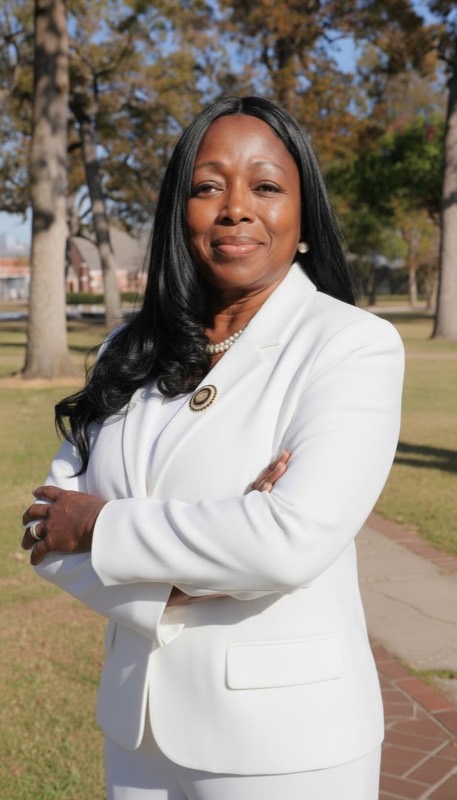
Louise Alexander defeated Mayor Kenneth Gulley in Bessemer’s Sept. 22 runoff, taking 2,376 votes to his 1,981, or 54.53% to 45.47%, ABC 33/40 and the Birmingham Free Press reported Sept. 23. Total turnout was 4,357 of 17,547 registered voters, about 25%. Alexander is a former state lawmaker and City Council member and is reported as the city’s first female mayor. Gulley had served 16 years.

The defining issue was Project Marvel, a data center campus proposed by QTS Data Centers of Kansas on roughly 1,600 acres, with 18 buildings totaling 4.5 million square feet, drawing up to 1,200 megawatts and announced at $14.5 billion. The company projects 350 permanent operations positions. The Birmingham Free Press reports that Gulley, the city attorney and the mayor’s chief of staff signed a nondisclosure agreement tied to the project, effective February 2025 through February 2027, which was released publicly in July after pressure from environmental groups.
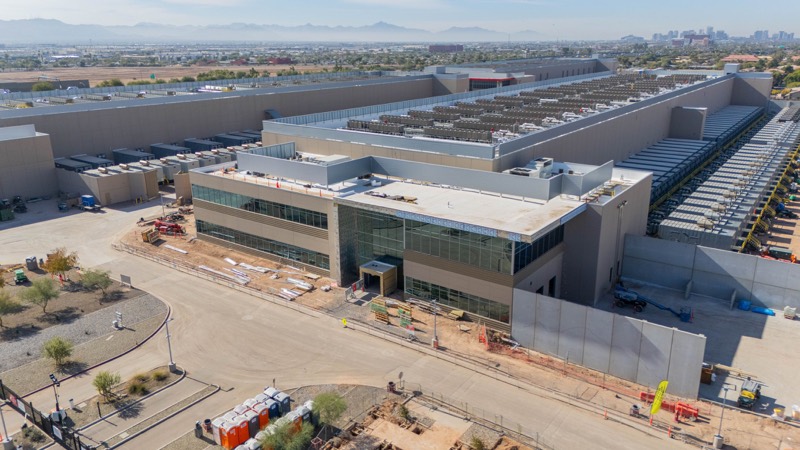
Gulley’s statement after the result: “It has been the honor of a lifetime to serve as your Mayor for the past 16 years.” Three other incumbents lost the same night. Council District 6 went to Valerie Williams over Carla Jackson, 420 to 240. Council District 7 went to Cleophus King, who had voted against the project’s rezoning last November, over Silas Baldwin, 352 to 248.
Four thousand three hundred and fifty-seven people decided this. That is a quarter of the registered voters in one Alabama city, and it was enough to end a 16-year mayoralty over a project almost nobody in town had been permitted to read the terms of.
The nondisclosure agreement is the part other cities can learn from. A mayor who has signed one cannot answer a question at a public meeting even if he wants to, which means the campaign becomes the only place the question can be asked. Virginia barred its state agencies from signing these in an executive order 10 days ago. No city in these nine states has to wait for a governor to do the same thing by ordinance.
A municipal runoff in a small city is the cheapest election there is to influence. Nobody spends money on it and turnout is low enough that a few hundred conversations move it. Bessemer is 66.6% Black, and a runoff there is decided by a few hundred conversations among the people carrying the project’s costs.
Arkansas’ largest county wrote rules and refused to grandfather the first project. The Pulaski County quorum court voted 11 to 4 on Sept. 22 to adopt the county’s first data center regulations, the Arkansas Advocate reported Sept. 23. Large data centers are classified as heavy industrial uses requiring conditional use permits, with a 500-foot setback from residential property, noise limits, and required electrical load analyses, water and wastewater plans, land-use suitability studies and decommissioning plans with financial assurance. Applicants must show the project will not materially impair the utilities serving surrounding properties.
The rules set no cap on how much power or water a facility may use. They also decline to exempt AVAIO Digital’s planned $6 billion campus near Wrightsville, which was proposed before the ordinance and which coverage puts at 760 acres with potential draw above 1 gigawatt.
Justice of the Peace Julie Blackwood, the lead sponsor, said she “did not think it was fair to let one company opt out on the rules just because they were first.” Wendell Griffen, a former circuit and appeals court judge now running for county judge, wrote the measure. County Judge Barry Hyde has seven days to veto it, according to the Advocate; KATV reported five days, and the two accounts cannot be reconciled from the coverage.
Wrightsville is a small, historically Black city in southeast Pulaski County. We are not printing a percentage because the town is under the 5,000-population threshold for Census QuickFacts and we have not pulled the American Community Survey table, and neither news account mentions the town’s demographics at all.
The grandfather clause is where these ordinances usually die. A county writes good rules and then exempts the project that prompted them, which means the rules apply to everyone except the company actually building. Pulaski County declined to do that, and a quorum court in any of these nine states can be handed that vote.
The air modeling for Spartanburg’s 457-megawatt permit used Greenville’s monitor. At a specially called meeting on Sept. 21, Spartanburg County Council members questioned the pollution monitoring behind the air permit South Carolina’s Department of Environmental Services issued Sept. 18 for the Valara data center on South Pine Street, Fox Carolina reported. Council members said the background air quality modeling relied on Greenville data rather than the T.K. Gregg Community Center monitor in Spartanburg, and that formaldehyde is not continuously monitored, with post-startup stack testing feeding monthly calculations instead. Public comment was not allowed at the meeting.
The 457 megawatts is permitted generating capacity and it decomposes. The permit adds about 409 megawatts across five 17-megawatt turbines and six 54-megawatt turbines, on top of 48 megawatts already permitted. Emission limits are 250 tons of volatile organic compounds on a rolling 12 months, 25 tons of hazardous air pollutants combined with none above 10 tons, and fine particulate at 35.88 pounds an hour.
Catherine Wannamaker, senior attorney at the Southern Environmental Law Center, raised formaldehyde, particulate matter and residents’ health. Resident Al Schneider told the council that “meetings and inquiries should have taken place before one shovel of dirt was even turned over.”
Which monitor supplies the background reading decides what the model says the air already contains, and therefore how much more a permit can allow. Using a monitor in another county is the whole calculation, not a rounding error.
The T.K. Gregg monitor sits in a historically Black part of Spartanburg. Asking an agency in writing which monitor it used, and why, is a question any resident can put on the record, and it does not require a lawyer or a technical consultant to ask.
Tuscaloosa County, Alabama, approved $314.5 million in tax breaks for a $3.2 billion campus. The Tuscaloosa County Economic Development Authority voted unanimously to approve incentives for Applied Digital’s Delta Forge 2 near Brookwood, the Birmingham Free Press reported Sept. 26. The package is $314.5 million in noneducational property, sales and use tax abatements over 20 years, alongside $270 million in community benefit payments over the same period, or $13.5 million a year, and a projected $131.5 million in education-related taxes.
The project is 210 megawatts of critical information technology capacity in an initial building of about 1.26 million square feet, on 160 acres of a 1,300-acre site. Construction was to begin in October 2026 with operations in 2028, at a peak construction workforce above 1,000 and more than 100 permanent onsite jobs. Neither report names the electric utility.
The two 20-year numbers sit beside each other. The county forgoes $314.5 million and receives $270 million in community benefit payments, which means the abatement is larger than the payment that is supposed to justify it. That comparison is in the coverage and it does not require an economist.
A community benefit payment is also not the same instrument as a tax. It is negotiated, it can be renegotiated, and its uses are set by whoever wrote the agreement. Ask to read that agreement before the ribbon cutting. The residents forgoing $314.5 million in county revenue include Black families in west Alabama whose schools draw on the same base.
Colleton County, South Carolina, got its first proposal a week after writing the rules. Eagle Rock Partners presented plans for the Rhodes Technology Park at a Colleton County Economic Alliance public information session, Live 5 News reported Sept. 22. The proposal covers more than 1,200 acres west of Interstate 95 off Mount Carmel Road, inside the Digital Infrastructure Overlay District the county council created Sept. 15, and is described at 1,000 megawatts.
Partner Ken Loeber told residents, “This is a single-user large hyperscale campus. We do not yet know who the user may be.” Brantley Strickland of the economic alliance projected that by year four the county would pass a $100 million annual threshold. Resident Nancy Thomas asked what training program would exist for local young people. Coverage does not specify whether the 1,000 megawatts is information technology load or interconnection capacity.
Colleton County is 33.6% Black, the largest Black share of any county with a new proposal this week. Last week’s issue described the county’s overlay district as the example of a pause used well, because it produced numbers on paper. The test arrived seven days later.
The overlay set a 65-decibel cap, 200-foot setbacks, a 300-acre minimum and a closed-loop or air-cooled requirement. Whether those numbers mean anything is now a matter of whether the county applies them to a project that does not yet have a named customer.
Georgia Power and Google agreed to fund nuclear upgrades with a subscription fee. Large customers would pay a fee on top of their bills to fund upgrades at Plant Vogtle near Augusta and Plant Hatch near Baxley, receiving clean energy credits in return, the Georgia Recorder reported Sept. 24 from WABE and Grist. The work would add 96 megawatts of nuclear generating capacity and the companies project about $900 million in customer benefits over the units’ remaining life.
Aaron Mitchell, senior vice president of strategic growth at Georgia Power, and Lucia Tian, director of advanced energy technologies at Google, announced the arrangement. It requires approval from the Georgia Public Service Commission. No docket number appears in the coverage and no residential bill impact analysis was published.
This is the model utilities will point to for the rest of the decade. A large customer pays a premium, existing plants get more capacity, and the utility says nobody else pays more. Whether that holds depends entirely on how the commission allocates the cost, which is a question asked in a docket rather than in a press release.
Georgia elects its commissioners, and the projected $900 million in customer benefits is the companies’ own figure that has not been tested by anyone at the commission yet. Georgia Power’s territory covers most of the state’s Black households, and they are the ones who pay if that $900 million does not arrive.
California signed seven data center laws in one afternoon. Gov. Gavin Newsom signed a package on Sept. 21 covering electricity cost allocation, water disclosure and environmental review. Three bills shift grid infrastructure costs onto data center operators and bar shifting them to low-income customers: SB 1168 by Sen. Jerry McNerney, SB 886 by Sens. Steve Padilla and McNerney, and AB 2383 by Assemblymember Rick Chavez Zbur. Three require disclosure of water use, supply, efficiency and drought planning to local governments and water suppliers: AB 2469 and AB 2619 by Assemblymember Diane Papan, and AB 1577 by Assemblymember Rebecca Bauer-Kahan. SB 887 by Padilla removes blanket environmental review exemptions.
Newsom said California has proven “we don’t have to sell out Californians or sacrifice our well-being” to succeed. The release contains no megawatt, water-volume or dollar figures, and the claim that the package is the most comprehensive in the nation is the governor’s own.
California is not in this coverage area and its politics do not transfer, but the bill text does. Every one of these nine states has a legislature that convenes in January, and a member who wants to file a cost-allocation bill now has seven drafted, argued and enacted examples instead of a blank page.
The one to read first is SB 1168, on rate structures, because rate structure is the mechanism that decides whether a household in Greenville or Greenwood pays for a building it will never enter. Greenwood is a majority-Black city in the Mississippi Delta, and rate structure is what decides whether it pays for that building.
Chesterfield County, Virginia, cannot agree on what to do with the money. For the second straight meeting, the Chesterfield County Board of Supervisors discussed how to spend expected data center revenue without reaching consensus, The Richmonder reported Sept. 24. A vote was pushed to Nov. 18. Proposals on the table include cutting the car tax from $3.25 to $1.79 per $100 of assessed value, addressing $185 million in school maintenance needs over the next decade, and raising fire staffing from three per shift to the standard four. Expected sales tax revenue is put at $1 billion over 20 years.
Supervisor Kevin Carroll of Matoaca said the revenue may be slower than expected. “Those data centers are not going to come out of the ground for a long time, because Dominion doesn’t have the energy to power them,” he said. Supervisor Jim Ingle of Bermuda said he is committed to giving “some relief to our citizens with that revenue.”
The leading use on the table is a car tax cut, which returns money in proportion to the value of the vehicle somebody owns. The competing uses are school roofs and fire staffing, which do not.
Nothing in the discussion ties the money to the neighborhoods nearest the sites. That is the standard outcome, and it is decided in a budget work session rather than at the zoning hearing everybody shows up for. Nov. 18 is the date, and a car tax cut returns the most to whoever owns the most car, while school roofs and fire staffing reach the Black neighborhoods closest to the sites.
The suit in Effingham County, Georgia, has a name for the buyer and a second case beside it. The Southern Environmental Law Center filed suit Sept. 21 in Effingham County Superior Court on behalf of five residents and the group One Hundred Miles against the county industrial development authority, alleging Georgia Open Meetings Act and Open Records Act violations in a July board vote on the land sale, the Atlanta Journal-Constitution and the Georgia Recorder reported. The buyer is identified in the filings as Octans Georgia. A separate suit brought earlier in September by three residents challenges the zoning changes before the county commission, and the two should not be conflated.
Zachary Hennessee, an SELC staff attorney, said Georgia’s public process rules “exist because communities should not learn about major decisions only after deals have been negotiated behind closed doors.” Eric Johnson, an authority board member and former state Senate leader, said of the process that if “we’d have put it out in front of the public, they’d have said, ‘No data center’ based on misinformation.” The project is announced at $20 billion on 1,440 acres, with 3.2 gigawatts of projected demand and a 15-year, 50% property tax abatement valued at roughly $900 million. Accounts differ on the floor area, at 4 million square feet in the Journal-Constitution and 4.4 million in Inside Climate News, and on the pledged community investment, at $85 million and $80 million.
Johnson said the quiet part into a reporter’s recorder. The reason for the closed process was that an open one would have produced a no. That is the procedure working as intended by the people who ran it, rather than a procedural defect.
Effingham County is 16.9% Black. The site sits about 1,000 feet from homes and next to two elementary schools, and it is 30 miles from Savannah.
Mississippi
A town of 1,400 turned out 350 people and the rezoning failed.

The Walls Planning Commission voted to deny an application to rezone about 1,200 acres from agricultural-residential to M-1 light industrial, DeSoto County News reported Sept. 23. Commissioner Jimmy Jones made the motion to deny and Commissioner Kyunna Gates seconded it. No vote tally appears in the coverage.
Roughly 350 people attended the hearing, which had been moved to the Walls Elementary School gymnasium in anticipation of the crowd. Walls has about 1,400 residents, so attendance was near a quarter of the town. Mississippi Today described Walls as a majority-Black town in its Sept. 16 report.
The applicants are landowners Robert and Will Abbay of Abbay Ag Services. No data center company was named on the application and no project has been announced, though a data center is the widely assumed use. Will Abbay called the proposal “probably the least invasive process to growth that you can imagine.”
The decision is a recommendation. The Walls mayor and board of aldermen make the final call, and no meeting date had been announced as of this issue.
Three hundred and fifty people in a gymnasium is the entire intervention, and it worked at the stage where it counts. Rezoning is the decision, and everything that follows is a permit for a use the zoning already allows.
It is not over, because a planning commission recommends and a board of aldermen decides, and boards of aldermen meet on weeknights in rooms that hold far fewer than 350. Anyone in Walls who wants this to hold should be finding out when that meeting is, because nobody has announced it.
What the application did not contain is the striking part: no company, no megawatts, no water figure, no jobs number. A town was asked to approve the category and trust that the particulars would be acceptable later. The residents declined to separate the two questions, which is the correct instinct and is available to any town. Three hundred and fifty neighbors in a room is a tactic available to any Black community facing a rezoning, and it works at the only stage where the decision is still open.
A Senate candidate called for a temporary ban on new data centers in Mississippi. Scott Colom, the Democratic candidate challenging Sen. Cindy Hyde-Smith, called for a temporary halt to new data center construction conditioned on the facilities being self-funding and on greater transparency in their agreements, Mississippi Today reported Sept. 24. Seven data center projects are under construction in the state.
“The reality is, the consequences of data centers in Mississippi are already here. We’re seeing it in our power bills,” Colom said. Of the incumbent he said, “She refuses to provide any oversight.” The report notes $2 million spent by the Leading the Future super political action committee and cites the Walls turnout as evidence of the backlash.
A United States senator has no authority over Mississippi zoning and cannot impose a construction ban. What a Senate candidate can do is make the issue expensive to ignore in a statewide race, which moves it onto the desks of the legislators and commissioners who do have that authority.
Watch whether the position survives contact with the general election. The transparency half of it, meaning disclosure of the agreements, is the part a state legislator could actually file in January. Disclosure is what lets a Black community in Mississippi find out what was promised in its name before the concrete is poured.
The Sierra Club gave Entergy Mississippi an F. The organization’s annual Dirty Truth report graded utilities on retiring coal by 2030, avoiding new gas generation and building clean energy to replace fossil load by 2035, Mississippi Today reported Sept. 25. Entergy Mississippi received an F and Mississippi Power a C. American utilities received an F overall for the second consecutive year.
Entergy plans about 3,500 megawatts of new gas capacity by 2035, including three new 754-megawatt plants. Mississippi Power plans 548 megawatts. Entergy has a 100-megawatt solar plant online since 2022 and 3 gigawatts of renewables approved or pending. Holly Bender, the Sierra Club’s chief program officer, tied the expansion to artificial intelligence demand. The report connects Entergy’s buildout to Amazon data centers across central Mississippi.
A letter grade from an advocacy organization is an argument, not a measurement, and it should be read as one. The underlying number is not an argument: three new gas plants at 754 megawatts each get built somewhere, and in this state that somewhere has historically been chosen from a short list of places. In Mississippi that short list has been Black communities, and the thing to watch is where the 754 megawatts each actually land.
Ten river states moved toward a compact on water exports. Leaders from 10 Mississippi River states announced plans for regulatory protections against data center water demand, Circle of Blue reported Sept. 22, following the Mississippi River Cities and Towns Initiative meeting in Natchez on Sept. 18. Missouri passed strict out-of-state water export rules in 2025, and Minnesota, Mississippi and Louisiana have agreed to pursue similar legislation. Three more state commitments would allow a Mississippi River Compact to go to Congress.
Mississippi Sen. Derrick Simmons said the river corridor lacks the protections the Great Lakes have “yet the resources of our corridor are more fragile and have a larger global impact.” Louisiana Rep. C. Travis Johnson put water-intensive activities at almost 80% of his state’s economy. Tennessee, Alabama and Arkansas are not named among the committed states.
Three states are in and three more are needed. The three missing from the commitment list include Tennessee and Arkansas, which sit on either side of the Memphis and West Memphis buildout, and Alabama, which is not on this river at all.
Simmons represents the Delta, where the water is and where the counties have the least ability to say who gets it. A bill filed in January is the venue, and it is worth knowing before the session which of your legislators has agreed to carry one.
The xAI plant on the state line
xAI offered to buy houses from people who agree not to sue.
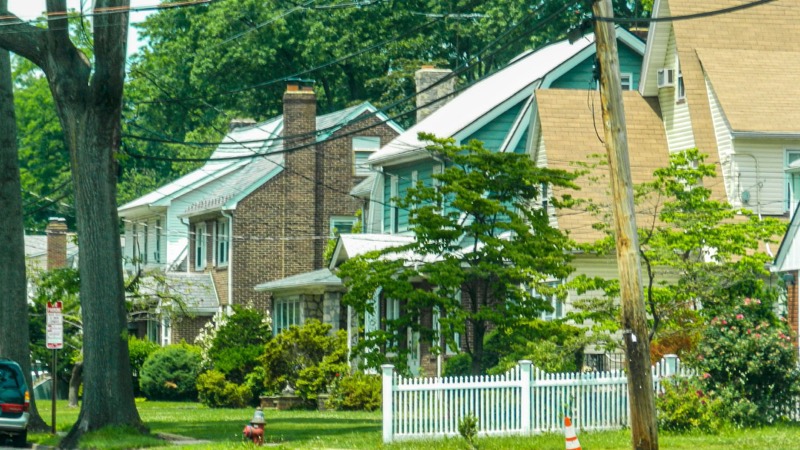
An undated letter from MZX Tech, an xAI subsidiary, offers to buy residential property in Southaven, Mississippi from residents who sign a release waiving their claims in the noise lawsuit against the company, the Mississippi Free Press reported Sept. 25. The reporter, Illan Ireland, obtained the letter and published an image of it.
The letter reads in part: “MZX denies all of the allegations against it. However, because MZX also requires property for its business purposes, MZX, through its real estate broker, is offering to purchase real estate in Southaven in exchange for, among other things, a release of all claims related to the lawsuit.” It also tells recipients that after executing the release they “will be unable to recover any damages or other relief from the lawsuit.”
No dollar amounts are disclosed. Residents told the outlet the offers appear to be based on appraisal values from real estate websites such as Zillow, and declined to give figures because they are involved in the litigation. The underlying suit was brought by Jason Haley, Preston Herrington and Taylor Logsdon over noise and vibration from the company’s gas turbines, and the complaint identifies more than 10,000 potential class members. xAI did not respond to the outlet’s request for comment.
This is lawful and it is how these cases end. A class action is only as strong as the number of people still in it, and buying out the loudest neighbors one at a time is cheaper than fixing the noise. Each person who signs is making a reasonable decision for their own household and a bad one for the block.
Southaven is 39.3% Black, a significant share and not a majority, and the people closest to the turbines are the people whose houses are worth least. An offer pegged to a website’s estimate of a house next to an industrial noise source is an offer priced by the very condition being complained about.
Anybody who receives one of these letters should have a lawyer read it before signing, and the plaintiffs’ firm in the existing case will do that at no cost. Signing it ends your claim permanently, and there is no version of the release that lets you take the money and stay in the class.
Memphis residents filed a federal class action over the turbines on Sept. 23. Robert Carter and Sabrina Anderson filed suit in the United States District Court for the Western District of Tennessee, Action News 5 reported Sept. 25. The complaint alleges that gas-fired turbines at the Southaven facility produce relentless noise and physical vibrations, and that the company went from three turbines to 69 between August and September 2025, which it characterizes as a 2,300% increase.
The suit brings five claims: private nuisance, public nuisance, negligence, negligence per se under Memphis noise ordinances, and trespass on the theory that noise waves and vibrations invade the property. It seeks an operational halt or significant noise reduction, compensatory damages for diminished property values and punitive damages, and demands a jury. The neighborhoods named are South Memphis, Whitehaven and Southaven. No decibel figures appear in the coverage.
Trespass is the claim to watch. Nuisance asks a court to balance the harm against the benefit, which is an argument a company with 69 turbines and a national security story can win. Trespass asks only whether something crossed the property line, and sound waves either did or did not.
Whitehaven and South Memphis are Black neighborhoods and the plant is across the state line, which is the arrangement. The emissions and the noise are in Tennessee and the permit is in Mississippi, so the people who breathe it have no vote over the body that approved it.
The Justice Department asked a judge to pause the NAACP’s Clean Air Act case, citing national security. The department asked the court to stay the NAACP’s suit, which alleges the company ran turbines in Southaven without an air permit, pending the department’s own appeal, Action News 5 reported Sept. 25. The filing argues in favor of the company’s importance to national security. In June the department moved to intervene on behalf of the Environmental Protection Agency and dismiss the case, the judge denied it, and the department appealed. Neither the court nor the judge is named in the coverage.
The Clean Air Act gives private parties the right to sue when a facility operates without a permit, and that citizen suit provision exists precisely because enforcement agencies do not always enforce. Here the federal government is in court arguing against the citizens using it.
National security is not a standard with an address. It does not distinguish between a facility in Boxtown and a facility anywhere else, which is what makes it useful to whoever invokes it. Watch whether the stay is granted, because a stay in an unpermitted-operation case is functionally a permit for the duration. The citizen suit provision is why an NAACP chapter can act when the agency will not, and a stay hands the facility time the community does not have.
A Memphis moratorium would not reach the plant a mile away. The company’s DeSoto County operations keep expanding less than a mile from the Memphis city line, unaffected by the city council’s pending moratorium, the Daily Memphian reported Sept. 21. Reporter Samuel Hardiman described the site at 2875 Stanton Road in Southaven on Sept. 17, with buses shuttling workers, and wrote that the wind that day blew from the south, carrying emissions north into Whitehaven.
The Memphis City Council takes a final vote Oct. 6 on a revised 12-month moratorium. The city would continue accepting applications but would not process or approve them while a study committee develops permanent zoning rules, Action News 5 reported Sept. 25. Existing lawfully operating data centers are exempt if they do not expand building footprint, electrical demand, utility capacity or operational intensity. A companion regulation ordinance posted by the city defines a large data center as one with projected electrical demand of 20 megawatts or greater, or designed to reach that within 10 years.
A city boundary stops a zoning ordinance and does not stop air. Memphis can pass the strongest moratorium in the region on Oct. 6 and the turbines a mile south will run exactly as before, because they are in another state.
The venue that matters for the existing plant is the Mississippi Department of Environmental Quality and the courts, not the Memphis council. The moratorium is still worth passing, because it governs the next one, and the next one is what Boxtown and Whitehaven have not yet absorbed. Boxtown and Whitehaven are Black neighborhoods, and the plant a mile south of the city line does not read the ordinance.
Data centers became the attack ad in a Memphis congressional race. Three Star PAC, a Democratic-aligned committee, is running an advertisement against Sen. Brent Taylor, the Republican candidate in Tennessee’s 9th Congressional District, over data centers, the Tennessee Lookout reported Sept. 24. The ad says Taylor took more than $100,000 from data center companies and wrote Senate Bill 2128, and it says: “They’re coming for our rivers, our neighborhoods, our farmland, because Brent Taylor wrote the law allowing massive data centers to take over Tennessee.”
The committee’s own September poll puts district voters at 68% opposed to data centers and 32% in support, and a separate poll had Taylor leading Rep. Justin Pearson 48% to 44% before the advertisements ran. Three Star PAC reported $105,000 in receipts in the first half of 2026 and had spent $675 as of June 30. District 9 was split from a majority-Black urban Memphis district in a May special session.
The poll is the committee’s own and should be read as advocacy, but 68 to 32 is the same direction as every independent survey this year. The relevant fact is that a consultant looked at this district and concluded data centers were the most damaging thing to run on.
The redistricting and the data center fight are one story here. A district drawn to dilute Black voting strength in Memphis is now the district where the plant’s neighbors vote, and their representation was reduced in the same year the turbines were installed.
Virginia
One Virginia county ended building by right. Petersburg has not.
The Prince William County Board of Supervisors voted unanimously on Sept. 22 to adopt a zoning text amendment ending by-right data center development countywide, the Prince William Times reported the same day. Every future data center will require a special use permit approved by the board. The Data Center Opportunity Zone Overlay District, adopted in May 2016, shrinks from roughly 9,700 acres to 3,500.
Developers have a 90-day grace period, and projects already built, under construction or with approved site plans proceed under the old overlay. A preliminary vote to eliminate the grace period failed, with only Supervisors George Stewart, Tom Gordy and Kenny Boddye supporting immediate implementation.
“We’ve bent over backwards enough for this industry,” Stewart said. “Now it’s time to stand up for the people that have to live with these monstrosities in their communities.” Board Chair Deshundra Jefferson said of the compromise, “I’m not a fan of the 90 days, but it is a compromise, and I want this to be done.” Rachel Ellis of the Coalition to Protect Prince William County said of the result, “There’s no teeth to this.”
By right means a company builds without asking: no hearing, no vote, no evening when a resident can stand up and say the word no. It is the single most consequential provision in any zoning code and almost nobody outside a planning office knows the term.
Petersburg still has it. The city changed its zoning in 2024 to make data centers a by-right use in industrial districts, and Data Center Dynamics reported in July that four campuses are planned there as a result, without rezoning and without public hearings. Among them are a Menlo Digital project on 74 acres at 104 proposed megawatts with a 300-megawatt substation, and a Warrenton Group project on 175 acres with six buildings. Petersburg is a majority-Black city, and Prince William is not.
Repealing a by-right provision takes a zoning text amendment and a council majority. It does not take a state law, a lawsuit or a consultant. Prince William just showed the procedure, and it is the same procedure in Virginia whether the council is in Woodbridge or Petersburg.
The state will study brownfields for data centers, and the list that circulated has no Southside on it. Executive Order 22 directs the state energy department to study data center siting and identify locations that diversify economic benefits and minimize energy, water, land use, infrastructure and community impacts, with the study due in about 180 days. Cardinal News ran an inventory on Sept. 24 of sites that might qualify, compiled by founding editor Dwayne Yancey.
The sites named are in southwest Virginia’s coal counties, the former Radford Foundry, Danville’s White Mill, Roanoke’s former American Viscose plant, the Smith Gap landfill in Roanoke County at 94.5 acres, the former Kim-Stan landfill in Alleghany County at 30 acres, and the Central Virginia Training Center in Amherst County at 110 acres. No Petersburg, Richmond, Hampton Roads or Southside site appears on the list.
This is a journalist’s inventory and not the state’s study, which is not due until March. The absence is still worth naming now, because the executive order’s own water scarcity provision designates the Eastern Virginia Groundwater Management Area, which covers Hampton Roads and Southside, as a cooling water scarcity area.
So the eastern half of the state is named as the place too short of water to cool these buildings, and also does not appear on the list of places that might host them. Those two facts can both be true and they point in opposite directions for the region’s economy. When the actual siting study lands in March, the first thing to check is which counties are in it. The places missing from that inventory are Petersburg, Richmond, Hampton Roads and Southside, which is where most of Virginia’s Black population lives.
A hearing examiner heard argument on what the merger case is allowed to examine. Clean Virginia argued before State Corporation Commission Hearing Examiner Mathias Roussy on Sept. 22 for an order compelling NextEra to produce documents on alleged political conduct in Florida and on its failed bids for Santee Cooper and JEA, Virginia Mercury reported Sept. 23. Clean Virginia attorney Greg Habeeb said “the behavior of the party acquiring Virginia’s largest electric utility is clearly relevant.” Joseph Reid, for the joint petitioners, said the request would “turn this case into a mini trial” and that “it would be a circus.”
Figures in the record include $23.6 million NextEra spent on the Santee Cooper bid, $2.6 million on JEA, a $150 million settlement over alleged Florida ghost candidate activity, and more than 2,200 discovery questions already answered. No ruling had issued as of Sept. 23. The case is docketed as PUR-2026-00112 according to coverage. The commission’s own site could not be reached.
Counts dollars spent on prior bids, settlement dollars and discovery responses · Measures a discovery motion, not a merger decision · Virginia Mercury, Sept. 23, reporting by Shannon Heckt, with WTVR, Sept. 22 · The SCC docket could not be reachedA statewide poll found most Virginians had heard nothing about the merger. Two outlets reported on the same Embold Research poll of Virginia voters, fielded Aug. 26 to 31 and commissioned by the Virginia Distributed Solar Alliance. Both give a margin of error around 3.2 points. WHRO and the Virginia Center for Investigative Journalism reported 1,107 respondents on Sept. 25; The Center Square reported 1,017 the same day and named a second commissioning group. We could not resolve the discrepancy and are not printing a sample size.
In the WHRO account, about two-thirds say electric bills are too high, 80% name rising costs as a primary concern for lawmakers, 75% had heard little or nothing about the Dominion and NextEra merger, 36% opposed it and 59% were unsure. After hearing statements from both sides, opposition rose to 63% and uncertainty fell to 27%. In The Center Square account, 89% support requiring data centers to pay the full cost of the infrastructure built to serve them. Neither write-up contains a breakdown by race, region or income.
Three-quarters of Virginia voters had not heard of a $67 billion transaction affecting their electric bills, six weeks before the first public hearing on it. That is not apathy; it is what it looks like when a proceeding is conducted correctly and reaches nobody.
The first hearing is Oct. 7 in Newport News, and it is the only one east of Richmond. Norfolk, Portsmouth, Hampton and Newport News are all inside this territory and none of those cities is a party to the case. Those cities hold Virginia’s largest Black communities, and not one of them is at the table in a case that sets their bills.
A Roanoke County project was confirmed as a data center, and the disclosure ban is why. The Wood Haven Technology Park project was confirmed as a data center developed by Clearview Dynamics on 94 acres, drawing water from Spring Hollow Reservoir, Cardinal News reported Sept. 22. The reservoir currently supplies 7.5 million gallons a day of an 18 million gallon capacity. Power and water requirements are not yet determined and due diligence runs through March 2027, with closing anticipated in October 2027.
The park is owned by Roanoke at 44.2%, Roanoke County at 44.2% and Salem at 11.6%. John Hull directs the Western Virginia Industrial Facility Authority. The disclosure follows Executive Order 22’s bar on state agencies signing nondisclosure agreements about proposed data center development.
Roanoke County is in western Virginia, and it is here because it is the first evidence that the nondisclosure ban changes what the public finds out, and it took four days.
Compare that against Bessemer, where the mayor, the city attorney and the chief of staff had all signed one and the public learned the terms only after an advocacy group pushed for their release, and then removed him.
Federal
The program that pays for school and library internet is on the table.

The Federal Communications Commission’s open inquiry into E-Rate is considering whether to end the program, limit it to rural areas, or condition participation on device restrictions and parental opt-out policies, Chalkbeat reported Sept. 23 in a piece republished by Route Fifty. The docket is WC 26-133. Comments are due Oct. 13 and reply comments Nov. 12.
E-Rate disburses roughly $3 billion a year and is the fifth-largest source of federal support for schools. It covers 20% to 90% of a school’s internet cost depending on location and poverty level. When Congress created it in 1996, 14% of American schools had internet access. The Alaska Gateway School District receives more than $700,000 a year, about 7% of its budget.
Arielle Roth, who runs the National Telecommunications and Information Administration, framed the case for restrictions. “Subsidies are not neutral. Subsidies can encourage greater consumption,” she said, and on opt-outs, “the same conditions that give parents an escape valve could also serve as a check on the subsidy.” Noelle Ellerson Ng, chief advocacy and governance officer at the School Superintendents Association, disagreed. “Screen time is a curriculum and a content question,” she said. “The FCC is not the body to regulate those things.”
The two arguments sit next to each other. One says a subsidy encourages consumption, which in this context means schools buying too much internet. The other says the agency deciding how much internet a child should have is the wrong agency.
In a lot of small Southern counties the school and the library are the only two buildings with a reliable connection, and the library is where people without one at home go to file for benefits, apply for jobs and do homework. Limiting E-Rate to rural areas sounds like protection for the South, but many of the poorest districts in these nine states are inside city limits.
Oct. 13 is 15 days out, and a school board, a library board or a county commission can file a comment in docket 26-133 as a letter. It does not require a lawyer, a filing fee or a particular format, and a superintendent describing what the money actually buys in one specific district is worth more in that record than another association brief. The districts where E-Rate money buys the most are rural and Black.
Twenty-one cities told the FCC to leave local permitting alone. Industry groups and local governments filed sharply opposed comments in FCC docket 25-253, which proposes a 120-day shot clock and limits on local fees for wireline broadband permits, Broadband Breakfast reported Sept. 22. USTelecom asked for 60 days for standard applications and 90 for complex ones. Supporting the proposal: USTelecom, NCTA, NTCA, INCOMPAS, the Fiber Broadband Association, ACA Connects, WISPA, the Wireless Infrastructure Association and AT&T.
Opposing it: the National League of Cities, whose chief executive is Clarence Anthony, a coalition of 21 large cities including Boston, Chicago and Las Vegas, and state and local telecom regulators. Kathleen Slattery Thompson of USTelecom called local barriers “structural impediments that alter rational investment and construction decisions.” The league’s filing said its members “strenuously object to the portrayal of local permitting as an obstacle.” Local governments noted that under the 2018 federal shot clock for wireless, agencies met the deadlines only 50% of the time.
A shot clock means that if a locality does not act within the window, the application is deemed granted. That is the whole mechanism, and it converts a small town’s understaffed permitting office into an automatic approval machine.
The fee cap is the part with a direct cost. Right-of-way compensation is money a county collects for use of its own property, and capping it federally moves that money from the county budget to the company. Small rural counties have the fewest staff and the smallest budgets, which means they are the ones the clock runs out on. Those are Black Belt and Delta counties, where a deemed-granted application is how a data center arrives without a vote.
Civil rights groups asked for a Democratic nominee alongside the Republican one. Nine organizations wrote to the Senate Commerce Committee asking that Commissioner Anna Gomez be renominated alongside Danielle Thumann Severs, Broadband Breakfast reported Sept. 25. The signers are the Leadership Conference on Civil and Human Rights, the National Urban League, the Hispanic Federation, the NAACP Legal Defense and Educational Fund, the ACLU, Common Cause, the Communications Workers of America, LULAC and UnidosUS. Their letter calls nominating a Republican without an accompanying Democrat “a breach of democratic norms.”
Separately, Sen. Ron Wyden asked Gomez on Sept. 25 for a legal opinion on whether the Communications Act permits the commission to operate with commissioners from only one party, warning that partisan actions could be overturned in court. If Thumann Severs is confirmed she becomes the third Republican, leaving Gomez the only Democrat. Thumann Severs was nominated Aug. 7.
Every item in this section runs through a five-seat commission, and the composition of that commission decides them. E-Rate, Lifeline, the Universal Service Fund, the permitting preemption, copper retirement and the broadband map are all votes there.
None of this looks like a Southern story, but the same body is deciding whether a library in Sunflower County, Mississippi, keeps its internet subsidy. Sunflower County is majority Black, and five seats in Washington decide that question.
A think tank told the FCC not to regulate broadband prices in its competition report. The Free State Foundation filed in the commission’s 2026 Section 706 report proceeding arguing against retail price caps, Broadband Breakfast reported Sept. 24. President Randolph May and Senior Fellow Joseph Kennedy wrote that “price regulation is not the answer for broadband affordability” and that this “is certainly not the time to renew efforts at rate regulation as the broadband marketplace becomes ever more competitive.” They cite a Comcast offering at $40 a month for 300 megabits per second and attribute $21 billion in BEAD savings to satellite competition. Christopher Ali of Penn State, on the other side, cites a $78 median monthly broadband bill.
Issue 03 reported that every state accepting BEAD money agreed to a grant condition barring it from regulating broadband rates. So the argument now being made at the federal level has already been settled contractually in all nine of these states.
That is why the two figures in this item are worth keeping together. An advertised promotional rate and a median bill measure different things, and the gap between them is where the actual affordability argument lives. That gap is where a Black household decides whether to keep service, and neither number is collected by race.
BEAD watch
Four state broadband directors said the second round will not finish the job. Directors from Washington, Indiana, Oklahoma and Ohio said the supplemental BEAD round excludes underserved locations and community anchor institutions, leaving gaps despite large unspent balances, Broadband Breakfast reported Sept. 23 from a summit in Milpitas, California. The distinction that governs eligibility is the 25/3 megabit threshold for unserved locations against the 100/20 threshold for underserved ones, and only unserved locations are in the supplemental round.
Jordan Arnold, Washington’s broadband director, said about 1,000 underserved locations in his state are excluded. “I’m just banging my head against the wall because that community desperately needs service,” he said. Projected remaining balances are $350 million in Washington, $300 million in Indiana and $340 million in Oklahoma. Peter Voderberg of BroadbandOhio said, “We want this money to stay in Ohio to benefit Ohio.” No Southern state was on the panel.
The two thresholds are the whole story and neither is a household. A location served at 30 megabits down is underserved by the 2024 federal definition and ineligible for this round, because the round runs on the 2015 definition. An analysis reported last week put the number of locations in that gap nationally at about 600,000.
None of these nine states has published its supplemental eligible location list, so nobody in this region can yet check whether their own address is in that gap. That is the document to ask for, by name, from your state broadband office. The addresses sitting in that gap are in rural Black counties, and nobody there can check without the list.
Louisiana said 52,000 more locations can now get service. The Louisiana Office of Broadband Development and Connectivity said more than 52,000 homes and businesses gained broadband availability over six months, a 3.16% increase in the state’s total served locations against a 0.9% national average, putting Louisiana fourth nationally for proportional growth. The figures come from the Federal Communications Commission’s Broadband Data Collection reflecting availability as of December 2025.
The item went out by email on Sept. 22 and does not appear on the office’s own press release page, whose most recent posting is Sept. 16. No official is quoted by name. The fourth-place ranking measures growth rate, not the level of access.
The unit matters here. Broadband Data Collection counts locations, which are addresses, and it records availability as reported by providers, not households and not anybody actually connected. A location that gained availability means a company told the commission it could serve that address.
The data is also nine months old at publication. Louisiana is the state in this region that publishes numbers most often, which is worth something, and this one still does not tell a resident of Tensas Parish whether they can get service today. Tensas is a majority-Black parish, and an availability count does not tell a family there anything they can act on.
North Carolina extended its satellite grant to Sept. 30. The Division of Broadband and Digital Opportunity moved the deadline for its $1 million Broadband Satellite Resiliency Grant from Sept. 23 to 11:59 p.m. Sept. 30, the office announced Sept. 23. This corrects last week’s issue, which reported the program closing Sept. 23. State agencies, units of local government, volunteer fire departments and community anchor institutions including schools, libraries, community colleges and community centers may apply.
The money buys satellite equipment and installation and cannot be used for service subscriptions. Priority goes to organizations in the 39 counties in the Hurricane Helene federal disaster area and to the Eastern Band of Cherokee Indians. The funding is state money appropriated through the GREAT program, not BEAD and not BEAD non-deployment funds. This was the only item published by any of the nine state broadband offices during the week.
Two days are left. If you know a volunteer fire department, a library or a community center that could use backup connectivity, telling them today is the whole intervention.
The priority geography decides who this money reaches. The 39 Helene counties are in western North Carolina, which is among the least Black parts of the state. The Black Belt counties of eastern North Carolina, which take hurricanes off the Atlantic, are eligible but not prioritized.
Around the states
Eight of the nine broadband offices published nothing, for the second week running. Only North Carolina posted a news item between Sept. 21 and Sept. 27, and it was the satellite grant extension above. Louisiana sent one item by email that never reached its own news page. The other seven published nothing at all.
Tennessee’s broadband announcements page has not been updated since Nov. 13, 2024, which is nearly two years. Georgia’s broadband press release page carries nothing newer than July 2021, and the Georgia Technology Authority press release page reads “No press releases.” Mississippi’s BEAM last posted a day-dated news item in January 2024 and its most recent BEAD notice is from June 2025. Alabama last posted in March, Arkansas in June, South Carolina in June and Virginia’s broadband pages in November 2025.
None of the nine has published a supplemental eligible location list or opened a supplemental challenge window. Under the policy notice NTIA released Sept. 3, a state has seven days after completing its review to publish that list, then broadband providers, local governments and nonprofits get 30 days to challenge, then the state has 30 days to adjudicate with no rebuttal round.
Thirty days is the entire window in which a county, a cooperative or a resident can contest whether an address belongs on the funded list. It opens when the state publishes a document, and eight of these nine offices have news pages that would not tell you it happened.
Watch the BEAD document pages directly rather than the news pages, and check on a schedule. If the list posts on a Friday and nobody notices for two weeks, the challenge window is already a third gone. The counties most likely to miss a Friday posting are the rural Black counties with the most addresses riding on it.
Virginia’s own broadband grant has closed comments and announced nothing. The comment period on draft 2026 guidelines for the Virginia Telecommunication Initiative closed Sept. 18 and no application round has been posted. The draft adds a category of additional eligible use projects covering make-ready work, undergrounding, mandated relocation and disaster recovery infrastructure.
Measures a closed comment period, not an open application · Virginia DHCD, program page, Sept. 28Cost and access
One in seven American households now depends on a phone for the internet. The share of households the Purdue Center for Regional Development classifies as mobile-dependent rose from 11.9% in 2019 to 14.1% in 2024, according to a report by Roberto Gallardo that the Benton Institute circulated Sept. 25. The report itself is dated August 2026, so the figure is not new this week.
The measure is a composite index rather than a single survey variable. It averages two overlapping percentages, households whose only internet is a cellular data plan and households whose only devices are mobile ones, and it is built from American Community Survey five-year estimates at the census tract level, covering 82,551 tracts in 2024. Households with no internet access at all fell from 17.6% in 2017 to 6.5% in 2024, while households relying solely on cellular rose from 7.5% to 11.5%. Disability, income, educational attainment and homeownership all predict mobile dependence. The report contains no state, county or racial breakdowns.
Mobile-only is the shape the divide takes once the outright disconnection number gets small enough to declare victory over. You cannot fill out a benefits application, write a resume or take an online course on a phone with a capped data plan, and none of those failures shows up as being unconnected.
Hold this against the Memphis figure from issue 03, where the median household mobile bill was near $165 a month. The households most likely to be phone-only are the ones paying the most per usable gigabyte, and the federal Lifeline benefit against that is $9.25. Phone-only is where the divide sits for Black households once the disconnection number gets small enough to celebrate, and $9.25 against a $165 bill is the federal answer.
The 42% Universal Service Fund charge takes effect around today. The Federal Communications Commission proposed a fourth-quarter contribution factor of 42.0% on Sept. 14, up from 38.8% in the third quarter and the highest on record. A proposed factor is deemed approved 14 days after release absent commission action, which puts the operative date at roughly Sept. 28. The factor is charged against carriers’ projected interstate and international end-user revenues and is passed through to customer bills.
The announcement itself fell outside this coverage window and was reported in last week’s issue. The public notice carries the per-program demand figures, but fcc.gov could not be loaded, so they are not in hand.
Counts a percentage rate charged on carrier revenues · Not a charge per household · Announced Sept. 14, outside this window, via Benton Institute and CommLaw Group, Sept. 15Nothing moved on copper retirement, and the date is seven weeks out. No filing, order or coverage on copper telephone line retirement appeared between Sept. 21 and Sept. 27. The date still stands. AT&T’s discontinuation, approved automatically in January when the commission did not act within 31 days, affects roughly 90,000 customers across 18 states, more than 30% of the company’s copper footprint outside California, and could begin Nov. 15. Thirteen of those 18 states are Southern, including eight of the nine covered here.
Copper works when the power is out, because the phone company powers the line from the central office. The replacement equipment needs electricity inside the house. The households still on copper skew old, rural and poor.
Nobody has to wait for a new filing. A county commission, a sheriff’s office or an emergency management director can write the commission today asking which addresses in their county lose service and what the alternative is. Virginia localities did exactly that two weeks ago and it cost them a letter. In the Black Belt the households still on copper are elderly, and that line is what works when the power goes out.
Algorithms
Two senators asked for federal rules on license plate readers. Sen. Raphael Warnock of Georgia and Sen. Katie Britt of Alabama wrote to Attorney General Todd Blanche seeking federal guidelines for automatic license plate readers and disclosure of how much federal money has been spent on them, the Georgia Recorder reported Sept. 23. Their letter says they are “deeply concerned about the misuse of ALPR systems and believe that appropriate safeguards are necessary to protect against unauthorized access and abuse.”
About 140,000 law enforcement officers have access to these systems and 19 people were arrested in Georgia in 2026 for misusing the cameras. Flock Safety, the largest vendor, is based in Atlanta. The coverage documents cases of women stalked by former partners with law enforcement access. State Sen. John Albers of Roswell said the technology “can’t be trusted to manage itself. And right now there are no guardrails at all.”
In a separate piece Sept. 23, Michael De Dora of Access Now and Maria Villegas Bravo of the Electronic Privacy Information Center put the network at more than 120,000 Flock cameras in 49 states capturing about 20 billion plate readings a month, with 71% of stolen-vehicle alerts in one California city containing misread plates and more than 170 documented abuse cases catalogued by the Institute for Justice. On the same night, Spartanburg County Council postponed a first reading of proposed Flock regulations, citing a need for legal guidance on criminal penalties.
Neither the letter nor the coverage mentions who gets driven past these cameras most often, which is a gap worth noticing in reporting about a system that logs 20 billion license plates a month and is concentrated in the places police patrol most.
The purchase is a local decision. A city council or county commission buys these cameras, signs the contract and sets the retention policy, and those three things are where a rule can actually be written. Ask how long the readings are kept, who outside the department can query them, and whether an audit log exists that anyone outside the department can see. Black drivers are who that unasked question is about, and those three department-level questions are the ones a council can actually answer.
Black immigrants carry the weight of federal facial recognition, three advocates argued. Tsion Gurmu and Nekessa Opoti of the Black Alliance for Just Immigration and Fatima Mohamed of Columbia Law School published an analysis of federal biometric systems in Tech Policy Press on Sept. 24. Current deployment figures: about 200,000 people are in Immigration and Customs Enforcement’s Intensive Supervision Appearance Program and roughly 84% of them use the SmartLINK app; Customs and Border Protection runs biometric checks at every international airport on entry, 66 airports on exit and 39 seaports. The piece names Mobile Fortify, HART, Clearview AI and Palantir as components.
One set of figures in the piece needs a date on it. The error rates it cites, 1% for lighter-skinned men against 34.7% for darker-skinned women, and one vendor with 93.6% of errors on darker-skinned subjects, come from the 2018 Gender Shades benchmark of commercial systems of that era. They are not measurements of any system in federal use now, and no comparable independent audit of the current federal stack is public.
The piece also reports that in July the Department of Homeland Security signed a biometric data-sharing agreement with CARICOM IMPACS covering six Caribbean countries, adding to agreements with Mexico, Colombia, Belize, Chile and Ecuador. No Southern state is named in the piece; the geographies are Ohio and Minnesota.
What is missing here is any published audit. Eight years after a benchmark showed commercial face matching failing hardest on darker-skinned women, the federal systems now deployed at every airport in the country have no published independent accuracy test at all. Everyone arguing about this, in both directions, is arguing from 2018 numbers.
That is a thing a member of Congress can demand and a thing worth asking for. Until it exists, be careful with the old figures, including when they appear in reporting you agree with. Black travelers and Black immigrants are the population the 2018 benchmark said these systems failed hardest, and no current audit exists to say whether that changed.
The African Diaspora
906 million people in Africa live under a signal they do not use. The GSMA and the Partnership for Digital Access in Africa published a roadmap on Sept. 21 titled “Advancing Digital Connectivity in Africa: Charting Africa’s Path to 1 Billion Connected People by 2030.” The usage gap, meaning people within mobile broadband coverage who do not use mobile internet, is 906 million, about 60% of the continent’s population. The coverage gap, meaning people with no mobile broadband signal at all, is 122 million, about 8%. Globally 3.1 billion people are in the usage gap.
Ellen Johnson Sirleaf, co-chair of the partnership and former president of Liberia, said the goal “is ambitious, but it is achievable” if connectivity, electrification, affordable devices and digital skills are brought together. John Giusti, the GSMA’s chief regulatory officer, said Africa “has already built much of the network foundation for its digital future” and that the urgent task is closing the usage gap.
The usage gap is more than seven times the coverage gap. That ratio is the argument in one number, because it is the same argument made on another continent with far bigger figures: building more network does not close a gap made of price.
Every time a state broadband office in these nine states reports how many locations gained availability, this is the number to hold beside it. Louisiana reported 52,000 locations this week and did not report a single subscription. The same ratio describes Black households here, where availability gets counted and subscription does not.
The cheap smartphone is getting further away, and a tax cut is the one thing that worked. An entry-level handset costs 44% of monthly income for the poorest fifth across low- and middle-income countries and 76% of monthly income for the poorest fifth in sub-Saharan Africa, TechCabal reported Sept. 24. Memory prices more than doubled between the third quarter of 2025 and the first quarter of 2026, then rose a further 80% to 90% in the second quarter of 2026, driven by artificial intelligence chip demand. The average smartphone selling price in Africa rose $41 year over year to $202, and shipments of devices under $100 fell 34%.
One country ran the experiment. South Africa removed a 9% excise duty on phones below about $156 in April 2025, and entry-level smartphone sales rose 80% over the following 11 months. Caroline Mbugua of the GSMA said Africa “has built the networks. But not enough people can afford to use them,” and that governments “continue to treat spectrum as a revenue resource.”
The data center buildout across these nine states and the price of a phone in Lagos are the same market. Memory that goes into artificial intelligence servers does not go into cheap handsets, and the people priced out are at the far end of a supply chain whose near end is being built in Bessemer and West Memphis.
The South African result is the one that transfers. One tax came off and sales rose 80% in under a year, which is the clearest available evidence that the barrier is price and not interest.
People and money
Entergy filings put Google’s Arkansas power bill at $2.1 billion, and two figures do not match. Unredacted Arkansas Public Service Commission records from early September put Google’s total payment to Entergy Arkansas at $2.1 billion over 20 years, with $1.6 billion for the Cypress Solar plant at 600 megawatts plus a 350-megawatt battery system, $190 million as Google’s transmission upgrade contribution, and a termination fee near $2 billion for the first 13 years, mgrid.org reported Sept. 23. The same report puts at $5.77 the monthly residential bill increase in June 2026 attributable to three generation projects, and at $1.1 billion Entergy’s projected net system benefit.
The unresolved number is Google’s upfront contribution, reported at $526 million by the Arkansas Democrat-Gazette on Aug. 31 and at $443 million in the filings mgrid describes. We cannot reconcile the two and are printing both. Issue 03 reported the $526 million figure.
Randy Zook, chief executive of the Arkansas State Chamber of Commerce, told Talk Business & Politics on Sept. 23 that data centers are “not bad for the community, if they’re regulated properly” and that the companies “will pay. They’re contractually obligated to pay the full cost.” He said a newspaper calculation omitted $83 million a year in payments across 19 years.
An $83 million discrepancy in one direction and an $83 million discrepancy in the other direction are the same kind of problem. These agreements are complicated enough that reasonable people reading the same documents produce different totals, which is exactly why the documents should be public without a lawsuit.
West Memphis, where the campus is going, has a large Black population. The $5.77 is on every Entergy Arkansas customer’s bill regardless of where they live.
Alabama’s attorney general can intervene in rate cases, and mostly has not. Under Alabama Code Section 37-1-16 the attorney general may intervene in Public Service Commission rate cases on behalf of the public, a power largely unused until this summer, when the office entered a natural gas company case, the Alabama Reflector reported Sept. 24. Alabama residential electricity rates were 16.04 cents per kilowatt-hour in June 2026 against a regional average of 14.89 cents.
Jeff McLaughlin, the Democratic nominee for attorney general, said the office “needs to be the champion of rate payers in our state where energy bills are at least as high or higher than in the rest of the country,” and noted it has been about 40 years since a rate case on some Alabama Power rates. Katherine Robertson, the Republican nominee, is chief counsel to the current attorney general. Daniel Tait of Energy Alabama said the office “gets access to a lot more information that is not made public.” Alabama Power has voluntarily proposed a rate freeze through 2029. The article does not mention Black or low-income ratepayers.
North Carolina’s attorney general filed two weeks ago asking his commission to create a separate rate class for data centers. Alabama’s has the same kind of standing under a statute that has sat mostly unused for decades, and the office is on the ballot.
Tait’s point is the practical one: an intervenor sees the unredacted filings, while everyone else reads the version with the numbers blacked out, which is exactly what Alabama Power filed for three data center contracts this year. The ratepayers reading the blacked-out version include the Black Belt counties that will carry whatever is inside it.
On the calendar
Sept. 30: North Carolina’s satellite resiliency grant closes at 11:59 p.m. Extended from Sept. 23. Priority to the 39 Helene disaster counties and the Eastern Band of Cherokee Indians. Equipment and installation only.
Deadline · NCDIT, Sept. 23Sept. 30: comments due at the FCC on Universal Service Fund administration. Reply comments Oct. 30. Rural Health Care comments are due the same day.
Deadline · Reported by Nelson Mullins, Sept. 17; the commission’s own notice could not be reachedOct. 5 and Oct. 6: two North Carolina hearings. Vance County, the most heavily Black jurisdiction with active data center business in this issue at 49.3% Black, takes up a 900-megawatt campus proposal and a 60-day moratorium on Oct. 5. Reports conflict on whether that moratorium has already been adopted. Raleigh holds its data center moratorium hearing Oct. 6 at 7 p.m., with 30 minutes for public comment and no size threshold specified in the notice.
Hearings · City of Raleigh notice dated Sept. 24 · Vance County via an aggregating newsletter and a station report that disagree · Vance County demographics from Census QuickFactsOct. 6: the Memphis City Council takes its final vote on the data center moratorium. Twelve months, applications accepted but not processed, with a study committee writing permanent rules.
Council meeting · Action News 5, Sept. 25Oct. 7: the first public hearing on the Dominion and NextEra merger, in Newport News. Christopher Newport University, Freeman Center, Gaines Theater, 6 to 8 p.m. Fairfax follows Oct. 9 and Richmond Nov. 5, with telephonic testimony Nov. 5, 9 and 10.
Hearing schedule · FFXnow, Sept. 25Oct. 13: comments due at the FCC on the future of E-Rate. Docket WC 26-133. Reply comments Nov. 12. The inquiry asks whether the program should be limited to rural areas, conditioned on device restrictions, or ended.
Deadline · Chalkbeat via Route Fifty, Sept. 23Oct. 16: the parties in the Digital Equity Act case are to confer. No filing or ruling appeared in the case between Sept. 21 and Sept. 27. The government still says it targets a December opening for the competitive grant program, with an outside date of Jan. 15, 2027.
Court date reported in coverage · Benton Institute, Aug. 19 · The docket could not be reachedOct. 20: Staff in Loudoun County, Virginia, return with the data center pause resolution. The Sept. 15 vote directed staff to draft it, and did not itself start a pause. The board indicated it should be retroactive.
Board meeting · Data Center Dynamics, Sept. 18Nov. 15: the earliest date AT&T’s approved copper discontinuation could begin. Roughly 90,000 customers across 18 states, eight of them in this coverage area.
Authorization granted January 2026 · Broadband Breakfast, Jan. 13, 2026Nov. 17: applications close for the Native Entity Grant Program and the third round of the Tribal Broadband Connectivity Program. $250 million and $540 million available, with awards from $500,000 to $2.5 million.
Deadline · NDIA, Sept. 14Nov. 18: Chesterfield County supervisors vote on how to spend data center revenue. Delayed twice. A car tax cut, school maintenance and fire staffing are the competing uses.
Board meeting · The Richmonder, Sept. 24Coming up
Eight weeks on, the Census Bureau still has not set a release date.
“The release date for the 2025 ACS 1-year estimates is being determined. The Census Bureau is assessing the impact of the new departmental administrative order.”
We fetched the bureau’s updates page again on Sept. 28. The most recent entry is still Aug. 6, unchanged for 53 days. The stated blocker is a Commerce Department disclosure avoidance order, not anything about the survey itself.
American Community Survey table S2801 is the source for nearly every county and state broadband subscription figure in circulation. The bureau has never named that table specifically. The suspension covers the one-year tables as a class and S2801 is affected by inclusion.
Without S2801 there is no county-level broadband subscription number for any of these nine states. This is the third issue running that the answer has been the same three words, and the number is exactly what a county commissioner needs when a company tells the room that everybody here is already connected. Without a county number, a room full of Black residents has only a state average to argue with, and the state average is where the Black Belt disappears.
The Walls decision is not final. The planning commission recommended denial on Sept. 22. The mayor and board of aldermen make the actual decision and no meeting date has been announced. We called this out in the lead item and we will follow it. If you live in Walls or DeSoto County and you learn of a date, the town clerk’s office is the place to confirm it, and it will be in the next issue.
Pending · No meeting scheduled or reported as of Sept. 28One item we could not resolve. A report exists that the Shelby County Commission in Tennessee introduced its own data center moratorium ordinance. We could not confirm the publication date or the originating outlet, because the only copy we found was a syndication that would not load. If it is real and in this window it belongs in this issue, and it will be in the next one either way.
Unconfirmed · Source could not be loadedCorrections
Two from issue 03. We reported that a judge in the Chatham County, North Carolina case “ordered the county to pay damages.” That is wrong. Judge John Morris granted summary judgment to the developer and the order states that “the determination and award of Plaintiff’s damages is reserved for further proceedings.” The county may owe damages and no amount has been determined. Our bullet and our item both overstated the ruling.
We also reported that North Carolina’s $1 million Broadband Satellite Resiliency Grant closed at 11:59 p.m. Sept. 23. The state extended the deadline to Sept. 30 in an announcement published that same day. Anyone who read us and concluded they had missed it has two days left.
Chatham order language via Chatham Journal, Sept. 21, quoting the order · Deadline via NCDIT, Sept. 23What the numbers mean
You’ll see a few terms throughout this report that sound similar, but they don’t always mean the same thing. We try to be clear about what each number actually tells us.
Every figure is labeled based on what was counted or measured. And when we’re using someone else’s research instead of the original source, we’ll say that too.
- Availability
- Internet service is offered where you live. That doesn’t necessarily mean you have it.
- Subscription
- Your household pays for internet service at home.
- Adoption
- Internet service is available to you, you have it, and you’re actually using it.
- Use
- You’re getting online somehow, whether that’s at home, on your phone, at the library, at work or somewhere else.
- Location
- A physical place or address. It might be a home, business, school, warehouse or another building.
- Household
- The people who live together in a home. One household is not always the same thing as one location.